cubuilt

Author name: cubuilt

welding roterors
Uncategorized

Welding Rotators: Essential Tools for Precision and Efficiency in Welding

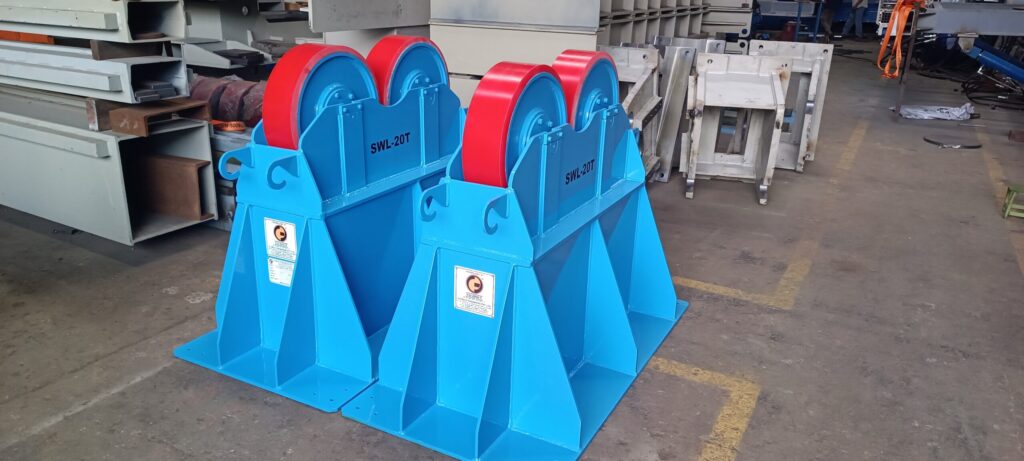
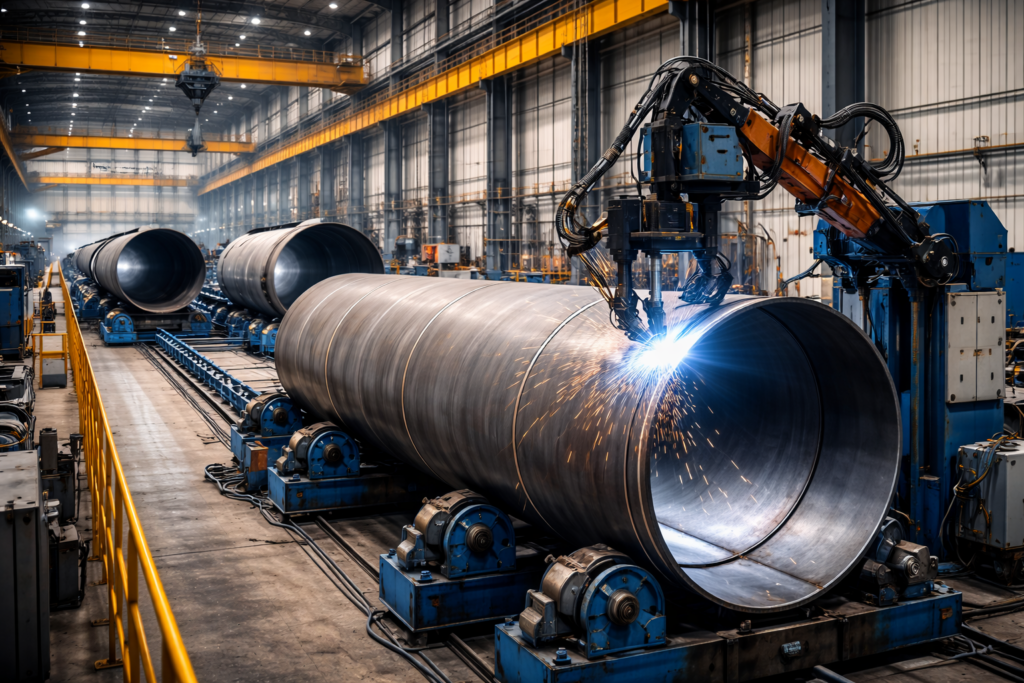
Welding rotators are crucial in the welding industry, primarily used for rotating cylindrical objects such as tanks, pipes, and vessels. These machines ensure the welder has consistent access to all areas of the workpiece, resulting in more uniform welds, faster processes, and reduced operator fatigue. Advantages of Welding Positioning Equipment One key benefit of welding rotators is their ability to handle large and heavy materials. Equipped with powerful motors, they maintain consistent rotation speed, ensuring precision while reducing manual effort. The adjustable speed controls allow welders to adapt to various materials and welding conditions, enhancing flexibility and accuracy. Types of Welding Turntables Different types of welding turntables are available to meet various project needs. Self-aligning units automatically center the workpiece, making them ideal for cylindrical components with imperfections. Adjustable versions are more versatile, accommodating different sizes, while powered models provide the necessary force for rotating heavy materials, such as large tanks or vessels. Boosting Efficiency with Automated Rotators By automating the rotation process, welding rotators save significant time and effort. Welders can focus on the quality of their work instead of manually adjusting the position of the material. This increased efficiency leads to higher-quality welds and a faster overall process, resulting in a more productive workspace. Safety Features of Rotating Welding Machines Welding rotators also improve workplace safety by reducing the need for manual handling of heavy workpieces. Automated rotation minimizes the risk of strain or injury. Furthermore, precise control over the welding process reduces common issues like spatter, enhancing both safety and the overall work environment. Conclusion Welding rotators are indispensable tools in welding operations, offering enhanced precision, efficiency, and safety. Their ability to rotate workpieces automatically makes them a valuable asset in any welding workshop, improving both productivity and the quality of the final product.

wind tower manufaturing
Uncategorized

Wind Tower: A Key Component in Renewable Energy Generation

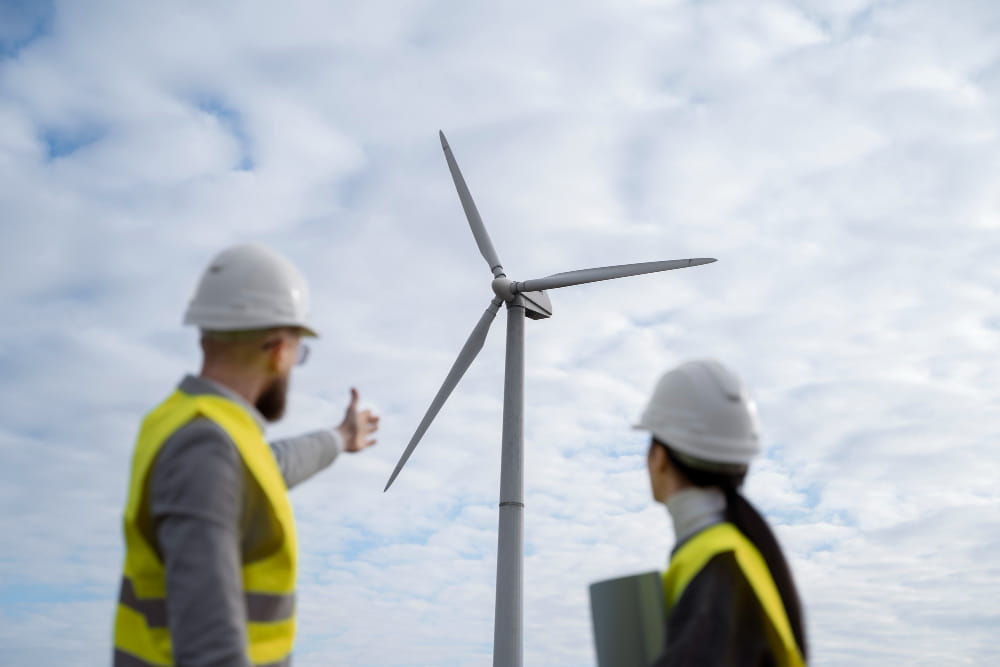
A wind tower plays a crucial role in wind energy generation by supporting the wind turbine and raising the rotor blades to greater heights, where wind speeds are stronger and more consistent. These towers enable the conversion of wind energy into electricity, making them a key element in renewable energy systems. A well-designed wind tower ensures the turbine operates efficiently, resulting in maximum energy output. The Role of Wind Towers in Wind Turbines Wind towers, or wind turbine towers, act as the foundation for the entire turbine system. They provide the necessary height for the rotor blades to capture wind effectively. The height of the tower is essential because wind speeds increase with altitude, and the blades must reach the optimal wind flow. Typically, manufacturers build the towers from steel or concrete to withstand the pressures of operation and external environmental forces. Wind towers support the turbine, enabling it to rotate and capture energy from the wind. The towers must be sturdy enough to endure high wind speeds and extreme weather conditions, ensuring the turbine’s longevity and reliability. These structures must withstand mechanical stresses and environmental challenges like corrosion, temperature changes, and ice accumulation. Types of Wind Towers Several types of wind towers exist to meet the needs of different wind energy projects. The most common type is the lattice tower, which is lightweight and strong. Lattice towers are cost-effective for onshore wind farms and require less maintenance. Monopole towers, another popular choice, consist of a single cylindrical structure and are ideal for offshore wind farms. These towers endure harsh marine conditions and provide a stable base for the turbines. Offshore wind towers are becoming increasingly significant because they allow the construction of wind farms in deeper waters, where wind speeds are often higher. These installations help solve space constraints on land and support the growing movement toward sustainable energy. Benefits of Wind Towers for Renewable Energy Wind towers significantly contribute to the generation of clean, renewable energy. By elevating the turbine blades to an optimal height, the towers enhance the efficiency of wind power systems, resulting in greater energy production. As the world focuses more on sustainability, engineers are developing larger, more efficient towers that capture more wind energy. These advancements help reduce reliance on fossil fuels and combat climate change. Conclusion In conclusion, wind towers are indispensable for wind turbines to operate efficiently. By supporting the turbine and ensuring the blades reach optimal wind conditions, wind towers improve the performance and reliability of wind power systems. As renewable energy grows in importance, wind towers will play an even more significant role in producing sustainable energy.

Heavy engineering fabrication setup at Cubuilt manufacturing facility
Uncategorized

Cubuilt Engineers Pvt Ltd: Leading the Way in Engineering Solutions

Cubuilt Engineers Pvt Ltd is a leading name in the engineering industry, known for delivering high-quality solutions across multiple sectors. Specializing in construction, infrastructure, and industrial projects, the company combines innovation with precision to meet the evolving needs of its clients. Comprehensive Engineering Services This engineering firm provides a broad spectrum of services, from structural design to project execution and management. Their team of skilled professionals works diligently to ensure every project upholds the highest standards of quality and safety. Whether it’s a small residential build or a large-scale industrial plant, the company customizes its approach for each unique challenge. Their experience spans residential, commercial, and public infrastructure projects. By integrating the latest technologies, the team ensures on-time delivery and cost-effective solutions for clients. Focused on Sustainability and Innovation Sustainability is central to the company’s operations. They incorporate green materials and energy-efficient designs into projects, supporting both environmental responsibility and long-term cost savings for clients. Innovation also plays a key role in their success. The organization continuously adopts cutting-edge technologies and smart construction techniques to enhance performance and efficiency. This forward-thinking mindset helps them maintain a competitive edge in a rapidly evolving industry. Experience Across Multiple Sectors With expertise in sectors such as manufacturing, construction, and infrastructure development, the firm has built a diverse project portfolio. From commercial complexes to industrial installations, they deliver tailored engineering solutions for a wide range of applications. Their ability to adapt across sectors is a major strength, allowing them to meet specific client goals with precision and reliability. Conclusion In summary, Cubuilt Engineers Pvt Ltd sets a high standard in modern engineering. Through a commitment to quality, sustainability, and innovation, the company continues to provide exceptional value to clients across various industries. Backed by a skilled team and a client-focused approach, this engineering leader is well-positioned for continued success.

Uncategorized

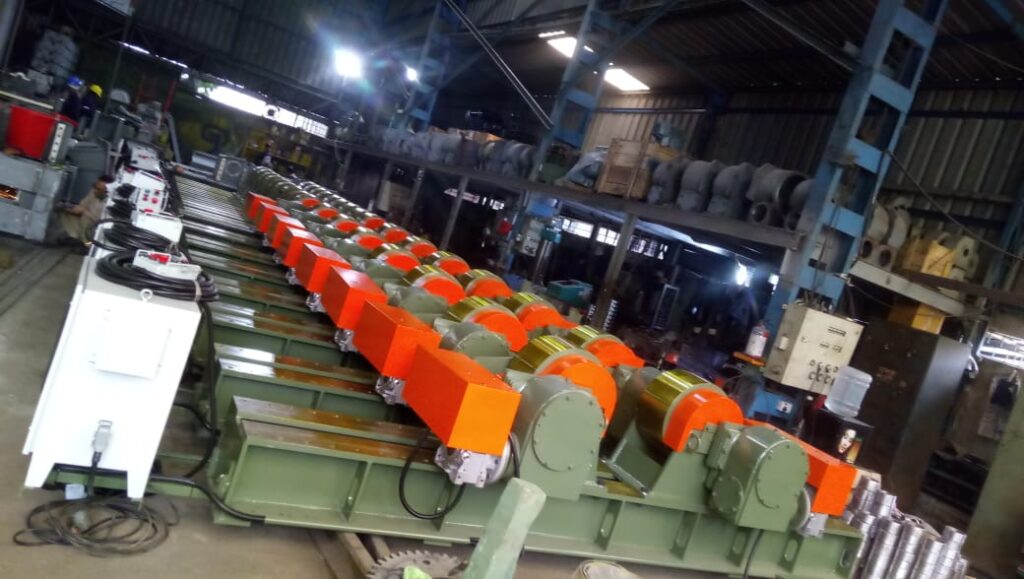
Enhance Fabrication Precision with a: 300 Ton Heavy Duty Welding Rotator with Trolley

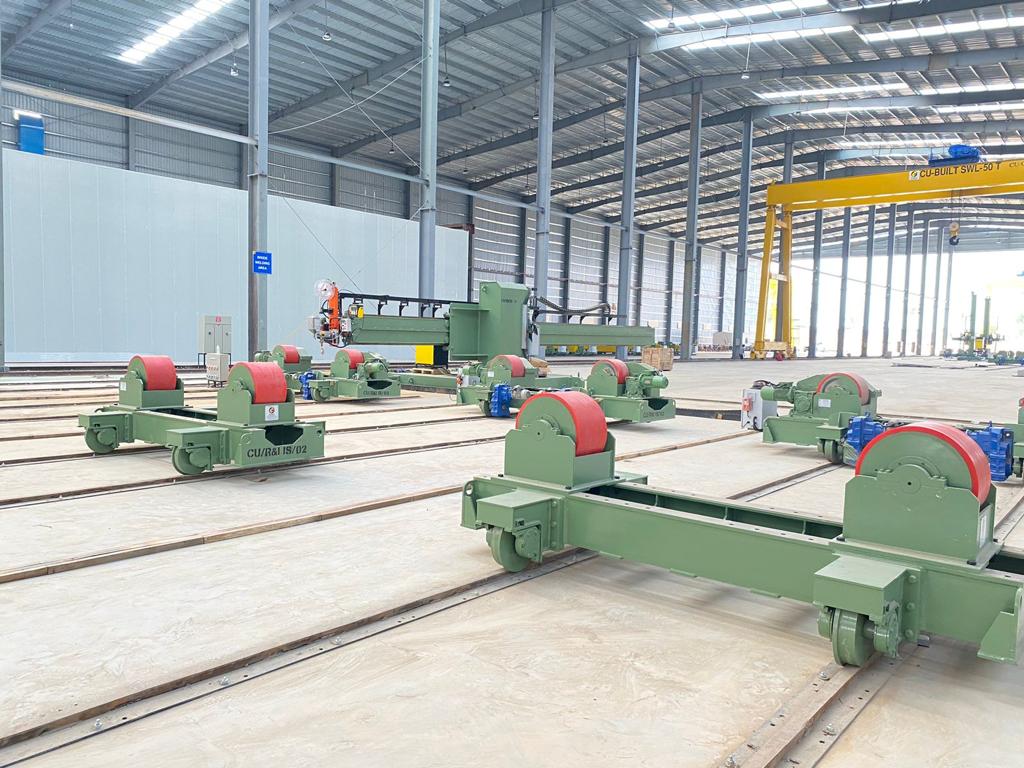
Handling large cylindrical components such as tanks, pipes, and pressure vessels demands robust and precise equipment. A 300 Ton Heavy Duty Welding Rotator with Trolley provides the strength and flexibility needed to rotate massive structures smoothly, resulting in consistent, high-quality welds and increased productivity. Power and Control for Demanding Jobs This heavy-duty tank rotator is built for industrial environments where handling oversized workpieces is a daily challenge. Its powered turning rolls rotate components evenly, while the integrated trolley system offers mobility within the fabrication bay. Teams can align the rotator with multiple joints or workstations without moving the workpiece manually, saving valuable time and effort. Features such as variable speed control and adjustable wheel spacing make it ideal for diverse applications, including pipe welding, tank fabrication, and pressure vessel production. Welders can fine-tune the rotation speed to match specific project requirements, ensuring precise and uniform welds throughout the process. Safety and Efficiency in the Workshop By automating the rotation of heavy materials, this rotator significantly reduces the need for manual handling. Operators benefit from improved ergonomics and reduced risk of workplace injuries. When paired with welding manipulators or positioners, it becomes part of a complete welding automation system that enhances both speed and accuracy. This setup is particularly effective in high-output sectors like shipbuilding, wind tower manufacturing, and industrial fabrication, where maintaining weld consistency across large surfaces is essential. Designed for Durability Engineered for long-term performance, this welding solution offers reliable operation under the toughest conditions. Its design supports a wide range of diameters and workpiece weights, making it suitable for both repetitive and custom fabrication tasks. Conclusion For any facility aiming to upgrade its welding automation capabilities, the 300 Ton Heavy Duty Welding Rotator with Trolley is a valuable investment. It improves safety, enhances precision, and accelerates workflow—key benefits for today’s competitive fabrication industry.

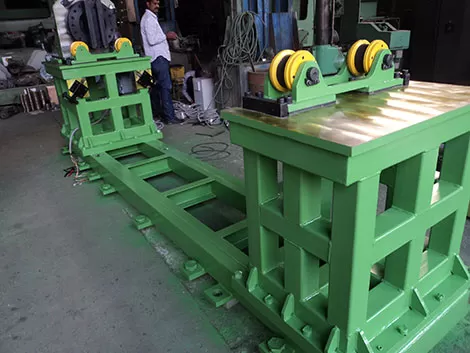
head and tail stock lifting
Uncategorized

Optimize Workpiece Handling with a: Head and Tail Stock Lifting Arrangement

Optimize Workpiece Handling with a Head and Tail Stock Lifting Arrangement In heavy-duty welding and fabrication environments, positioning large and bulky components can be challenging. A Head and Tail Stock Lifting Arrangement offers an effective solution for rotating and lifting long or irregular workpieces with precision and safety. This setup enhances workflow, improves weld quality, and significantly reduces manual handling risks. What is a Head and Tail Stock Lifting Arrangement? A Head and Tail Stock Lifting Arrangement consists of two synchronized lifting units placed at opposite ends of the workpiece. These units—commonly referred to as the headstock and tailstock—work together to lift, rotate, and hold materials such as beams, pipes, or large metal structures during fabrication or welding. The system allows for controlled movement, making it easier to access different angles without moving the part manually. This lifting mechanism is especially useful when handling components that are too long or too heavy for traditional welding positioners or rotators. The arrangement provides improved load balancing, reducing the risk of stress or distortion during operations. Advantages in Fabrication and Welding Incorporating a workpiece lifting and rotation system into your facility helps streamline the material handling process. It enables safe and efficient lifting of large workpieces, providing access to hard-to-reach areas for welding or assembly. Operators can rotate the workpiece horizontally or vertically, depending on the design of the lifting system. This arrangement is particularly valuable in industries such as shipbuilding, aerospace, energy equipment manufacturing, and structural steel fabrication, where precision and safety are critical. Using this equipment also improves ergonomics. Workers experience less fatigue, and the likelihood of accidents caused by manual lifting or unstable setups is minimized. Furthermore, automation compatibility makes it easier to integrate the system into advanced fabrication lines and robotic welding cells. Conclusion A workpiece lifting and positioning system is a must-have for modern fabrication shops that deal with oversized or awkwardly shaped components. It enhances safety, precision, and efficiency while allowing for full control over the lifting and rotation process. Whether you’re working on wind towers, pressure vessels, or structural assemblies, this system ensures smooth handling from start to finish.

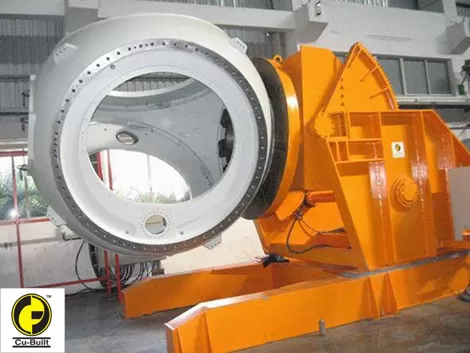
positioner with hub for wind mill
Uncategorized

Enhance Welding Efficiency with an: 80 Ton Welding Positioner

For high-capacity welding operations, an 80 Ton Welding Positioner is a vital tool to ensure precision, safety, and increased productivity. Designed for heavy-duty applications, this welding positioner supports large and bulky workpieces, allowing welders to rotate, tilt, and position them with ease. Whether in industrial manufacturing or custom fabrication, the 80 Ton Welding Positioner delivers superior performance for projects requiring significant strength and accuracy. Why Choose an 80 Ton Welding Positioner? The 80 Ton Welding Positioner is engineered to handle large components like pressure vessels, tanks, or heavy structural pieces. With its powerful load-bearing capacity, it simplifies workpiece handling, reducing the need for manual lifting and repositioning. This leads to faster turnarounds and minimizes the risk of accidents from improper handling. A major advantage of using an 80-ton positioner is its ability to provide precise rotation and tilting, which allows welders to reach every angle of the workpiece. This enhances welding quality, making it ideal for tasks like pipe welding, tank fabrication, or steel structure assembly. The system’s variable speed control allows welders to adjust the rotation to suit different materials and welding techniques, improving the overall process. Boosting Efficiency and Safety Incorporating an 80 Ton Welding Positioner into a fabrication line contributes to higher welding automation. By automating the rotation and positioning of the workpiece, welders can focus on their craft without the need for constant adjustments. This not only speeds up the overall welding process but also ensures more consistent and higher-quality welds. Furthermore, the positioner’s ability to rotate and tilt large workpieces means operators experience less physical strain. This ergonomic improvement reduces the risk of injury and boosts worker safety. The system is especially beneficial in environments where large-scale manufacturing takes place, such as shipbuilding, aerospace, and industrial equipment production. Conclusion An industrial welding positioner is a game-changer for any heavy-duty fabrication facility. By streamlining workpiece handling, improving precision, and enhancing safety, this welding positioner makes large-scale welding projects more efficient. Whether you’re working with pressure vessels, wind towers, or steel structures, the seamless handling and superior weld quality every time.

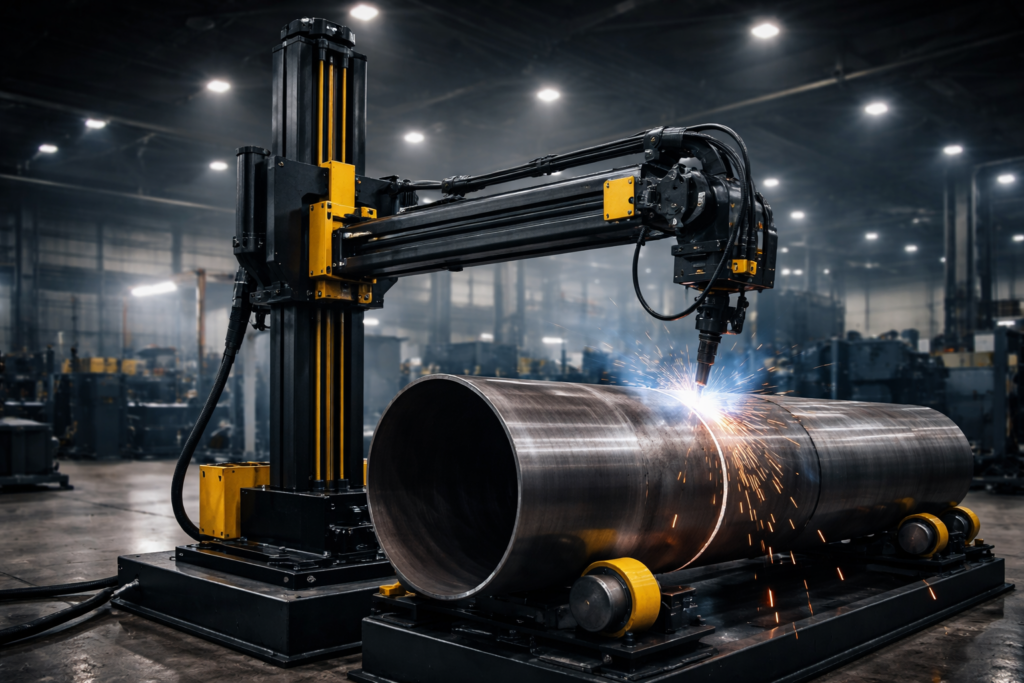
3 Axis Welding Manipulator
Uncategorized

Boost Welding Precision with a: 3-Axis Manipulator

In advanced welding operations, achieving precision and efficiency is essential. A 3-Axis Welding Manipulator enhances workpiece positioning and welding accuracy. It provides full control over tilt, rotation, and positioning, ensuring welders can access all angles for perfect welds. What is a 3-Axis Welding Manipulator?  Allows workpieces to move in three directions: horizontally, vertically, and rotationally. This equipment is ideal for precise manipulation of large components such as pipes, tanks, and structural elements. It enables welders to work on all sides of a piece, improving welding quality and consistency. The manipulator is suitable for both manual and automated welding processes. It enhances workflow, leading to faster production and more accurate results. Advantages of Using a 3-Axis Welding Manipulator Here are several benefits of integrating this manipulator into your workflow: Increased Efficiency: It allows for quick, easy positioning of workpieces, reducing downtime and speeding up the welding process. Enhanced Precision: With control over tilt, rotation, and positioning, the manipulator ensures that welding is done with high accuracy. This is particularly beneficial in industries like shipbuilding, aerospace, and energy equipment manufacturing. Improved Ergonomics: The 3-axis functionality reduces physical strain on operators, eliminating the need for manual lifting or rotating of heavy workpieces. Versatility: Whether for pipe welding, tank fabrication, or steel structure assembly, the manipulator can be adapted to various types of projects. Conclusion A welding positioner with 3-axis movement is a valuable tool for improving welding efficiency, precision, and safety. Whether you’re handling pipes, tanks, or steel structures, it ensures better control for high-quality welds. By incorporating this equipment into your welding process, you can enhance productivity and ensure exceptional results.

Hydraulic Fit up Rotators
Uncategorized

Enhance Precision in Welding with: Hydraulic Fit Up Rotators

In heavy-duty welding and fabrication, achieving precision is essential. Hydraulic Fit Up Rotators offer the ideal solution for aligning and positioning large workpieces such as pipes, tanks, and pressure vessels. These tools increase welding accuracy, improve efficiency, and reduce manual handling in the workshop. What Are Hydraulic Fit Up Rotators? Hydraulic Fit Up Rotators are designed to rotate and position heavy workpieces during welding. The hydraulic systems in these devices allow for smooth and controlled movement, ensuring precise alignment. By providing adjustable positioning, they make it easier for welders to access all angles of the workpiece, ensuring high-quality welds throughout the entire structure. These rotators are commonly used in welding applications like pipe welding, tank fabrication, and pressure vessel assembly, where accuracy and stability are critical. Benefits of Using Hydraulic Workpiece Positioning Systems Improved Alignment and Precision: Hydraulic workpiece positioning systems ensure perfect alignment, enabling welders to work on every side of a component with confidence. The hydraulic system offers precise control over positioning, resulting in more consistent and accurate welds. Enhanced Safety: These systems significantly reduce manual handling, lowering the chances of accidents. By automatically rotating and positioning the workpiece, operators can focus on welding rather than struggling with heavy parts. Increased Efficiency: The ability to easily position workpieces means less downtime and faster production cycles. Hydraulic positioning systems eliminate the need for manual adjustments, helping teams complete projects on time. Versatile Applications: Whether you’re working with pipes, tanks, or steel structures, these systems can handle various workpieces. They offer flexibility in different welding environments, making them indispensable in fabrication shops that work with large, heavy components. Conclusion Incorporating hydraulic workpiece positioning systems into your welding process significantly improves both the precision and safety of your operations. These devices streamline workpiece handling, reduce manual labor, and enhance the overall quality of welds. Investing in these rotating alignment systems will boost productivity, reduce errors, and ensure consistent, high-quality results in your welding projects.

Uncategorized

The Ultimate Guide to Welding Turntables: Enhancing Precision and Weld Quality in Modern Fabrication

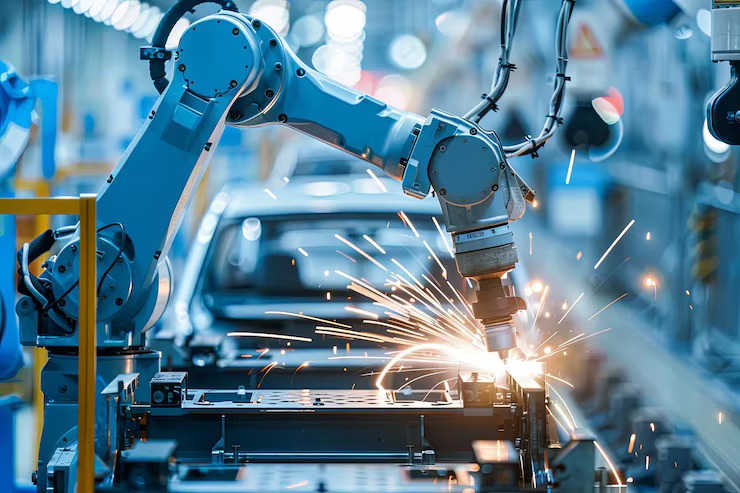
Welding remains a cornerstone of manufacturing, construction, and industrial fabrication, where high quality welds are indispensable to structural integrity and performance. Amid the vast array of welding aids and accessories, the welding turntable stands out as an essential tool, revolutionizing how welders achieve precision, speed, and consistency. This comprehensive guide dives deep into the world of welding turntables—detailing their benefits, types, and best usage practices to help manufacturers and welders optimize their workflow. What Is a Welding Turntable? A welding turntable refers to a motorized or manual rotating platform designed to hold a workpiece during welding. It allows smooth and consistent rotation, enhancing access to multiple angles without the need for manual repositioning. By automating or easing the rotation of the workpiece, welding turntables significantly improve weld quality and operator ergonomics. Often classified under the broader category of welding positioners, turntables focus primarily on rotary movement. They are ideal for cylindrical objects like pipes, tanks, and drums. When paired with other welding tools, turntables unlock the potential for high precision and high quality welds across demanding industrial applications. Why Welding Turntables Are Important 1. Superior Weld Quality Uniformity in welding conditions is a critical factor in producing high quality welds. A welding turntable rotates the workpiece at a consistent speed, allowing the welder to maintain steady arc length, travel speed, and angle. This results in uniform bead formation, better penetration, and fewer defects such as spatter and incomplete fusion. 2. Increased Productivity Manually repositioning heavy or awkward workpieces is not only time-consuming but also physically taxing. Welding turntables reduce downtime by providing continuous, automated rotation. This translates to faster completion times and the ability to handle repetitive jobs efficiently without compromising quality. 3. Ergonomic Benefits for Welders Welding turns tables help operators maintain a comfortable posture by bringing the workpiece to their ideal orientation without them needing to move around. Reduced physical strain leads to better concentration and fewer mistakes, contributing to improved overall job performance and safety. 4. Versatility Through Integration While welding turntables specialize in rotational motion, they are often used in conjunction with other welding positioners that control tilt or lift. This synergy creates flexible setups capable of handling complex geometries and diverse welding positions, making the equipment indispensable in fabrication shops. Types of Welding Turntables Choosing the right type depends largely on the scope of work, size of the items welded, and the required precision. Type Description Ideal For Manual Turntables Operated by hand crank or lever Small, lightweight pieces; low volume jobs Motorized Turntables Electrically powered for smooth, regulated rotation Medium to heavy pieces; high precision welding Programmable Turntables Automated with control systems allowing speed variation and rotation patterns High volume, repetitive welds; robotic welding Heavy-Duty Turntables Built for extremely heavy loads and large diameters Shipbuilding, pipeline, and large pressure vessels Each of these turntables integrates with other welding positioners and robotic welding devices to enhance workflow and ensure weld quality across demanding applications. Key Features to Look for in a Welding Turntable When selecting a welding turntable, ensure the equipment possesses these attributes to maximize efficiency and weld consistency: Load Capacity: Match the turntable’s weight rating with your heaviest workpieces for safety and smooth operation. Speed Control: Variable speed control allows adjustment to match welding parameters, ensuring uniform bead quality. Tilt and Elevation Options: Some systems offer tilt or height adjustments in addition to rotation, enhancing ergonomic benefits and access. Robust Build Materials: Look for turntables made of durable steel or alloy capable of handling harsh welding environments. Integration Capabilities: Opt for models that can interface with PLCs, robotic arms, or other automation technology to future-proof your setup. Workpiece Clamping: Secure clamping mechanisms prevent slippage during rotation, critical for precision welding. How Welding Turntables Enhance High Quality Welds Achieving high quality welds isn’t just about the welder’s skill. The environment and equipment used play pivotal roles. Welding turntables contribute in many specific ways: Consistent Positioning: A rotating table ensures the weld bead is laid down evenly by holding the part steady and moving it smoothly. Reduced Human Factors: Minimizing manual movement of the workpiece lowers fatigue and reduces errors caused by awkward welding positions. Optimal Welding Angles: Turntables allow easy adjustment of the part’s angle to ensure the perfect torch angle, critical in penetration and bead appearance. Minimized Welding Defects: Steady motion reduces spatter, weld porosity, and other common defects. Enables Continuous Welding: Automation options permit non-stop welding, reducing the risk of cold starts and stops, which can weaken the seam. Welding Turntables vs. Other Welding Positioners All welding positioners serve to enhance access and precision but differ in motion and application. Feature Welding Turntables Tilt/Rotary Positioners Primary Movement Continuous 360° rotation Rotation plus tilt & lift capabilities Ideal for Workpiece Shape Cylindrical or round parts like pipes Irregular shapes needing angular adjustment Precision Excellent for consistent circular welds Versatile for various weld types Common Application Pipe fabrication, tanks, drums Complex assemblies, fittings, frames Sometimes, combining turntables with tilt positioners results in unbeatable flexibility. Common Industrial Applications Welding turntables are indispensable across numerous sectors such as: Pipe Fabrication: Enables uninterrupted circumferential welds necessary for pipelines and industrial tubes. Shipbuilding: Facilitates the welding of large stainless steel tanks and pipe manifolds. Automotive and Aerospace: Utilized in assembly lines for cylindrical components requiring precise rotational welding. Construction and Manufacturing: Boosts productivity when producing repetitive, uniform welds on tubular steel structures and components. Pressure Vessel Fabrication: Assists in achieving weld quality standards vital for safety-critical applications. Best Practices for Operating Welding Turntables To fully capitalize on the benefits and maintain weld quality, follow these guidelines: Securely Clamp Workpieces: Avoid slippage that can cause misalignment and compromise weld integrity. Set Appropriate Speed: Adjust rotation speed to match the welding process and material being welded. Train Operators: Ensure all staff are familiar with turntable controls and safety protocols. Prevent Contamination: Keep the table clean from weld spatter and dirt to avoid disruptions. Regular Maintenance: Lubricate moving parts and inspect drive motors to prevent unexpected downtime. Combine With Proper Welding Positioners: For more complex welds, use tilt or lift positioners alongside your turntable. Maintenance Tips for Longevity and Consistency Regular upkeep guarantees ongoing high quality welds: Routine Lubrication: Keeps gears and bearings moving smoothly, avoiding jerky rotation. Electrical Inspections: Prevent faults in motors and wiring by scheduled checks. Calibration: Periodically

Scroll to Top