cubuilt

Uncategorized

Future of Windmill Tower Manufacturing in India
Uncategorized

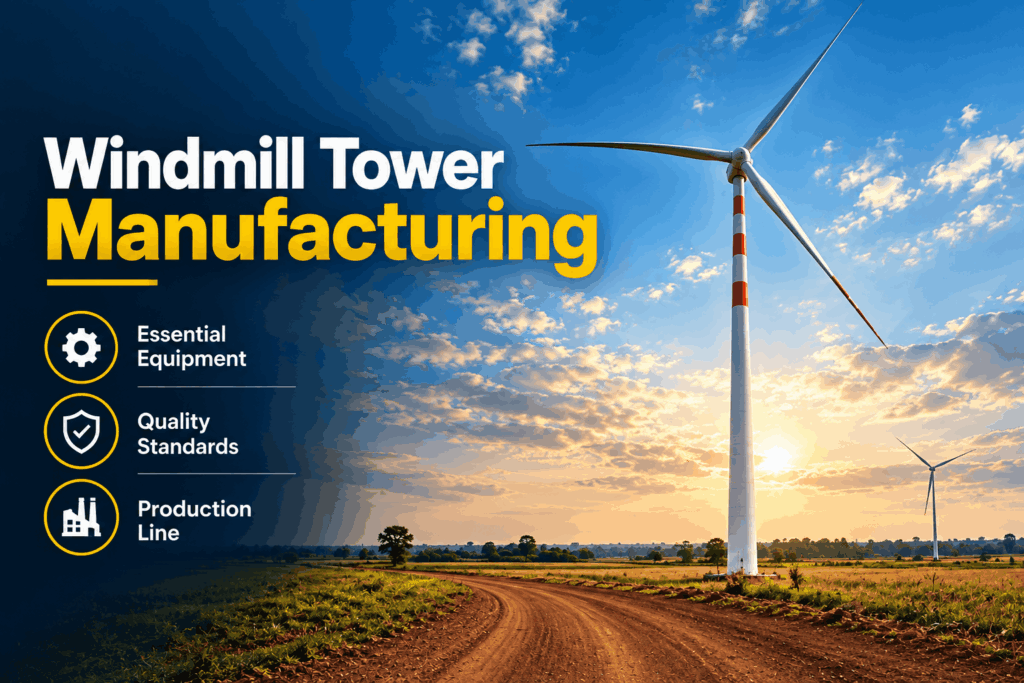
The Future of Windmill Tower Manufacturing in India: A Green Industrial Revolution

The global shift toward sustainable energy has placed India at the center of a massive industrial transition. As the nation strives to meet its ambitious goal of 500 GW of non-fossil fuel energy capacity by 2030, the Future of Windmill Tower Manufacturing in India has become a focal point for investors, engineers, and policymakers alike. No longer just a secondary component, the wind tower is evolving into a sophisticated piece of engineering designed to support larger turbines and endure harsher environments. The wind energy sector is currently witnessing a paradigm shift. From the implementation of the Production Linked Incentive (PLI) schemes to the emergence of offshore wind projects, India is positioning itself as a global hub for renewable energy hardware. In this blog, we explore the technological advancements, market drivers, and strategic innovations shaping the wind tower industry. The Rising Trajectory of Wind Energy in India India currently ranks fourth globally in installed wind power capacity. However, the “low-hanging fruit” of high-wind sites has largely been tapped. The future of windmill tower manufacturing in India now lies in reaching higher altitudes where wind speeds are more consistent. This necessitates the production of taller, more resilient towers. Manufacturers are moving away from standard tubular steel towers to hybrid models—combining concrete and steel—to reach heights of 140 meters and beyond. This evolution is not just about height; it is about localizing the supply chain to reduce costs and carbon footprints. Key Trends Shaping the Future of Windmill Tower Manufacturing in India 1. Shift Toward Tall Hybrid Towers As turbine capacities increase from 2MW to 5MW+, the structural demands on towers have intensified. Hybrid towers allow for greater stability and height, capturing stronger winds. This shift is driving demand for precision welding and heavy-duty fabrication capabilities. 2. The Offshore Wind Frontier With a coastline spanning over 7,500 km, India’s offshore wind potential is staggering. Manufacturing towers for marine environments requires advanced anti-corrosive coatings and massive structural integrity. The future of windmill tower manufacturing in India will see dedicated coastal manufacturing clusters designed to ship these behemoths directly to sea. 3. Automation in Fabrication Efficiency is the name of the game. Advanced CNC plate cutting machines and automated welding lines are replacing manual processes. This ensures zero-defect manufacturing and speeds up the “time-to-market” for large-scale IPP (Independent Power Provider) projects. Government Policy: The Wind Beneath the Wings The Indian government’s focus on “Atmanirbhar Bharat” has significantly boosted the future of windmill tower manufacturing in India. Policy interventions like the Inter-State Transmission System (ISTS) charges waiver for wind projects and the notification of the National Offshore Wind Energy Policy have created a predictable roadmap for manufacturers. Furthermore, the Ministry of New and Renewable Energy (MNRE) is consistently bidding out capacities, ensuring a steady pipeline of work for fabrication units. According to recent reports by IRENA, India’s commitment to decarbonization is among the most transparent in the developing world, attracting significant Foreign Direct Investment (FDI). Technical Challenges in Modern Tower Manufacturing Manufacturing a wind tower is a feat of heavy engineering. It involves: To address these challenges, companies are adopting Heavy Duty Column and Boom systems that allow for seamless welding of large-diameter cylinders. The Role of CuBuilt in the Wind Energy Ecosystem At CuBuilt, we understand that the future of windmill tower manufacturing in India depends on the quality of the machinery used in the fabrication process. We provide the heavy-duty infrastructure that allows manufacturers to scale their operations. Our Rotators and Rollers are designed to handle the massive weights of modern turbine towers, ensuring precise rotation for high-quality welding seams. By providing world-class fabrication equipment, we enable Indian manufacturers to compete on a global stage, ensuring that “Made in India” wind towers are installed from the North Sea to the Australian Outback. Sustainability in Manufacturing The irony of building green energy components in a high-pollution factory is not lost on the industry. The future of windmill tower manufacturing in India involves adopting “Green Steel” and energy-efficient fabrication processes. Reducing scrap through optimized CNC nesting and using solar-powered welding units are becoming industry standards. Economic Impact and Job Creation The expansion of wind tower plants is a massive job creator. From specialized welders and NDT (Non-Destructive Testing) technicians to logistics experts and structural engineers, the sector is revitalizing industrial hubs in states like Gujarat, Maharashtra, and Tamil Nadu. As per data from Global Wind Energy Council (GWEC), every megawatt of wind energy installed creates nearly 30 job-years of employment across the value chain. Future Outlook: 2026 and Beyond By 2026, we expect to see the first major offshore foundations being laid in the Gulf of Khambhat. This will require a completely different scale of manufacturing. The future of windmill tower manufacturing in India will be characterized by: Partner with CuBuilt for Excellence in Fabrication As the wind energy sector grows, the demand for precision, durability, and scale will only increase. Whether you are setting up a new fabrication unit or upgrading an existing line to meet the demands of the future of windmill tower manufacturing in India, CuBuilt is your strategic partner. Our range of automated welding and cutting solutions is engineered to deliver the performance required for the next generation of renewable energy infrastructure. Contact CuBuilt today to explore our heavy-duty fabrication solutions and lead the Indian wind revolution. Frequently Asked Questions (Q&A) Q1: What is the average height of a windmill tower in India?  Currently, most towers range between 80 to 120 meters. However, the trend is moving toward 140-160 meters to capture higher wind speeds. Q2: Why is the “Make in India” initiative important for wind towers?  It reduces the cost of logistics, which can account for up to 20% of the total tower cost, and ensures that the infrastructure is built to suit local climatic conditions. Q3: What materials are used in the future of windmill tower manufacturing in India?  While S355 grade steel remains the standard, we are seeing a rise in high-strength concrete for hybrid towers and advanced

Uncategorized

Top Welding Automation Trends in India for 2026: The Future of Manufacturing

The Indian manufacturing sector is currently undergoing a seismic shift. As we move deeper into the decade, the integration of advanced technology into traditional workflows is no longer a luxury—it is a necessity for survival. For fabrication shops and heavy industries, staying updated on the Top Welding Automation Trends in India for 2026 is the key to maintaining a competitive edge in a global market. With the “Make in India” initiative reaching new heights, the demand for precision, speed, and cost-effectiveness has made manual welding a bottleneck of the past. At Cubuilt, we have witnessed firsthand how automation transforms production lines from labor-intensive hubs into streamlined, high-output powerhouses. Whether you are in automotive, aerospace, or structural engineering, understanding these trends will help you navigate the complexities of modern industrial requirements. 1. The Rise of Collaborative Robots (Cobots) in Welding One of the most significant Top Welding Automation Trends in India for 2026 is the widespread adoption of Collaborative Robots, or “Cobots.” Unlike traditional industrial robots that require massive safety cages and specialized programming, Cobots work alongside human operators. In the Indian context, where skilled welders are increasingly difficult to find, Cobots fill the gap by handling repetitive, high-volume tasks. These machines are designed with sensitive sensors that allow them to stop instantly if they contact a human, ensuring a safe hybrid workspace. Key Benefits of Cobots: 2. Artificial Intelligence and Machine Learning Integration AI is no longer just for software companies. By 2026, AI-driven welding systems will be standard in high-end Indian manufacturing. These systems use machine learning algorithms to analyze weld data in real-time, adjusting parameters like voltage, wire feed speed, and travel speed on the fly to compensate for irregularities in the workpiece. This trend focuses on “First Time Right” manufacturing. By predicting potential defects before they happen, companies can significantly reduce scrap rates and rework costs. 3. Advanced Laser Welding Systems While MIG and TIG remain staples, Fiber Laser Welding is set to dominate the Top Welding Automation Trends in India for 2026. Laser welding offers unparalleled speed and a much smaller Heat Affected Zone (HAZ), which is critical when working with thin materials or exotic alloys. India’s push toward Electric Vehicle (EV) manufacturing is a primary driver for this. The delicate nature of battery packs and lightweight aluminum frames requires the precision that only automated laser systems can provide. You can explore our range of specialized welding SPM to see how laser integration is changing the game. 4. Industry 4.0 and IoT-Enabled Welding Power Sources The concept of the “Smart Factory” is becoming a reality in industrial hubs like Pune, Chennai, and Gurgaon. In 2026, welding power sources are no longer isolated machines; they are IoT (Internet of Things) nodes. What does IoT in welding look like? 5. Adoption of Multi-Process Automated Cells Flexibility is the theme for 2026. Instead of having a single machine for a single task, Indian manufacturers are investing in Multi-Process Automated Welding Cells. These cells can switch between MIG, TIG, and Plasma cutting within the same footprint. This trend is particularly relevant for job shops that handle diverse contracts. By using modular welding rotators and positioners, a single cell can handle everything from small pipe joints to massive pressure vessels. 6. Green Welding: Sustainability in Automation Environmental regulations in India are tightening. Sustainability is a core pillar of the Top Welding Automation Trends in India for 2026. Automated systems are significantly more energy-efficient than manual setups. They produce less fume, use consumables more effectively, and reduce the overall carbon footprint of the plant. High-efficiency inverter-based power sources integrated with robotic arms ensure that power is only consumed during the actual arc-on time, leading to massive savings on utility bills. 7. Enhanced Virtual Reality (VR) Training for Operators As automation grows, the role of the human operator shifts from “welder” to “robot technician.” To bridge the skill gap, VR-based training has become an essential trend. It allows new workers to practice on automated interfaces in a risk-free environment, saving on material costs during the learning phase. To truly grasp the Top Welding Automation Trends in India for 2026, one must look at the broader scope of Industrial Robotics and Smart Manufacturing. In India, the Robotic Welding Market is expected to grow by double digits, driven by the need for Precision Engineering and Automated Quality Control. Companies are no longer just buying a machine; they are investing in Digital Transformation of their shop floors. This involves Welding Data Analytics and the implementation of Cloud-based Fabrication Management. Why Choose Cubuilt for Your Automation Journey? Transitioning to automation can be daunting. At Cubuilt, we specialize in providing end-to-end solutions tailored to the unique challenges of the Indian industrial landscape. From Column and Boom setups for heavy fabrication to intricate robotic cells, our engineering team ensures that your investment yields the highest ROI. We don’t just sell machines; we build partnerships. Our systems are designed to be future-proof, ensuring that as the Top Welding Automation Trends in India for 2026 evolve, your facility remains at the cutting edge of technology. Boost Your Production with Cubuilt’s Expert Solutions Are you ready to revolutionize your manufacturing process? Don’t let outdated manual processes hold your business back. Whether you need to increase your throughput, improve weld quality, or solve labor shortage issues, Cubuilt has the expertise to guide you. Contact our automation experts today for a free plant assessment and custom quotation! Frequently Asked Questions (Q&A) Q1: What is the biggest advantage of robotic welding for Indian SMEs? The biggest advantage is consistency. Unlike manual welding, which is subject to human fatigue, a robot performs the same high-quality weld every single time, 24/7. This reduces waste and ensures your products meet international standards like those set by the American Welding Society (AWS). Q2: Is welding automation too expensive for small-scale industries? While the initial investment is higher, the ROI is usually achieved within 12 to 24 months through increased speed, reduced rework, and lower consumable waste. 2026 models

hydraulic rotators
Uncategorized

Mastering Efficiency: The Complete Guide to Hydraulic Rotators

In the fast-evolving world of industrial machinery and forestry operations, the demand for high-performance tools is greater than ever. Among the many innovations transforming the way we work, hydraulic rotators stand out as indispensable components in modern hydraulic systems. Whether you’re in construction, logging, material handling, or agriculture, understanding the function and benefits of these powerful devices is key to optimizing your equipment and boosting productivity. What Are Hydraulic Rotators? Hydraulic rotators are mechanical devices that enable continuous 360-degree rotation for attachments connected to hydraulic equipment like cranes, excavators, and log grapples. These rotators ensure smooth, controlled movements, making it easier to position heavy loads with precision. Unlike traditional static attachments, hydraulic rotators provide operators with greater flexibility and efficiency. They are commonly used with grapples, grabs, clamshell buckets, and similar hydraulic tools in industries that require robust, reliable rotation mechanisms. Why Hydraulic Rotators Matter in Heavy Equipment One of the standout features of hydraulic rotators is their ability to perform under high-stress conditions. These tools are built to handle intense pressure and heavy-duty work cycles without compromising on accuracy or performance. Some key benefits include: Enhanced maneuverability: Operators can rotate attachments effortlessly in tight or hard-to-reach areas. Reduced wear and tear: Smooth rotation minimizes strain on the base machine and attachment joints. Improved job site efficiency: Faster, more precise movements lead to quicker job completion and reduced fuel consumption. Safety enhancement: Allows operators to position loads from a safe distance, minimizing risks. Common Applications of Hydraulic Rotators Hydraulic rotators are used across various sectors for a wide range of purposes: Forestry: Rotators attached to log grapples enable the swift, controlled handling of timber. Demolition: In demolition tasks, rotators help in placing shears or crushers at exact angles. Waste management: Grapples equipped with rotators streamline the sorting and lifting of recyclable materials. Construction: Cranes and loaders use them to lift, rotate, and position construction materials with high precision. Agriculture: In farms, rotators assist in lifting hay bales, feed bags, or machinery parts without manual rotation. Each of these use-cases highlights the crucial role of hydraulic rotation in boosting workplace efficiency and operational safety. Types of Hydraulic Rotators Choosing the right type of rotator depends on the nature of your work and the kind of equipment you’re operating. Below are the most common types: 1. Flange-Mounted Rotators These are bolted directly onto the equipment or attachment and offer a stable base. Ideal for applications where fixed positioning and high load capacity are essential. 2. Shaft-Mounted Rotators These feature a rotating shaft and are popular in forestry applications where mobility and rotation flexibility are priorities. 3. Integrated Rotator-Links Some advanced models integrate the rotator with the link system of grapples, providing a compact solution with fewer moving parts. This design reduces the chance of mechanical failure and eases maintenance. Key Features to Look for in Hydraulic Rotators When investing in a hydraulic rotator, consider the following critical features to ensure longevity and effectiveness: Load capacity: Make sure the rotator can support the weight and pressure of your typical load. Torque output: Higher torque allows for better performance under strain. Sealing system: Good seals prevent hydraulic oil leaks and keep dirt and water out. Durability: Opt for rotators made with high-grade steel and corrosion-resistant materials. Serviceability: Look for models with easily accessible parts and minimal maintenance requirements. Maintenance Tips for Longer Life To maximize the lifespan of your hydraulic rotator, consistent maintenance is essential: Inspect seals regularly: Any signs of leakage should be addressed immediately. Lubricate moving parts: Regular greasing reduces friction and wear. Check hydraulic lines: Ensure there are no kinks, clogs, or leaks that could impair performance. Monitor rotational accuracy: If rotation becomes stiff or imprecise, it may indicate internal wear. Follow the manufacturer’s guidelines: Adhering to OEM maintenance schedules and procedures guarantees optimal performance. Choosing the Right Manufacturer There are several manufacturers offering hydraulic rotators, but not all are created equal. It’s crucial to choose a brand that emphasizes quality, innovation, and after-sales support. Look for companies with a solid track record, global presence, and excellent customer service. Don’t forget to verify compatibility with your existing equipment. A well-matched rotator will save time, reduce repair costs, and extend the life of your machinery. The Future of Hydraulic Rotators As automation, AI integration, and smart hydraulics continue to reshape industries, the next generation of hydraulic rotators will likely feature: IoT sensors for real-time diagnostics and performance tracking Energy-efficient designs that reduce hydraulic fluid consumption Wireless control systems for remote operation Smart feedback loops to detect resistance, temperature changes, and load distribution Investing in advanced rotators today means staying competitive and ready for tomorrow’s technological advances. Final Thoughts In the world of heavy-duty machinery, hydraulic rotators are not just components—they are productivity powerhouses. From forestry to construction and everything in between, they deliver the flexibility, precision, and efficiency modern industries demand. Whether you’re upgrading existing equipment or setting up a new operation, choosing the right hydraulic rotator can significantly impact your bottom line. Make your choice wisely, maintain it regularly, and you’ll see improvements not only in output but also in operator safety and machine longevity.

welding roterors
Uncategorized

Welding Rotators: Essential Tools for Precision and Efficiency in Welding

Welding rotators are crucial in the welding industry, primarily used for rotating cylindrical objects such as tanks, pipes, and vessels. These machines ensure the welder has consistent access to all areas of the workpiece, resulting in more uniform welds, faster processes, and reduced operator fatigue. Advantages of Welding Positioning Equipment One key benefit of welding rotators is their ability to handle large and heavy materials. Equipped with powerful motors, they maintain consistent rotation speed, ensuring precision while reducing manual effort. The adjustable speed controls allow welders to adapt to various materials and welding conditions, enhancing flexibility and accuracy. Types of Welding Turntables Different types of welding turntables are available to meet various project needs. Self-aligning units automatically center the workpiece, making them ideal for cylindrical components with imperfections. Adjustable versions are more versatile, accommodating different sizes, while powered models provide the necessary force for rotating heavy materials, such as large tanks or vessels. Boosting Efficiency with Automated Rotators By automating the rotation process, welding rotators save significant time and effort. Welders can focus on the quality of their work instead of manually adjusting the position of the material. This increased efficiency leads to higher-quality welds and a faster overall process, resulting in a more productive workspace. Safety Features of Rotating Welding Machines Welding rotators also improve workplace safety by reducing the need for manual handling of heavy workpieces. Automated rotation minimizes the risk of strain or injury. Furthermore, precise control over the welding process reduces common issues like spatter, enhancing both safety and the overall work environment. Conclusion Welding rotators are indispensable tools in welding operations, offering enhanced precision, efficiency, and safety. Their ability to rotate workpieces automatically makes them a valuable asset in any welding workshop, improving both productivity and the quality of the final product.

wind tower manufaturing
Uncategorized

Wind Tower: A Key Component in Renewable Energy Generation

A wind tower plays a crucial role in wind energy generation by supporting the wind turbine and raising the rotor blades to greater heights, where wind speeds are stronger and more consistent. These towers enable the conversion of wind energy into electricity, making them a key element in renewable energy systems. A well-designed wind tower ensures the turbine operates efficiently, resulting in maximum energy output. The Role of Wind Towers in Wind Turbines Wind towers, or wind turbine towers, act as the foundation for the entire turbine system. They provide the necessary height for the rotor blades to capture wind effectively. The height of the tower is essential because wind speeds increase with altitude, and the blades must reach the optimal wind flow. Typically, manufacturers build the towers from steel or concrete to withstand the pressures of operation and external environmental forces. Wind towers support the turbine, enabling it to rotate and capture energy from the wind. The towers must be sturdy enough to endure high wind speeds and extreme weather conditions, ensuring the turbine’s longevity and reliability. These structures must withstand mechanical stresses and environmental challenges like corrosion, temperature changes, and ice accumulation. Types of Wind Towers Several types of wind towers exist to meet the needs of different wind energy projects. The most common type is the lattice tower, which is lightweight and strong. Lattice towers are cost-effective for onshore wind farms and require less maintenance. Monopole towers, another popular choice, consist of a single cylindrical structure and are ideal for offshore wind farms. These towers endure harsh marine conditions and provide a stable base for the turbines. Offshore wind towers are becoming increasingly significant because they allow the construction of wind farms in deeper waters, where wind speeds are often higher. These installations help solve space constraints on land and support the growing movement toward sustainable energy. Benefits of Wind Towers for Renewable Energy Wind towers significantly contribute to the generation of clean, renewable energy. By elevating the turbine blades to an optimal height, the towers enhance the efficiency of wind power systems, resulting in greater energy production. As the world focuses more on sustainability, engineers are developing larger, more efficient towers that capture more wind energy. These advancements help reduce reliance on fossil fuels and combat climate change. Conclusion In conclusion, wind towers are indispensable for wind turbines to operate efficiently. By supporting the turbine and ensuring the blades reach optimal wind conditions, wind towers improve the performance and reliability of wind power systems. As renewable energy grows in importance, wind towers will play an even more significant role in producing sustainable energy.

Heavy engineering fabrication setup at Cubuilt manufacturing facility
Uncategorized

Cubuilt Engineers Pvt Ltd: Leading the Way in Engineering Solutions

Cubuilt Engineers Pvt Ltd is a leading name in the engineering industry, known for delivering high-quality solutions across multiple sectors. Specializing in construction, infrastructure, and industrial projects, the company combines innovation with precision to meet the evolving needs of its clients. Comprehensive Engineering Services This engineering firm provides a broad spectrum of services, from structural design to project execution and management. Their team of skilled professionals works diligently to ensure every project upholds the highest standards of quality and safety. Whether it’s a small residential build or a large-scale industrial plant, the company customizes its approach for each unique challenge. Their experience spans residential, commercial, and public infrastructure projects. By integrating the latest technologies, the team ensures on-time delivery and cost-effective solutions for clients. Focused on Sustainability and Innovation Sustainability is central to the company’s operations. They incorporate green materials and energy-efficient designs into projects, supporting both environmental responsibility and long-term cost savings for clients. Innovation also plays a key role in their success. The organization continuously adopts cutting-edge technologies and smart construction techniques to enhance performance and efficiency. This forward-thinking mindset helps them maintain a competitive edge in a rapidly evolving industry. Experience Across Multiple Sectors With expertise in sectors such as manufacturing, construction, and infrastructure development, the firm has built a diverse project portfolio. From commercial complexes to industrial installations, they deliver tailored engineering solutions for a wide range of applications. Their ability to adapt across sectors is a major strength, allowing them to meet specific client goals with precision and reliability. Conclusion In summary, Cubuilt Engineers Pvt Ltd sets a high standard in modern engineering. Through a commitment to quality, sustainability, and innovation, the company continues to provide exceptional value to clients across various industries. Backed by a skilled team and a client-focused approach, this engineering leader is well-positioned for continued success.

Uncategorized

Enhance Fabrication Precision with a: 300 Ton Heavy Duty Welding Rotator with Trolley

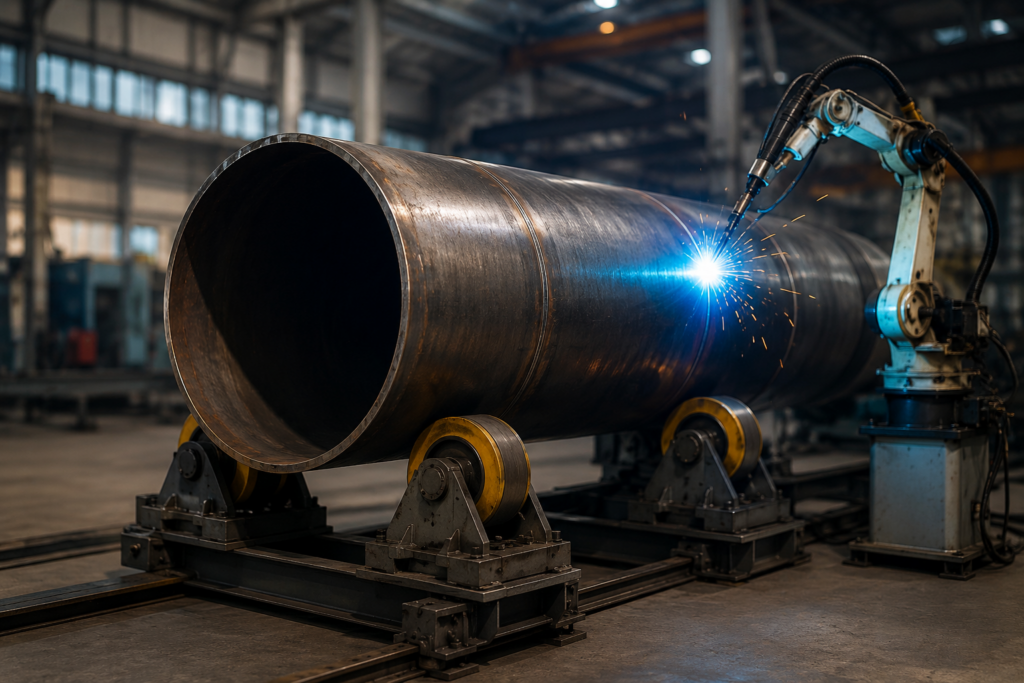
Handling large cylindrical components such as tanks, pipes, and pressure vessels demands robust and precise equipment. A 300 Ton Heavy Duty Welding Rotator with Trolley provides the strength and flexibility needed to rotate massive structures smoothly, resulting in consistent, high-quality welds and increased productivity. Power and Control for Demanding Jobs This heavy-duty tank rotator is built for industrial environments where handling oversized workpieces is a daily challenge. Its powered turning rolls rotate components evenly, while the integrated trolley system offers mobility within the fabrication bay. Teams can align the rotator with multiple joints or workstations without moving the workpiece manually, saving valuable time and effort. Features such as variable speed control and adjustable wheel spacing make it ideal for diverse applications, including pipe welding, tank fabrication, and pressure vessel production. Welders can fine-tune the rotation speed to match specific project requirements, ensuring precise and uniform welds throughout the process. Safety and Efficiency in the Workshop By automating the rotation of heavy materials, this rotator significantly reduces the need for manual handling. Operators benefit from improved ergonomics and reduced risk of workplace injuries. When paired with welding manipulators or positioners, it becomes part of a complete welding automation system that enhances both speed and accuracy. This setup is particularly effective in high-output sectors like shipbuilding, wind tower manufacturing, and industrial fabrication, where maintaining weld consistency across large surfaces is essential. Designed for Durability Engineered for long-term performance, this welding solution offers reliable operation under the toughest conditions. Its design supports a wide range of diameters and workpiece weights, making it suitable for both repetitive and custom fabrication tasks. Conclusion For any facility aiming to upgrade its welding automation capabilities, the 300 Ton Heavy Duty Welding Rotator with Trolley is a valuable investment. It improves safety, enhances precision, and accelerates workflow—key benefits for today’s competitive fabrication industry.

head and tail stock lifting
Uncategorized

Optimize Workpiece Handling with a: Head and Tail Stock Lifting Arrangement

Optimize Workpiece Handling with a Head and Tail Stock Lifting Arrangement In heavy-duty welding and fabrication environments, positioning large and bulky components can be challenging. A Head and Tail Stock Lifting Arrangement offers an effective solution for rotating and lifting long or irregular workpieces with precision and safety. This setup enhances workflow, improves weld quality, and significantly reduces manual handling risks. What is a Head and Tail Stock Lifting Arrangement? A Head and Tail Stock Lifting Arrangement consists of two synchronized lifting units placed at opposite ends of the workpiece. These units—commonly referred to as the headstock and tailstock—work together to lift, rotate, and hold materials such as beams, pipes, or large metal structures during fabrication or welding. The system allows for controlled movement, making it easier to access different angles without moving the part manually. This lifting mechanism is especially useful when handling components that are too long or too heavy for traditional welding positioners or rotators. The arrangement provides improved load balancing, reducing the risk of stress or distortion during operations. Advantages in Fabrication and Welding Incorporating a workpiece lifting and rotation system into your facility helps streamline the material handling process. It enables safe and efficient lifting of large workpieces, providing access to hard-to-reach areas for welding or assembly. Operators can rotate the workpiece horizontally or vertically, depending on the design of the lifting system. This arrangement is particularly valuable in industries such as shipbuilding, aerospace, energy equipment manufacturing, and structural steel fabrication, where precision and safety are critical. Using this equipment also improves ergonomics. Workers experience less fatigue, and the likelihood of accidents caused by manual lifting or unstable setups is minimized. Furthermore, automation compatibility makes it easier to integrate the system into advanced fabrication lines and robotic welding cells. Conclusion A workpiece lifting and positioning system is a must-have for modern fabrication shops that deal with oversized or awkwardly shaped components. It enhances safety, precision, and efficiency while allowing for full control over the lifting and rotation process. Whether you’re working on wind towers, pressure vessels, or structural assemblies, this system ensures smooth handling from start to finish.

positioner with hub for wind mill
Uncategorized

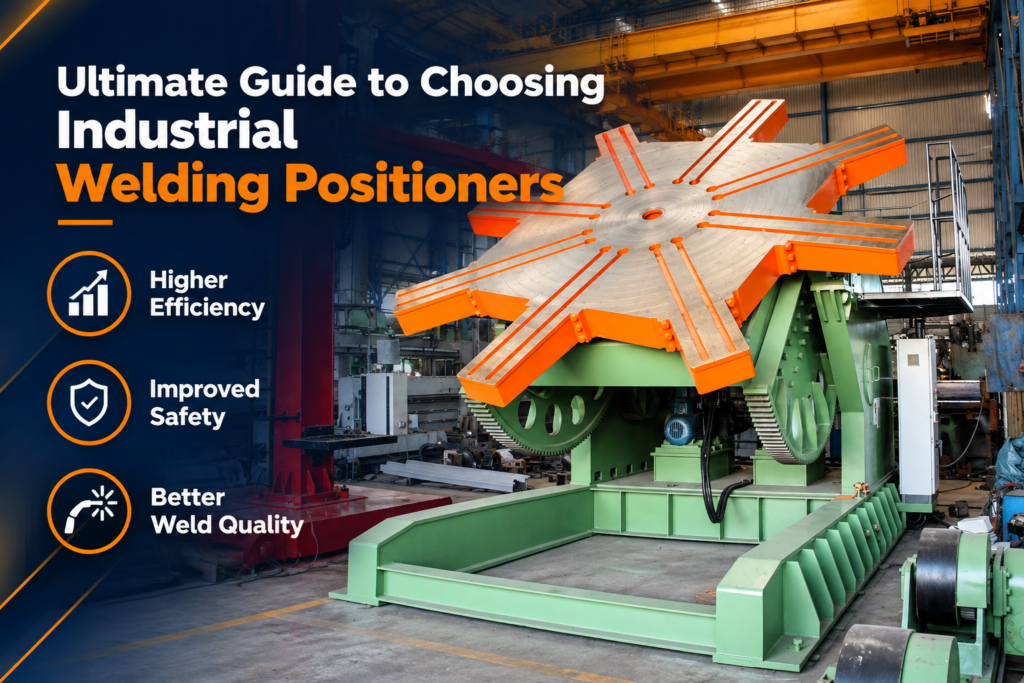
Enhance Welding Efficiency with an: 80 Ton Welding Positioner

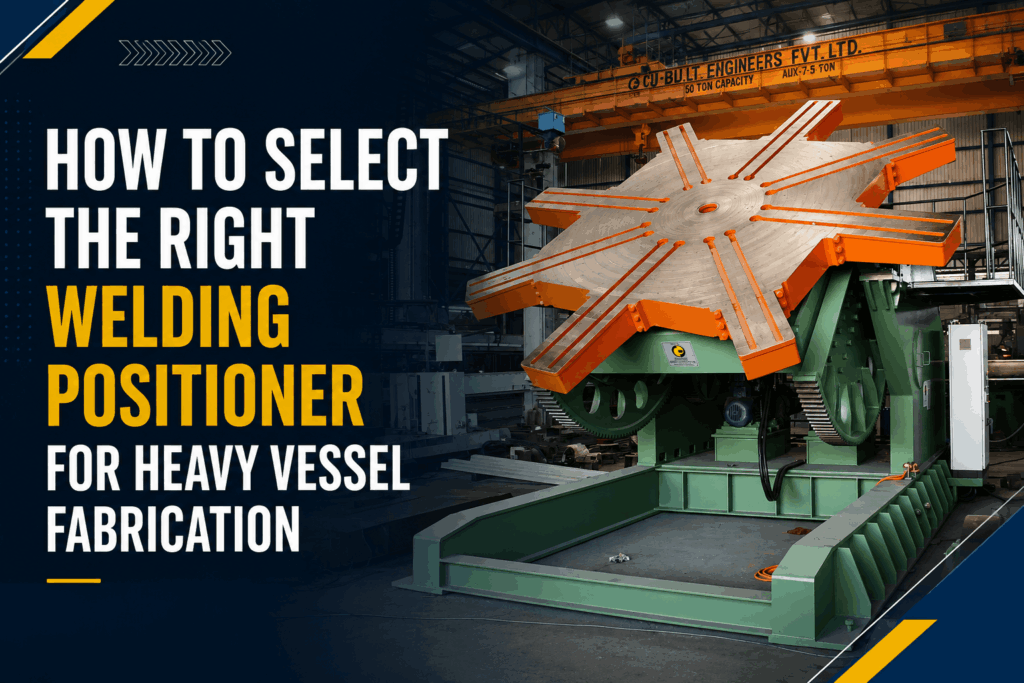
For high-capacity welding operations, an 80 Ton Welding Positioner is a vital tool to ensure precision, safety, and increased productivity. Designed for heavy-duty applications, this welding positioner supports large and bulky workpieces, allowing welders to rotate, tilt, and position them with ease. Whether in industrial manufacturing or custom fabrication, the 80 Ton Welding Positioner delivers superior performance for projects requiring significant strength and accuracy. Why Choose an 80 Ton Welding Positioner? The 80 Ton Welding Positioner is engineered to handle large components like pressure vessels, tanks, or heavy structural pieces. With its powerful load-bearing capacity, it simplifies workpiece handling, reducing the need for manual lifting and repositioning. This leads to faster turnarounds and minimizes the risk of accidents from improper handling. A major advantage of using an 80-ton positioner is its ability to provide precise rotation and tilting, which allows welders to reach every angle of the workpiece. This enhances welding quality, making it ideal for tasks like pipe welding, tank fabrication, or steel structure assembly. The system’s variable speed control allows welders to adjust the rotation to suit different materials and welding techniques, improving the overall process. Boosting Efficiency and Safety Incorporating an 80 Ton Welding Positioner into a fabrication line contributes to higher welding automation. By automating the rotation and positioning of the workpiece, welders can focus on their craft without the need for constant adjustments. This not only speeds up the overall welding process but also ensures more consistent and higher-quality welds. Furthermore, the positioner’s ability to rotate and tilt large workpieces means operators experience less physical strain. This ergonomic improvement reduces the risk of injury and boosts worker safety. The system is especially beneficial in environments where large-scale manufacturing takes place, such as shipbuilding, aerospace, and industrial equipment production. Conclusion An industrial welding positioner is a game-changer for any heavy-duty fabrication facility. By streamlining workpiece handling, improving precision, and enhancing safety, this welding positioner makes large-scale welding projects more efficient. Whether you’re working with pressure vessels, wind towers, or steel structures, the seamless handling and superior weld quality every time.

3 Axis Welding Manipulator
Uncategorized

Boost Welding Precision with a: 3-Axis Manipulator

In advanced welding operations, achieving precision and efficiency is essential. A 3-Axis Welding Manipulator enhances workpiece positioning and welding accuracy. It provides full control over tilt, rotation, and positioning, ensuring welders can access all angles for perfect welds. What is a 3-Axis Welding Manipulator?  Allows workpieces to move in three directions: horizontally, vertically, and rotationally. This equipment is ideal for precise manipulation of large components such as pipes, tanks, and structural elements. It enables welders to work on all sides of a piece, improving welding quality and consistency. The manipulator is suitable for both manual and automated welding processes. It enhances workflow, leading to faster production and more accurate results. Advantages of Using a 3-Axis Welding Manipulator Here are several benefits of integrating this manipulator into your workflow: Increased Efficiency: It allows for quick, easy positioning of workpieces, reducing downtime and speeding up the welding process. Enhanced Precision: With control over tilt, rotation, and positioning, the manipulator ensures that welding is done with high accuracy. This is particularly beneficial in industries like shipbuilding, aerospace, and energy equipment manufacturing. Improved Ergonomics: The 3-axis functionality reduces physical strain on operators, eliminating the need for manual lifting or rotating of heavy workpieces. Versatility: Whether for pipe welding, tank fabrication, or steel structure assembly, the manipulator can be adapted to various types of projects. Conclusion A welding positioner with 3-axis movement is a valuable tool for improving welding efficiency, precision, and safety. Whether you’re handling pipes, tanks, or steel structures, it ensures better control for high-quality welds. By incorporating this equipment into your welding process, you can enhance productivity and ensure exceptional results.

Scroll to Top