In the modern manufacturing landscape, the pressure to increase throughput, maintain impeccable weld quality, and mitigate skilled labor shortages is at an all-time high. To stay competitive, forward-thinking fabrication facilities are moving away from piecemeal equipment upgrades. Instead, they are turning toward comprehensive turnkey welding automation solutions to revolutionize their shop floors.
However, the term “turnkey” is frequently thrown around in the industrial sector, often leading to confusion. Many manufacturers purchase what they assume is a complete system, only to realize later that they must source their own fixtures, program the logic controllers, or handle complex system integration independently.
A true turnkey solution is fundamentally different. It is a hassle-free, fully integrated approach where a single, specialized partner manages the entire lifecycle of a project—taking it seamlessly from initial concepts to a fully functional machine ready for production.
In this comprehensive guide, we will unpack exactly what a comprehensive turnkey welding automation solutions package includes, from the initial design phase to final delivery on your shop floor.
What Does Turnkey Welding Automation Actually Mean?
At its core, turnkey welding automation solutions mean that you partner with an expert vendor who takes full accountability for the project. You provide the problem, the part drawings, and your production goals; the vendor provides a ready-to-run system.
When you invest in custom welding automation systems, you are not just buying a robotic arm or a welding power source. You are investing in a tailored engineering ecosystem designed to seamlessly fit into your current manufacturing workflow. This end-to-end responsibility eliminates the risk of component incompatibility, reduces deployment timelines, and ensures a much faster return on investment (ROI).
Phase 1: Conceptualization and Custom Engineering Design
The journey of building high-performance custom welding automation systems begins long before any metal is cut or any components are ordered. It starts with deep engineering collaboration and analysis.
Comprehensive Part and Process Review
An experienced automation partner will thoroughly analyze your current parts, materials, joint geometries, and cycle time targets. They assess whether your parts are optimized for automation or if subtle design adjustments could drastically improve weld access and consistency.
Advanced 3D CAD Modeling and Digital Simulation
Using cutting-edge software, engineers develop detailed 3D models of the entire automated work cell. This includes the integration of a specialized SPM welding machine (Special Purpose Machine), pneumatic or hydraulic fixtures, safety enclosures, and robotic positioners.
Digital simulation tools are then used to program and run the cell virtually. This critical step identifies potential torch collisions, verifies robot reachability, and calculates precise cycle times before physical manufacturing begins. This phase forms the backbone of highly reliable design to delivery manufacturing.
Phase 2: Complete Manufacturing and Assembly
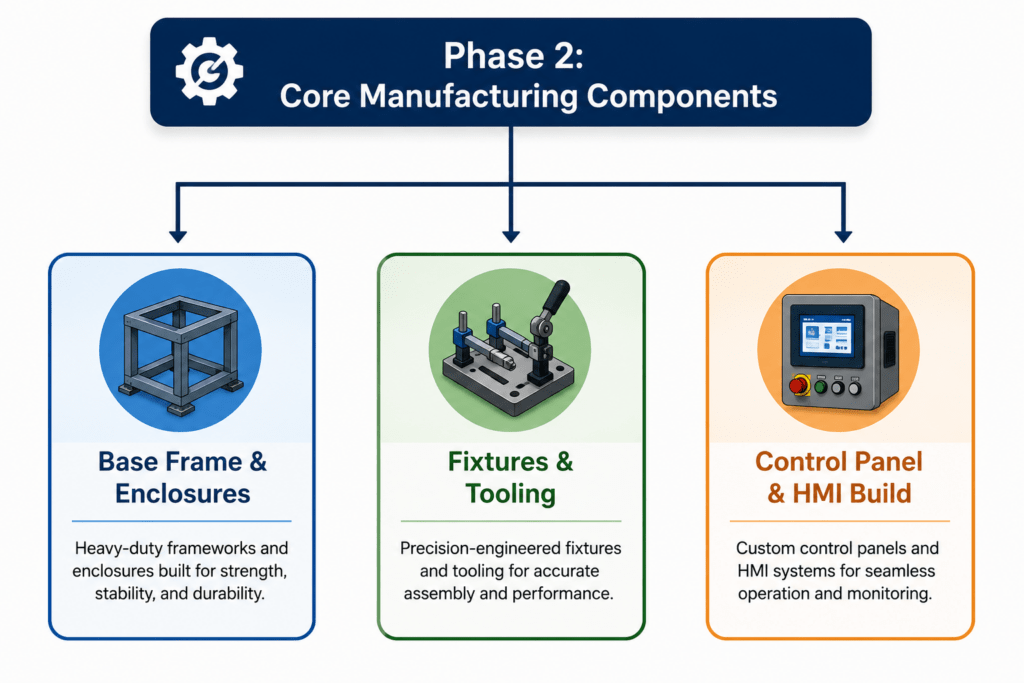
Once the digital design is finalized and approved, the physical phase of the project begins. This stage requires a highly capable welding automation manufacturer India to execute precise fabrication and assembly.
Advanced Component Sourcing and System Integration
A complete turnkey system integrates several highly sophisticated sub-systems into a unified machine:
- The Welding Power Source: Sourced from global leaders (such as Fronius, Lincoln Electric, or Miller) to ensure precise arc control.
- The Motion System: Utilizing precise CNC gantries, linear tracks, or multi-axis articulated robots.
- Sensors and Tracking: Integrating laser vision tracking or touch-sensing systems to dynamically compensate for part variations.
In-House Fabrication of Custom Tooling and Fixtures
The success of automated welding relies heavily on the fixtures holding the parts. True turnkey providers design and manufacture heavy-duty, pneumatic, or hydraulic clamping fixtures in-house. These custom-engineered fixtures ensure parts are held with repeatable precision, preventing thermal distortion during high-heat welding cycles.
Phase 3: Control Systems and Software Integration
Hardware without intelligent software is just an expensive collection of metal and motors. The control system is the brain of your automated cell, turning complex individual movements into a safe, repeatable, and efficient manufacturing process.
Industrial Automation Design and Installation of Controls
This critical phase involves building the central electrical control panels and integrating high-performance Programmable Logic Controllers (PLCs) alongside intuitive Human-Machine Interfaces (HMIs). The entire system is engineered according to strict global safety standards, utilizing dual-channel safety relays, light curtains, interlocked access doors, and dedicated E-stop circuits.
Custom HMI Programming for Simplified Operation
A well-designed turnkey system features a custom-programmed HMI that simplifies complex automated welding into an intuitive, user-friendly interface. Operators can easily select part recipes, monitor real-time welding parameters (voltage, wire feed speed, travel speed), view diagnostic logs, and track overall equipment effectiveness (OEE) metrics without needing extensive programming knowledge.
Phase 4: Factory Acceptance Testing (FAT)
A true turnkey solution is never shipped to your facility in pieces with the hope that it works. Before any equipment leaves the factory floor, it undergoes rigorous testing.
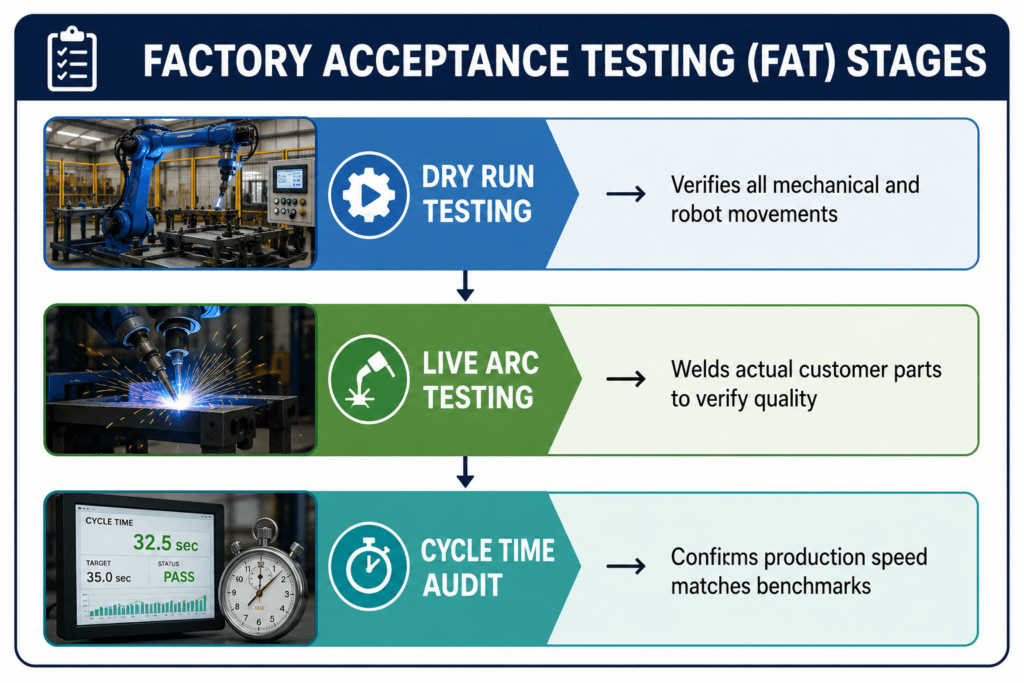
During the Factory Acceptance Testing (FAT) phase, the entire automated cell is fully assembled and powered up at the manufacturer’s facility. Your team is invited to witness the system running a live production simulation using your actual sample parts.
The machine must successfully run multiple consecutive cycles, proving its structural reliability, cycle time compliance, and weld quality before it receives approval for shipment. This rigorous approach is a hallmark of world-class engineering and fabrication services.
Phase 5: Seamless Logistics, Installation, and Commissioning
Shipping massive, highly sensitive automation machinery requires specialized logistics and precision handling. The turnkey provider manages this entire process, ensuring a smooth transition to your facility.
Safe Transport and Physical Installation
The system is carefully disassembled into manageable shipping modules, safely crated, and shipped to your production facility. Upon arrival, the manufacturer’s field service team unloads, positions, levels, and mechanically reassembles the system on your shop floor.
Site Acceptance Testing (SAT) and Final Tuning
Once the system is physically installed and connected to your facility’s power, compressed air, and shielding gas supplies, engineers conduct Site Acceptance Testing (SAT). They recalibrate the system to account for any minor environmental variations and run production parts on your shop floor to ensure the system performs exactly as it did during factory testing.
Phase 6: Operational Training and Long-Term Support
The final, and arguably most important, element of a true turnkey package is empowering your workforce to operate, maintain, and troubleshoot the new system effectively.
Comprehensive Operator and Maintenance Training
A premier automation vendor provides intensive, hands-on training for your team. This covers:
- Operators: Safe machine operation, loading/unloading parts, and HMI recipe selection.
- Maintenance Technicians: Preventive maintenance schedules, sensor calibration, torch consumables replacement, and electrical troubleshooting.
Long-Term After-Sales Support Automation
Automation is a long-term investment. Reliable vendors provide ongoing after-sales support automation programs, including remote digital troubleshooting, priority spare parts availability, scheduled preventative maintenance audits, and software updates to ensure your system continues operating at peak efficiency for years to come.
Why Choose CuBuilt for Your Turnkey Welding Automation?
When investing in end-to-end fabrication solutions, partnering with an experienced and capable manufacturer is critical to your project’s success.
CuBuilt stands out as a leading welding automation manufacturer India, delivering highly robust, reliable, and innovative custom industrial systems across diverse manufacturing sectors. With deep expertise across heavy engineering, automotive, defense, and infrastructure industries, CuBuilt combines state-of-the-art engineering and fabrication services under one roof.
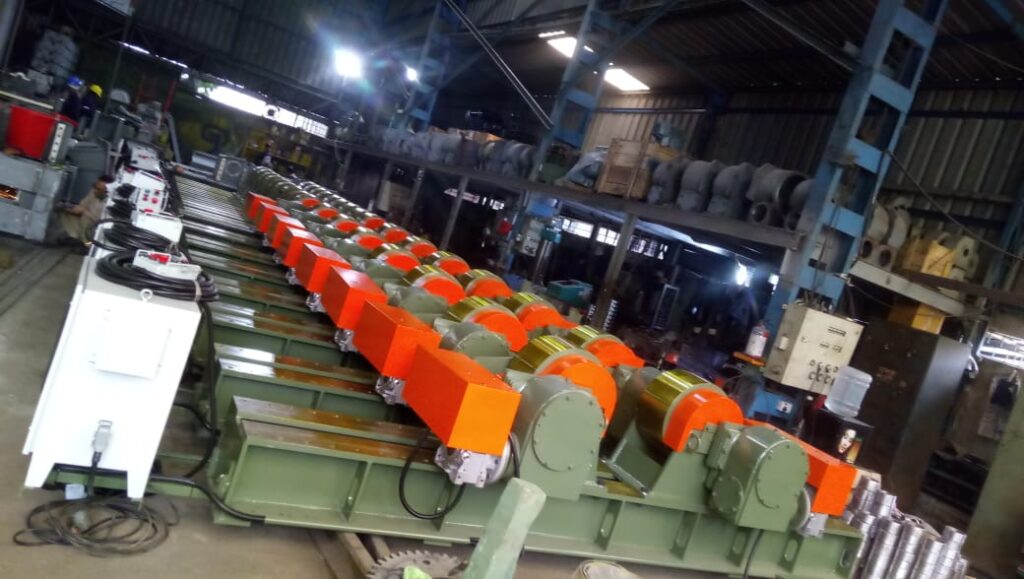
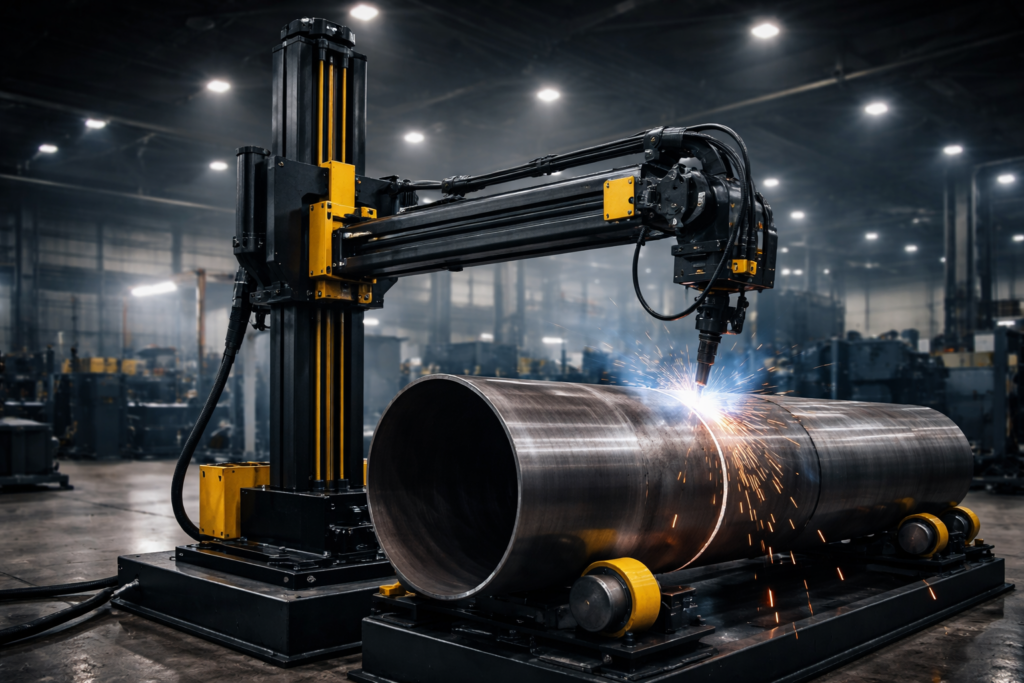
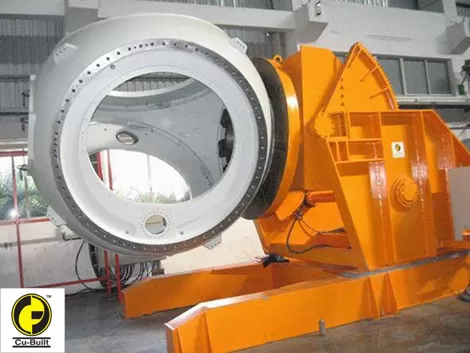
From specialized column and boom manipulators and heavy-duty welding positioners to highly customized SPM welding machine systems, CuBuilt manages every single detail of your project from initial design to final delivery on your shop floor. Our dedicated team eliminates multi-vendor coordination headaches, ensuring that your automated system arrives fully optimized, on time, and completely ready to boost your bottom line.
Transform Your Production Floor Today
Ready to eliminate production bottlenecks, reduce labor dependencies, and significantly elevate your welding quality? Don’t leave your automation journey to chance or split your project across multiple uncoordinated vendors. Partner with the industry experts who deliver true, hassle-free excellence from concept to reality.
Contact the Engineering Experts at CuBuilt today to schedule a detailed assessment of your production line and request a custom quote for a tailored turnkey welding solution!
Frequently Asked Questions (FAQs)
1. What is the difference between a standard welding machine and a turnkey welding automation solution?
A standard welding machine or robotic arm is simply an isolated piece of hardware that requires you to handle your own system integration, safety guarding, fixture design, and PLC programming. Conversely, true turnkey welding automation solutions provide a complete, integrated, and fully functional ecosystem. This includes custom-engineered fixtures, safety enclosures, advanced control panels, and pre-programmed software, all optimized to run your specific parts right out of the box.
2. Can a turnkey system handle multiple types of parts, or is it limited to one design?
Modern custom welding automation systems are designed with exceptional flexibility. While highly specialized machines focus on a specific part family, most systems leverage flexible, quick-change tooling fixtures and custom HMI recipe management. This allows operators to change fixtures and load a new welding program via the touchscreen interface in just a few minutes, enabling the cell to handle multiple product variants efficiently.
3. How does turnkey automation improve workplace safety?
Safety is an absolute priority in industrial automation design and installation. Turnkey systems are built with fully enclosed, interlocked safety perimeters. They feature advanced light curtains, safety mats, and integrated fume extraction hoods. These safety measures isolate human operators from hazardous welding arcs, sparks, intense heat, and toxic welding fumes, drastically reducing workplace injuries and ensuring compliance with stringent safety standards.
4. What kind of ROI can I expect from a turnkey automated welding system?
While the initial investment in automated systems is higher than purchasing standalone equipment, the return on investment is rapid. Most manufacturing facilities achieve full ROI within 12 to 24 months. This rapid payback is driven by significant increases in production throughput, a drastic reduction in weld defects and rework, minimized scrap material costs, and reduced dependence on hard-to-source certified manual welders.