In the heavy fabrication industry, maximizing productivity while maintaining flawless weld quality is a continuous challenge. Whether you are fabricating massive pressure vessels, wind tower sections, or small-bore process pipes, the way you support and turn your workpieces fundamentally dictates your operational throughput. This brings engineering managers and procurement heads to a critical fork in the road: self-aligning vs conventional welding rotators—which setup is truly optimal for your production floor?
Investing in automated turning rolls is not merely about spinning a steel cylinder; it is an economic and structural decision. Selecting the wrong equipment configuration leads to excessive setup delays, uneven weld profiles, or structural deformation of expensive workpieces. Conversely, choosing the ideal system dramatically cuts cycle times, limits operator fatigue, and delivers a rapid return on investment.
This comprehensive guide breaks down the structural differences, operational mechanics, financial implications, and application suitability of both systems. Read on to determine which machine configuration will elevate your shop floor efficiency to the next level.
What Are Welding Rotators and Why Are They Essential?
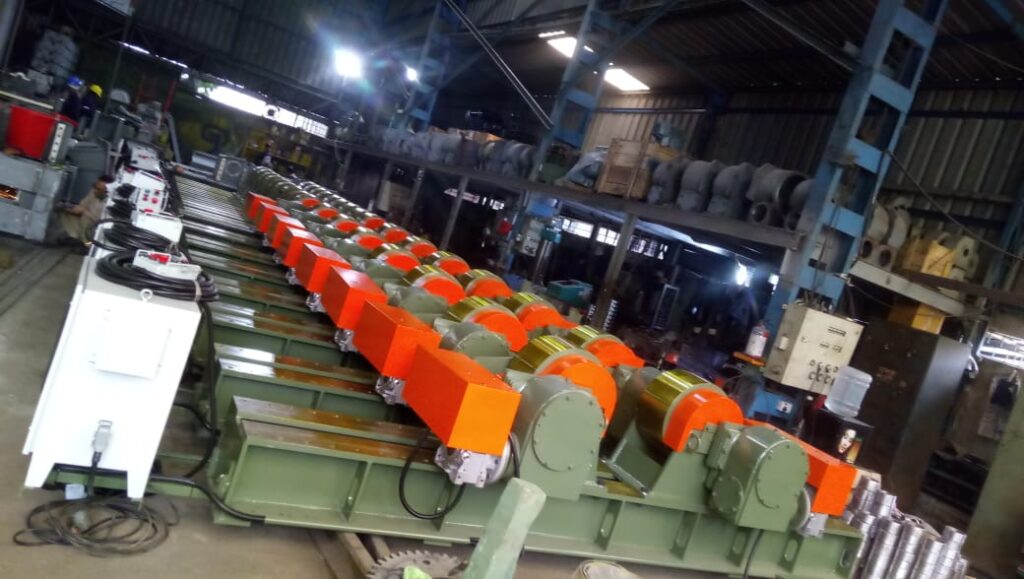
Before diving into the detailed comparison of self-aligning vs conventional welding rotators, it is crucial to understand the foundational role these industrial systems play. Industrial welding rotators, often called turning rolls, are specialized mechanical assemblies designed to rotate cylindrical workpieces. By spinning the job at a stable, controlled velocity, these systems allow the welding torch to remain completely stationary. This presentation consistently places the joint in the ideal downhand (flat) position.
When you eliminate the need to constantly reposition a workpiece manually using overhead workshop cranes, your fabrication workflow becomes remarkably streamlined. Automated rotation minimizes crane dependency, dramatically decreases idle time between passes, and ensures deep, uniform weld penetration. This process remains vital for critical applications across sectors like oil and gas, green energy, and petrochemical processing.
A standard industrial turning roll package operates using a dual-component architecture:
- The Drive Unit: Equipped with an electric motor and heavy-duty gearboxes, this unit supplies the required torque to overcome friction and turn the heavy cylinder.
- The Idler Unit: A non-motorized, passive support assembly that mirrors the drive unit’s placement to sustain the weight of the workpiece over its length.
Understanding Conventional Welding Rotators
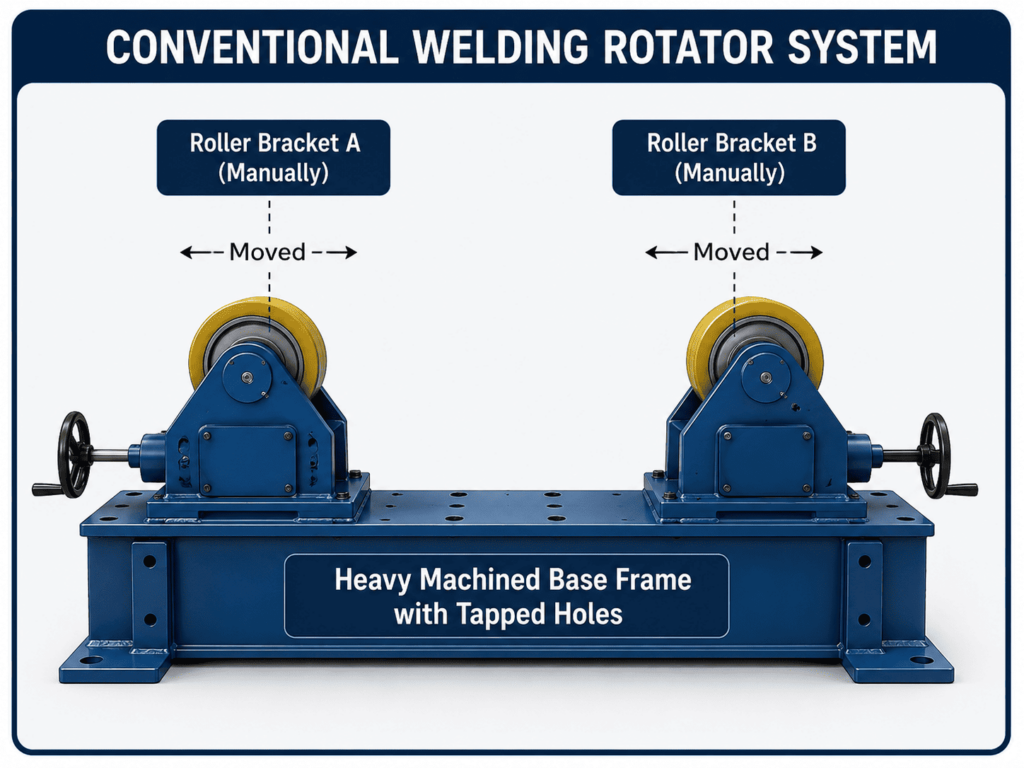
To understand the core differences between a self-aligning vs conventional welding rotators framework, we must first analyze the engineering behind the conventional design. A conventional welding rotator consists of fixed roller brackets bolted securely onto a rigid, machined base frame.
Mechanical Design and Adjustment Process
In a conventional setup, the roller brackets do not adapt on their own. When a new job arrives with a different outer diameter, operators must manually unbolt the roller brackets, slide or lift them to matching positions on the base frame, and bolt them back down. To facilitate this, manufacturers like Cu-Built Engineers provide precision-machined base frames with a series of pre-spaced tapped holes or dedicated slots. The operator must reference a spacing chart to guarantee that the vessel’s centerline remains balanced and centered.
Load Management and Contact Points
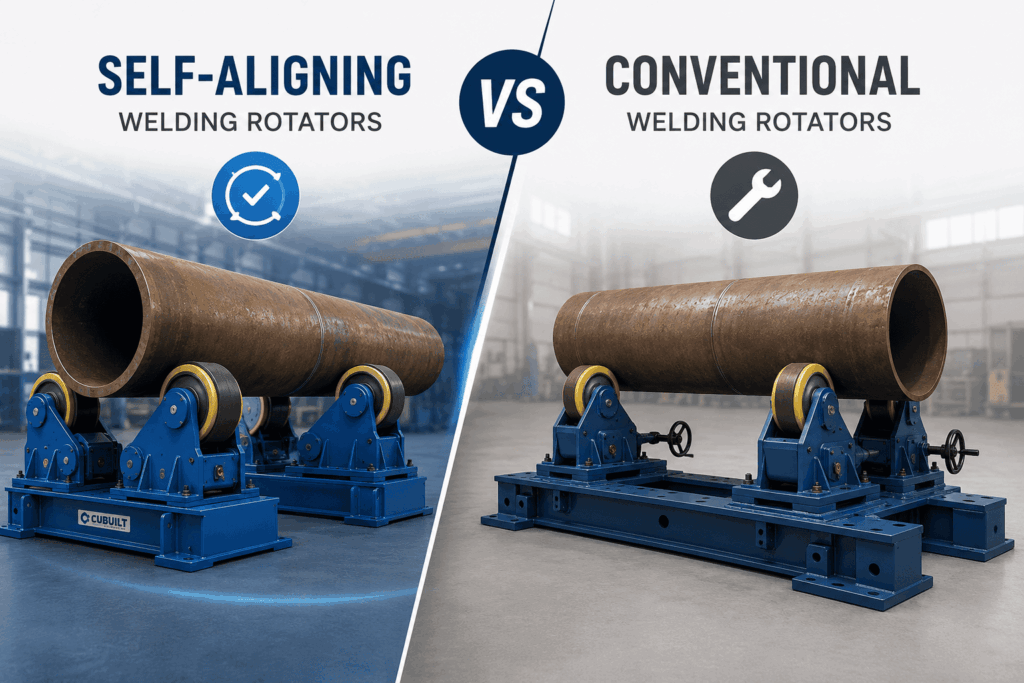
A conventional system provides exactly two contact points per unit (two on the drive unit and two on the idler unit). Because the contact arc is narrower, the entire load of that specific section rests on these distinct points. This configuration works exceptionally well for thick-walled, heavy structures that possess the inherent stiffness to resist point-loading stress. However, if a thin-walled vessel is loaded onto a two-point conventional configuration, the concentrated forces can cause local buckling or cross-sectional ovality.
Understanding Self-Aligning Welding Rotators
The self-aligning welding rotator represents a major technological evolution designed to address the time-consuming manual setup steps required by conventional models.
The Automatic Alignment Mechanism
The defining characteristic of a self-aligning turning roll system is its hinged, self-adjusting roller assembly. Instead of fixed brackets bolted to a base frame, the roller housings are pinned to independent, pivoting rocker arms. When a crane lowers a cylindrical vessel onto the unit, the weight of the incoming job automatically forces the hinged arms to swing outward or inward.
This mechanical design allows the rotator to dynamically self-accommodate a wide range of workpiece diameters instantly without any manual tool usage, structural adjustments, or operational downtime.
Centerline Stability in Advanced Systems
A persistent engineering concern with basic turning rolls is “centerline drop”—where a change in workpiece diameter alters the elevation of the cylinder’s central axis. Advanced self-aligning rotators engineered by specialists like Cu-Built Engineers utilize a geometrically constrained pivot axis.
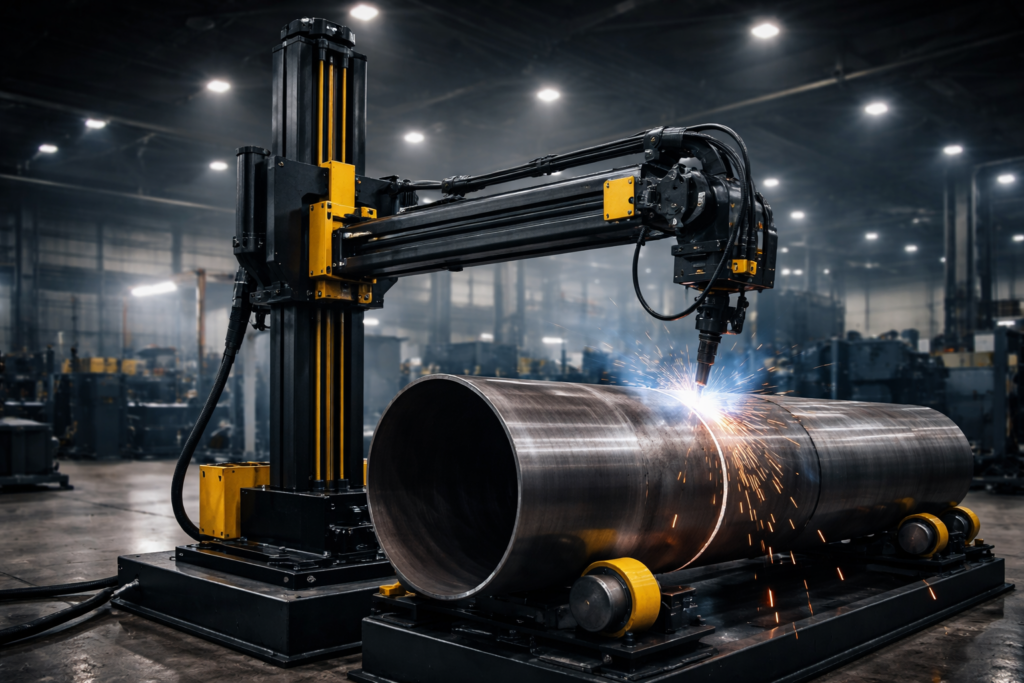
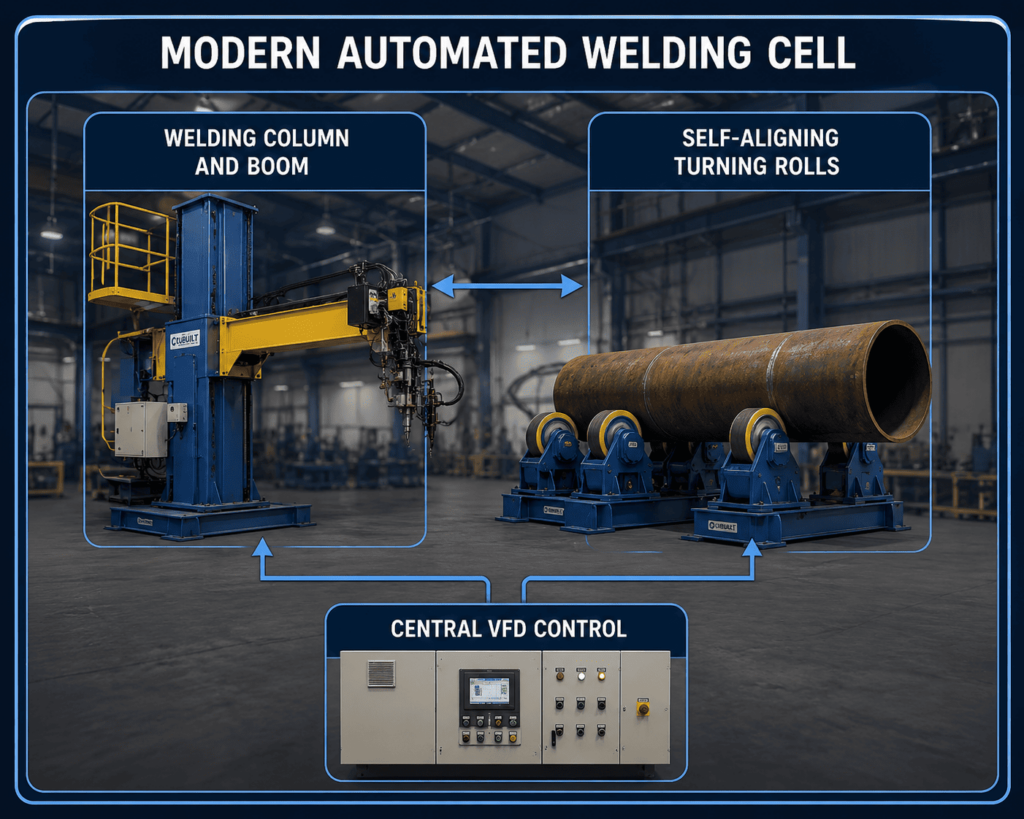
This geometric constraint ensures that as the roller arms pivot open to cradle a larger vessel, the exact midpoint between the rollers moves down proportionally. As a result, the global centerline height of your job remains perfectly stable. This stability implies that a welding column and boom setup, or an automated orbital welding head, requires zero vertical axis recalibration when shifting from a small shell segment to a massive vessel section.
The Power of Four Contact Points
Unlike conventional variants, a single self-aligning unit features four distinct contact points (two rollers per pivoting bracket assembly). By doubling the contact points across the drive and idler assemblies, the system distributes the structural load over a much larger surface arc.
This superior distribution drastically reduces localized radial forces, rendering self-aligning turning rolls the undisputed choice for protecting delicate, thin-walled shells from permanent deformation.
Head-to-Head Comparison: Self-Aligning vs Conventional Welding Rotators
To help your procurement and engineering teams make an informed choice, let’s compare the technical parameters, structural dynamics, and financial implications of self-aligning vs conventional welding rotators.
| Technical Metric / Feature | Conventional Welding Rotators | Self-Aligning Welding Rotators |
| Diameter Adjustment | Manual intervention required (unbolting, shifting, re-bolting). | 100% automatic configuration driven by the workpiece’s weight. |
| Setup Time Requirements | Moderate to High (15 to 45 minutes per diameter swap). | Zero downtime (Instantaneous alignment upon loading). |
| Contact Points per Unit | 2 Points (Higher concentrated localized load). | 4 Points (Evenly distributed radial load). |
| Suitability for Thin-Walled Shells | Poor (Risk of localized indentation or ovality). | Excellent (Prevents shell buckling and distortion). |
| Workpiece Centerline Height | Varies unless explicit manual calculations are done. | Stays fixed due to constrained geometric pivot arms. |
| Initial Capital Investment | Lower upfront machine cost. | Higher initial engineering and purchase cost. |
| Mechanical Component Complexity | Low (Fewer moving joints, simpler long-term maintenance). | Moderate (Hinged linkages require regular inspection). |
| Traction Performance | Standard dual-roller friction grip. | Superior slip-free traction due to expanded contact area. |
Core Factors to Consider When Making Your Choice
Choosing between a self-aligning vs conventional welding rotators setup requires analyzing your specific shop metrics, workpiece attributes, and production targets. Consider these core operational vectors:
1. Workpiece Specifications (Diameter & Wall Thickness)
The physical dimensions of your cylindrical components are a primary deciding factor.
- If your shop fabricates standard, heavy-gauge structural pipes or thick-walled boilers that do not easily flex, a conventional rotator provides a rigid, dependable foundation.
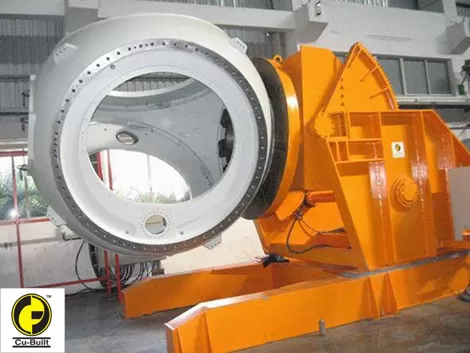
- If your facility processes thin-walled stainless steel tanks, large-diameter wind tower segments, or specialized aluminum vessels, you should choose a self-aligning model. The four-roller configuration prevents localized structural indentation, ensuring your vessel remains perfectly round throughout its rotation cycle.
2. Production Variety and Batch Sizes
Analyze your daily production schedules. Are you running a continuous line of identical cylinders, or does your team tackle highly customized, variable jobs?
- High-Mix, Variable Production: If your vessel diameters change frequently throughout a shift, a conventional unit will cause severe production bottlenecks due to repetitive manual adjustments. A self-aligning turning roll solves this challenge by eliminating setup delays entirely.
- Low-Mix, Monotonous Production: If your workshop processes hundreds of identical LPG bullets or API pipeline segments of the exact same diameter for weeks at a time, the manual setup tooltime becomes a non-issue. In this scenario, a conventional system is highly efficient.
3. Initial Budget vs. Long-Term ROI
While a conventional rotator demands a lower initial capital outlay, you must evaluate the total cost of ownership (TCO). Calculate the labor hours lost to manual adjustments over a 12-month period. If your team modifies a conventional rotator’s spacing twice a day, losing roughly 45 minutes each time, that equals hundreds of non-productive shop hours annually.
A self-aligning system, despite its higher initial cost, frequently pays for itself within months via increased arc-on time, lower labor overhead, and reduced crane usage.
Technical Enhancements for Modern Shop Floors
Modern fabrication settings require more than just basic mechanical steel rollers. To achieve true production efficiency, your turning rolls must incorporate advanced control systems and robust mechanical components.
Advanced VFD Speed Control
Both conventional and self-aligning rotators manufactured by industry leaders utilize sophisticated AC Variable Frequency Drives (VFDs). A high-performance VFD delivers step-less, ultra-smooth speed variation under constant torque conditions. This precise control is vital because even minor velocity fluctuations can cause weld bead variations, leading to costly weld rework or failure during non-destructive testing (NDT).
Selecting the Right Roller Coating
The material coating of your rollers affects both traction and workpiece integrity:
- Polyurethane (PU) Rollers: Polyurethane coatings provide exceptional friction grip, preventing the workpiece from slipping during rotation. Crucially, PU rollers protect delicate surfaces—such as stainless steel or pre-coated shells—from surface marking, scratching, or cross-contamination.
- Solid Steel Rollers: For extreme high-temperature environments, heavy-duty cladding operations, or workpieces weighing over 150-200 tonnes, solid steel rollers provide the raw compression capacity and thermal resistance needed to handle harsh industrial demands.
Partner with Cu-Built Engineers for Superior Welding Automation
Making the right equipment choice requires deep technical expertise. At Cu-Built Engineers Pvt. Ltd., based in the industrial hub of Pune, Maharashtra, we engineer world-class industrial automation systems tailored to your precise production needs. With over 26 years of heavy fabrication experience and an expansive manufacturing infrastructure, we deliver reliable, high-performance equipment to clients worldwide.
Our comprehensive product line includes:
- Advanced Self-Aligning Rotators: Built with robust hinged linkages and zero-setup diameter adjustments, optimized for high-throughput pressure vessel and wind tower production.
- Heavy-Duty Conventional Rotators: Rugged, stress-relieved frames engineered for extreme stability and long-term durability on heavy-duty jobs.
- Custom Pipe Welding Systems: Purpose-built pipe rotators featuring premium PU rollers and precise gear reduction for streamlined spool fabrication.
- Complete Turnkey Automated Cells: Seamlessly integrate your turning rolls with our heavy-duty welding column and boom systems to establish a fully integrated circumferential welding environment.
Don’t let outdated setup routines or component slippage slow down your production line. Our expert engineering team is ready to analyze your shop floor requirements and design the perfect rotator system to maximize your output.
Contact our automation experts today at sales@cubuilt.com or call +91 97300 89705 to request a custom quote!
Frequently Asked Questions (FAQs)
1. Which rotator type is better for thin-walled pressure vessels?
The self-aligning welding rotator is the ideal option for thin-walled vessels. Because it features a four-roller design per unit, it distributes the structural load across a wider surface area. This significantly minimizes localized radial forces, preventing shell buckling, surface indentations, and cross-sectional ovality.
2. Can I use a conventional rotator for workpieces of varying diameters?
Yes, conventional rotators can handle different diameters, but they require manual adjustment. Operators must unbolt the roller brackets, move them to the appropriate pre-drilled holes or slots on the base frame, and bolt them back down. If your shop changes diameters frequently, this manual process can lead to significant cumulative downtime.
3. What is “centerline drop” and how do self-aligning rotators manage it?
Centerline drop occurs when changing a workpiece’s diameter alters the height of its central axis relative to the floor. Premium self-aligning rotators utilize a geometrically constrained pivot arm system. As the rollers expand outward to accept a larger shell, the mechanism automatically compensates so that the central axis of the cylinder remains at a fixed height. This eliminates the need to adjust the height of your stationary welding torch.
4. How long do polyurethane (PU) rollers typically last compared to steel rollers?
High-quality PU rollers offer excellent service life, often lasting several years under standard operational conditions while providing superb traction and protecting workpiece surfaces. However, solid steel rollers are more durable in high-heat applications, heavy cladding tasks, or extreme load conditions exceeding 200 tonnes, as they are immune to surface cuts from sharp weld seams.
5. What are the maintenance requirements for a self-aligning welding rotator?
Because self-aligning units feature additional moving parts, they require a consistent maintenance routine. This includes regular lubrication of the pivot pins and rocker arm hinges, checking gear reduction oil levels, inspecting the polyurethane roller treads for wear, and verifying that the AC VFD control parameters are correctly calibrated for smooth rotation.