The demands of modern industrial manufacturing require precision, speed, and uncompromising safety. When dealing with massive cylindrical workpieces—such as pressure vessels, storage tanks, pipelines, and heavy structural columns—manual manipulation is not only inefficient but highly hazardous. This is where the welding rotator becomes an indispensable asset on the factory floor.
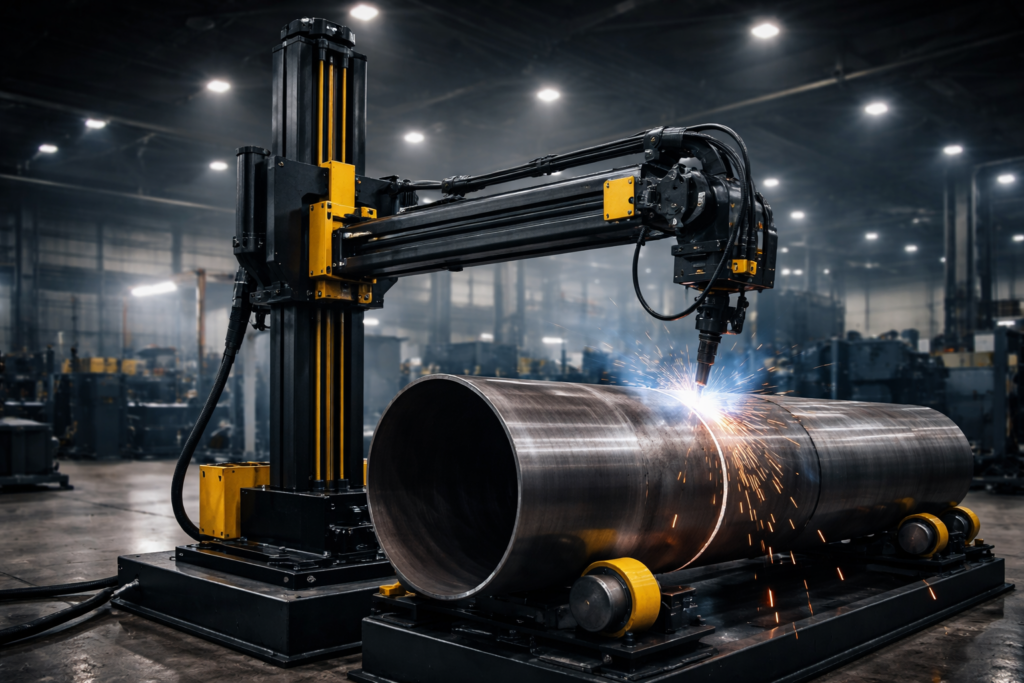
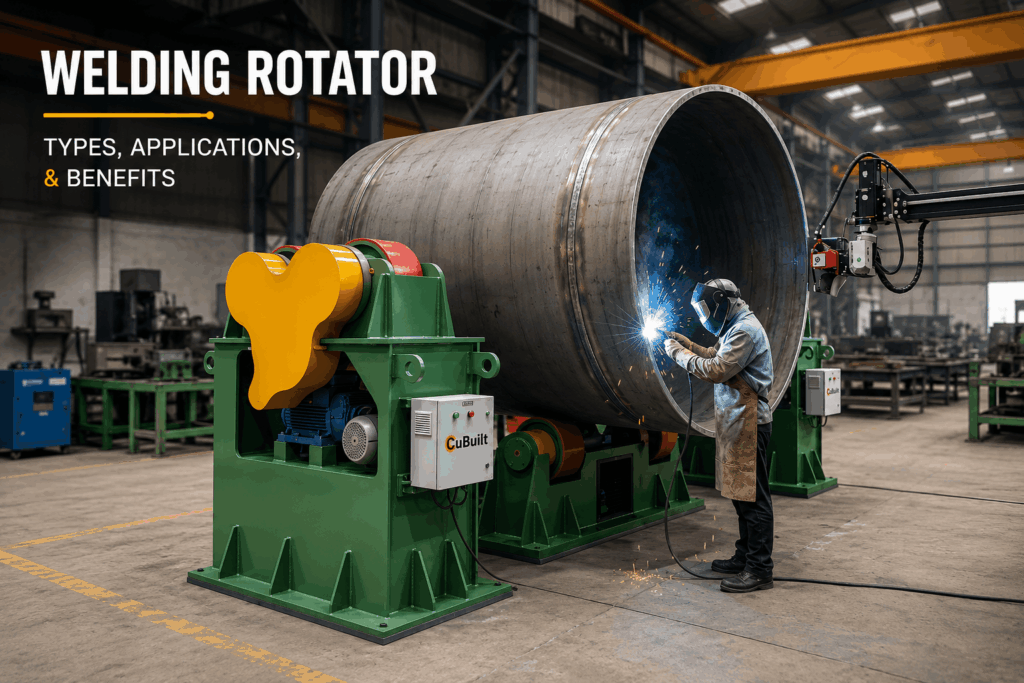
A welding rotator is a specialized piece of heavy-duty engineering equipment designed to rotate cylindrical or conical objects during welding and fabrication processes. By maintaining a constant, controlled speed, these machines allow welding torches (whether manual, semi-automatic, or fully automatic) to remain stationary while the workpiece rotates uniformly. This configuration ensures smooth, deep-penetration welds that meet rigorous quality standards.
Integrating an industrial welding rotator into your production line eliminates the need for cranes, forklifts, and complex rigging systems to turn heavy loads. As structural fabricators face tightening deadlines and stricter compliance standards, choosing the right welding rotator machine is the ultimate key to maximizing throughput, eliminating operational bottlenecks, and protecting skilled technicians.
What is a Welding Rotator?
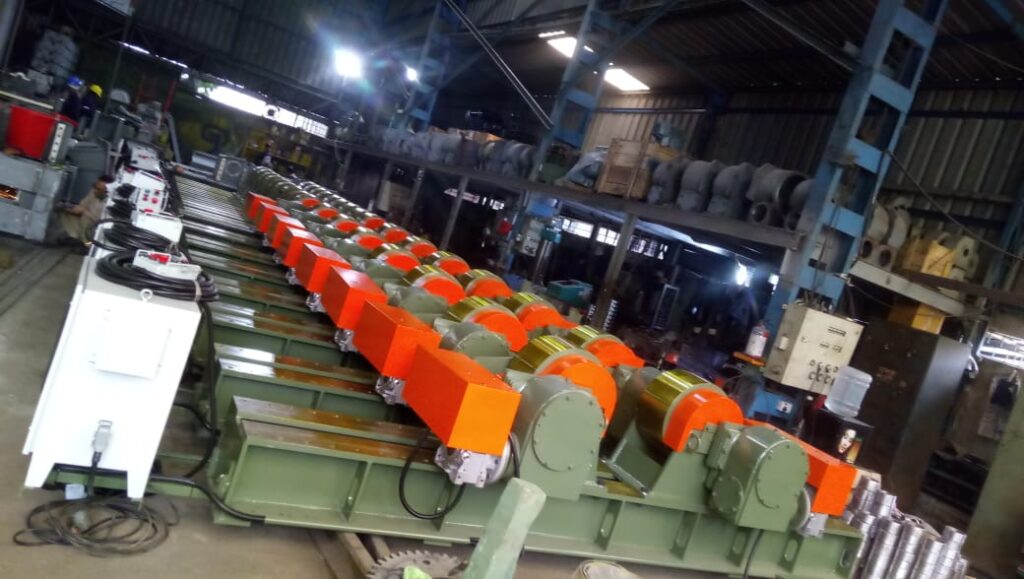
At its core, a welding rotator—often referred to globally as welding turning rolls—consists of a motorized drive unit and one or more idler units. The drive unit houses an electric motor and gearbox that powers heavy-duty wheels (usually coated in polyurethane, rubber, or made entirely of steel) to turn the workpiece. The idler units provide additional structural support along the length of the vessel or pipe.
By providing a stable, motorized rotating platform, this fabrication welding equipment ensures that circumferential seams are welded continuously in the ideal flat downhand position (1G/PA). Welding in the flat position yields superior metallurgical properties, better bead aesthetics, and a significantly lower risk of defects like slag inclusions, porosity, or lack of fusion.
Types of Welding Rotators Used in Manufacturing
Different fabrication projects involve varying diameters, weights, and wall thicknesses. To accommodate these diverse manufacturing demands, a premium welding rotator manufacturer offers several distinct configurations:
1. Conventional Type Welding Rotator
The conventional type welding rotator is engineered with fixed wheel centers that must be manually adjusted to accommodate different workpiece diameters. The operator moves the roller housings along the base frame using bolt slots or lead screw mechanisms.
- Best For: Production runs where workpieces share uniform diameters over long periods.
- Advantage: Extreme structural rigidity and exceptional load-bearing capacity, making it a staple for ultra-heavy fabrication.
2. Self Aligning Welding Rotator
A self aligning welding rotator features independent wheel assemblies that automatically pivot and adjust their orientation to match the exact diameter of the workpiece as it is lowered onto the bed.
- Best For: Workshops handling an array of vessel diameters in rapid succession.
- Advantage: Eliminates manual setup downtime entirely. The automated design distributes the weight evenly across four wheels per unit, preventing localized structural deformation on thin-walled shells.
3. Self Centering Welding Rotator
The self centering welding rotator utilizes a synchronized lead screw or mechanical linkage system to move both roller beds simultaneously toward or away from the center line. This ensures that the exact center axis of the cylindrical workpiece remains constant, regardless of its diameter. This feature is highly advantageous when integrating the rollers with fixed welding columns and booms.
4. Pipe Welding Rotator
Tailored specifically for smaller diameters and rapid cycle times, a pipe welding rotator is optimized for cross-country pipeline construction, refinery piping systems, and mechanical workshop plumbing. These systems typically utilize high-traction polyurethane rollers to prevent scratching or damaging polished surfaces on exotic materials like stainless steel or duplex alloys.
5. Hydraulic Shell to Shell Fit Up Welding Rotator
When aligning two separate cylindrical shells for tack welding, a standard roller is not enough. A hydraulic shell to shell fit up welding rotator incorporates hydraulic cylinders capable of shifting the rollers vertically, horizontally, and independently. This allows operators to perfectly align the joint faces, correct eccentricities, and eliminate “hi-lo” structural mismatches prior to running the main weld passes.
Technical Comparison of Core Turning Roll Configurations
| Feature | Conventional Type Rotator | Self Aligning Rotator | Self Centering Rotator |
| Diameter Adjustment | Manual (Bolts/Lead Screw) | Automatic (Pivoting Rockers) | Synchronized Mechanical |
| Ideal Load Range | Up to 1000+ Tons | Up to 500 Tons | Up to 200 Tons |
| Setup Time | Moderate | Zero | Low |
| Thin-Wall Support | Standard | Excellent (4-point contact) | Good |
| Automation Compatibility | Good | Excellent | Superior (Fixed Centerline) |
Key Benefits of Implementing an Automatic Welding Rotator
Investing in an automatic welding rotator yields substantial financial and operational returns. If your facility is trying to decide how does a welding rotator improve welding efficiency, consider these critical advantages:
1. Unmatched Weld Quality and Defect Reduction
When operators attempt to weld large cylindrical seams manually without a rotator, they must constantly stop to reposition the workpiece. Every stop-and-start introduces a high vulnerability point for defects like lack of penetration or porosity. A motorized roller ensures continuous, uninterrupted rotation, enabling consistent arc voltage and travel speed.
2. Exponential Productivity Gains
By eliminating the reliance on overhead factory cranes to turn vessels step-by-step, non-productive handling time is reduced by up to 70%. Welders can keep their torches lit for longer durations, greatly increasing arc-on time and overall deposition rates.
3. Enhanced Workplace Safety
Suspended heavy loads are one of the most prominent safety hazards in structural fabrication shops. Utilizing a low-profile, floor-mounted heavy duty welding rotator keeps massive steel vessels securely cradled at ground level, minimizing crane lifts and mitigating the risk of catastrophic catastrophic workplace accidents.
4. Reduced Fatigue for Professional Welders
Working over overhead zones or maintaining awkward bodily positions for hours causes rapid welder fatigue, which degrades weld quality over a shift. Rotators place the weld joint directly in front of the worker at an ergonomic height, allowing them to focus strictly on puddle control.
Industrial Applications Across Sectors
From minor industrial piping networks to massive aerospace assemblies, high-capacity turning rolls are utilized across a vast spectrum of critical industrial landscapes:
- Pressure Vessels & Boilers: Fabricating nuclear, chemical, and utility boilers according to strict ASME Section VIII guidelines requires flawless, multi-pass circumferential welds that only automated rollers can facilitate.
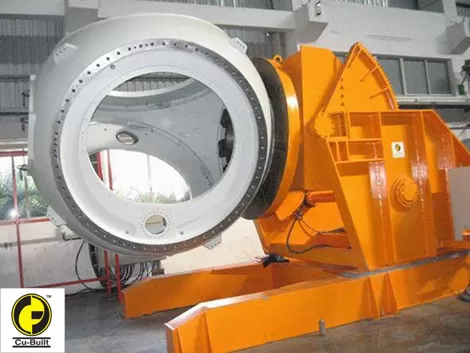
- Wind Tower Manufacturing: Wind turbine structural steel towers require specialized, extra-heavy industrial welding rotator setups capable of handling expanding conical diameters safely.
- Shipbuilding & Marine Engineering: Submarine hulls, ship masts, structural pillars, and offshore drilling rig legs rely on heavy-duty turning rolls for precision joining.
- Oil, Gas, & Petrochemical Pipelines: Long transmission pipelines utilize mobile line travel rotators and stationary pipe rollers to accelerate field joint completion.
Selecting the Best Welding Rotator for Heavy Fabrication Industries
Choosing the correct equipment requires evaluating more than just the gross weight of your heaviest workpiece. To source the best welding rotator for heavy fabrication industries, your engineering team must analyze the following parameters:
- Maximum Load Capacity: Ensure the rated capacity of the drive unit and idler unit combined safely exceeds the maximum total weight of your heaviest vessel, including internal fittings or flux beds.
- Diameter Range Capabilities: Verify that the minimum and maximum workpiece diameters fall comfortably within the mechanical limits of the roller wheel adjustments.
- Surface Material Composition: Polyurethane rollers provide excellent traction and protect non-ferrous metals from carbon contamination. However, for ultra-high-temperature applications or extreme weights exceeding 150 tons, solid steel wheels are typically required.
- Drive Synchronization: Look for manufacturers utilizing dual-motor synchronization drives with variable frequency drives (VFDs) to ensure smooth, jerk-free rotation without slipping.
Elevate Your Production with CuBuilt’s Engineering Solutions
At CuBuilt Engineers, we specialize in designing and manufacturing top-tier industrial automation systems that tackle your toughest fabrication challenges. As a globally recognized welding rotator manufacturer, our equipment is built to withstand rugged foundry and shop floor conditions while delivering pinpoint accuracy.
Whether your facility requires a standardized pipe welding rotator or a custom-engineered heavy duty welding rotator system integrated with advanced columns and booms, CuBuilt delivers unmatched durability and technology.
Don’t let outdated material-handling processes bottleneck your workshop’s daily output. Our dedicated engineering team is ready to analyze your manufacturing workflows and configure the perfect system to optimize your operational throughput.
Contact the CuBuilt Automation Experts Today to Request a Custom Quote!
Frequently Asked Questions (FAQ)
Q1: What is the main difference between a drive roll and an idler roll?
The drive roll is equipped with an electric motor, gearbox, and control system that actively rotates the workpiece via surface friction. The idler roll has no power; it features free-spinning wheels designed solely to support the weight of elongated workpieces along their linear axis.
Q2: How do polyurethane wheels compare to solid steel wheels on turning rolls?
Polyurethane wheels offer superior friction grip, prevent workpiece slippage, and protect sensitive surfaces (like stainless steel or aluminum) from marring or carbon contamination. Steel wheels are reserved for heavy-duty applications (typically over 150-200 tons) or high-temperature environments where polyurethane could melt.
Q3: Can a self-aligning welding rotator handle asymmetrical loads?
While a self aligning welding rotator can accommodate minor irregularities, severely asymmetrical or eccentric loads can cause uneven loading on the roller assemblies. For highly unbalanced workpieces, counterweights or specialized conventional rotators with locking mechanisms may be necessary to prevent overloading individual wheels.
Q4: How does integrating a VFD improve rotator performance?
A Variable Frequency Drive (VFD) allows for precise, stepless control over the rotation speed. This allows operators to seamlessly synchronize the travel speed of the workpiece rotation with the wire feed speed and deposition rate of automatic welding heads.
Q5: What routine maintenance does an industrial welding rotator require?
Standard maintenance involves regular lubrication of the drive gearboxes, inspecting wheel surfaces for wear or embedded metal debris, checking electrical connections, and ensuring the base frames remain perfectly leveled on the workshop floor to avoid tracking issues. For detailed maintenance guides, check the latest technical standards from organizations like the American Welding Society (AWS).