India’s energy landscape is undergoing a massive paradigm shift. As the nation races to meet its aggressive climate commitments, clean energy is moving from the margins directly into the mainstream. At the absolute heart of this green transition stands the wind energy sector, an industry tasking engineers and fabricators with building unprecedented structural capacities. While the soaring, elegant sweeps of wind turbine blades capture the public’s imagination, the true marvel of engineering lies beneath them: the colossal, heavy steel towers that hold these behemoths steady against unforgiving elements.
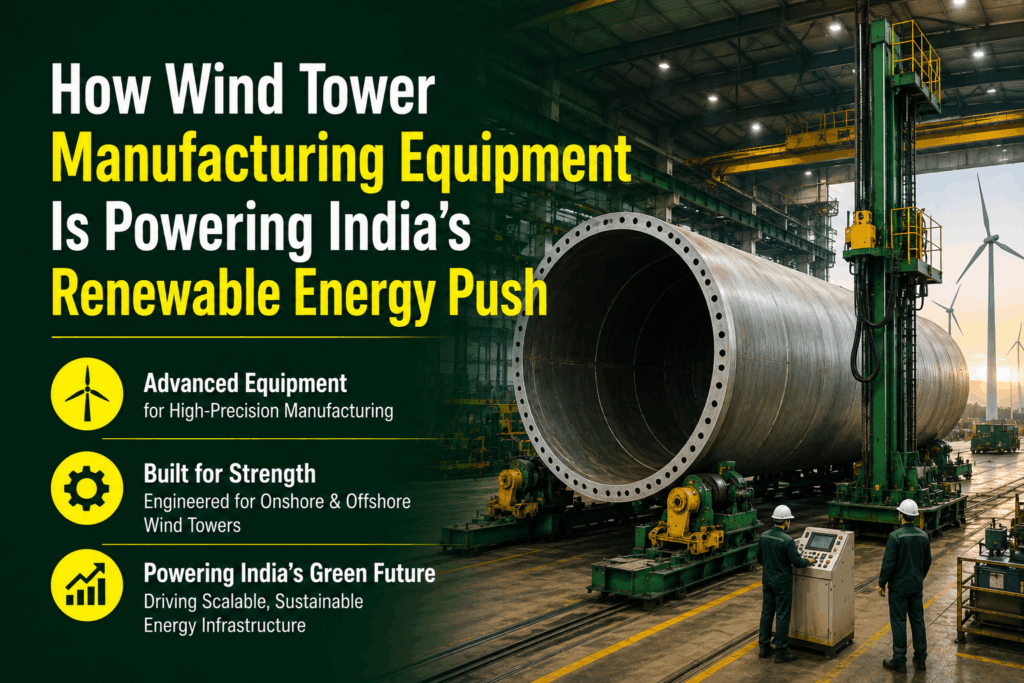
The production of these giant support structures requires specialized engineering systems. High-precision wind tower manufacturing equipment is driving India’s renewable energy push by transforming massive steel plates into structurally sound, highly reliable utility assets. Without these automated, high-capacity machinery setups, scaling up the nation’s clean power grid would be virtually impossible.
The Scale of India’s Green Ambitions and the Need for Robust Wind Energy Infrastructure
India has established a global benchmark by targeting a massive expansion of its green power grid, aiming for a significant share of non-fossil fuel capacity over the coming decades. Achieving these targets requires a dramatic acceleration in both terrestrial and marine installations. Consequently, the reliance on high-capacity wind energy infrastructure has never been more pronounced.
To harvest stronger, more consistent winds, modern turbines are scaling to towering heights. The structural stress applied to these systems is immense, requiring support structures that can bear hundreds of tons of dynamic weight. Building towers that can reliably withstand these forces requires heavy-duty engineering solutions. Specialized machinery plays a crucial role in shaping, aligning, and securing these mega-structures to guarantee structural integrity over decades of operation.
Technical Breakdown: How Wind Tower Manufacturing Equipment Automates Clean Energy Production
Constructing a modern wind turbine tower is a complex multi-stage process that requires deep expertise in heavy metal fabrication. Standard manufacturing tools fall short when dealing with dimensions of this scale. Specialized heavy industrial automation is required to manage the unique geometries and strict tolerances demanded by the global green energy market.
Heavy Duty Plate Rolling and Forming
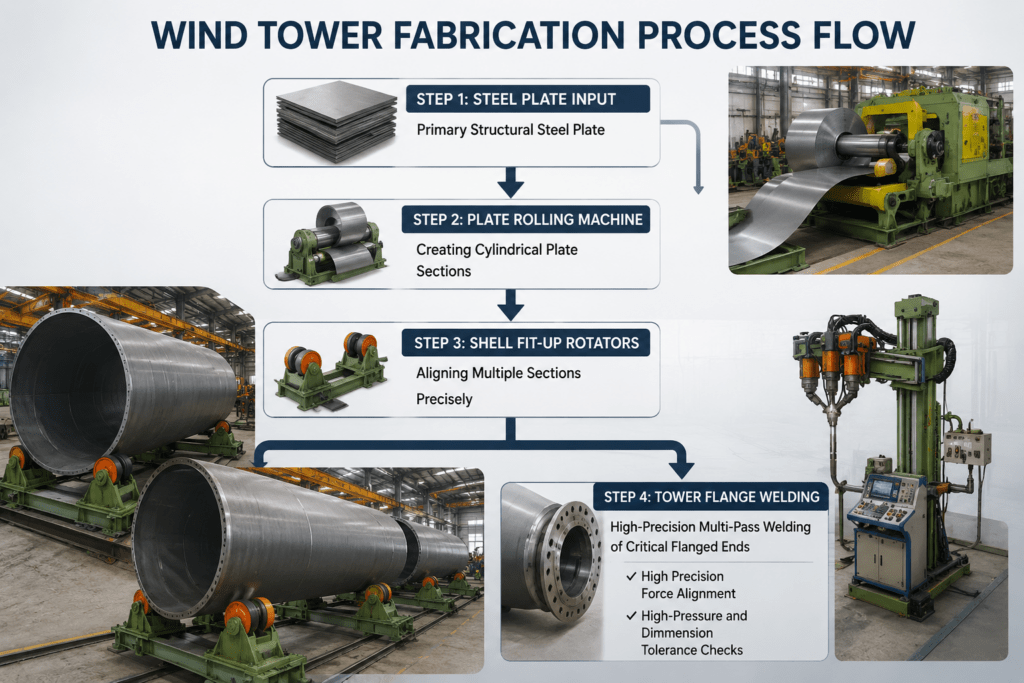
The fabrication process starts with massive structural steel sheets. A high-capacity plate rolling machine is utilized to bend these flat, heavy-gauge steel pieces into precise conical or cylindrical shells. Given that a single tower consists of multiple segments with varying diameters and wall thicknesses, these rolling systems must maintain absolute precision to ensure perfect alignment during subsequent production phases.
Advanced Fitting and Structural Alignment
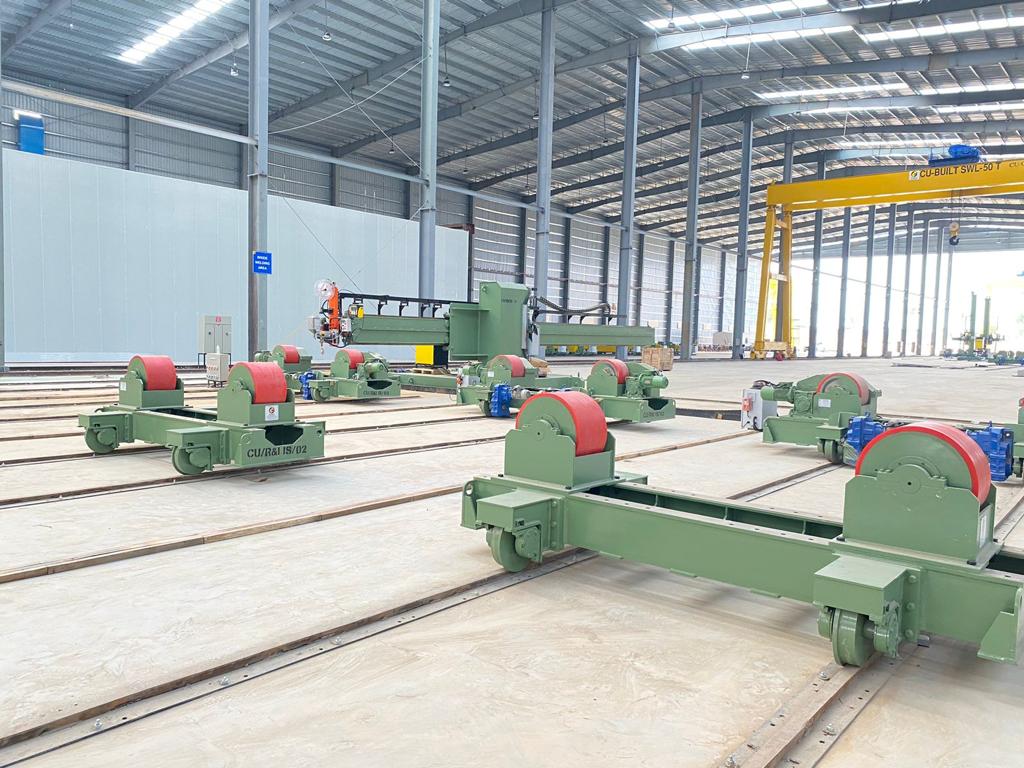
Once individual steel plates are rolled into cylinders, they must be aligned and welded together. Specialized heavy-duty shell-to-shell fit-up rotators play a crucial role here. These automated systems support, rotate, and precisely position the heavy steel sections, minimizing manual adjustments and accelerating structural assembly.
Precision Flange Integration
Integrating internal and structural connections is a critical step in ensuring the overall stability of the structure. Tower flange welding demands precision, as the massive forged flanges at the ends of each tower section must be perfectly square and true. Any minor deviation could cause misalignment during final field assembly, putting the structural integrity of the entire turbine assembly at risk.
Onshore vs. Offshore Wind Tower Fabrication: Meeting Varied Structural Challenges
As India expands its renewable installations, engineers must design equipment tailored for distinct geographic and environmental conditions.
| Engineering Factor | Onshore Wind Tower Equipment | Offshore Wind Tower Fabrication |
| Material Thickness | Medium to high-gauge structural steel | Extreme heavy-gauge, corrosion-resistant steel |
| Diameter Dimensions | Constrained by overland transit limits | Significantly larger diameters for maritime stability |
| Welding Requirements | Standard high-yield structural welding | Multi-pass, fatigue-resistant automated welding |
| Surface Treatment | Standard weatherproofing coatings | Multi-layer marine coatings to resist salt spray |
Deploying dedicated onshore wind tower equipment allows manufacturers to optimize workflows for land-based projects, where logistics and transport routes often cap the maximum diameter of individual tower segments.
Conversely, offshore wind tower fabrication presents unique engineering challenges. Marine installations face harsher environments, including continuous salt spray, wave impacts, and high wind forces. To withstand these conditions, offshore structures require thicker steel walls, larger diameters, and enhanced metallurgical integrity, requiring specialized heavy-duty fabrication equipment.
Key Machinery Driving the Wind Turbine Tower Manufacturing Sector
Scaling up production to meet commercial demand requires transitioning from manual workflows to fully automated systems. Modern manufacturing facilities utilize integrated production lines designed to handle heavy components efficiently.
1. Automated Columns & Booms (Welding Manipulators)
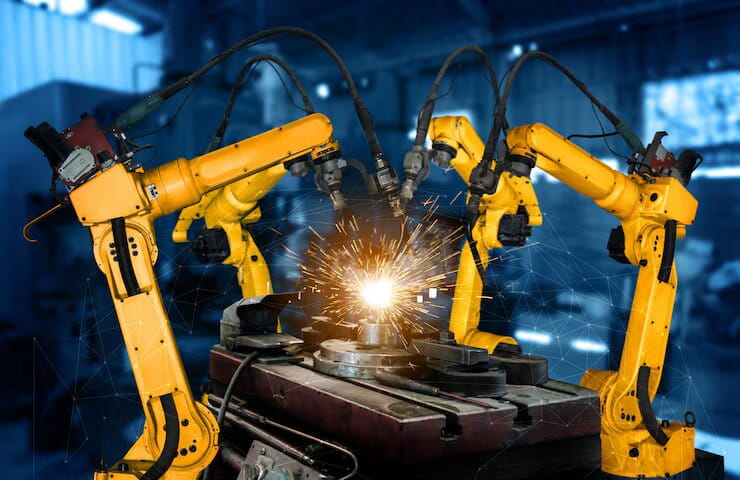
Automated column and boom systems position welding heads with high precision along both internal and external seams. By automating the Submerged Arc Welding (SAW) process, these systems deliver deep-penetration, defect-free welds that meet strict non-destructive testing (NDT) criteria.
2. Specialized Welding Rotators
Heavy-duty fit-up and turning rotators handle the rotation of massive steel cylinders during assembly. These systems maintain synchronized rotation speeds to ensure uniform heat distribution and consistent weld profiles across the entire circumference of the workpiece.
3. Integrated Internal Component Assembly Stations
Beyond the outer steel shell, a functional tower requires an array of internal systems. Dedicated tower internals assembly stations allow for the systematic installation of platforms, ladders, high-voltage cabling, and lift mechanisms, ensuring these internal components are securely anchored before the tower leaves the factory floor.
Overcoming Heavy Fabrication Bottlenecks in the Wind Sector
The manufacturing of utility-scale power infrastructure presents distinct production and logistical challenges. Handling massive, heavy-gauge components requires careful process control to avoid structural deformities and maintain manufacturing throughput.
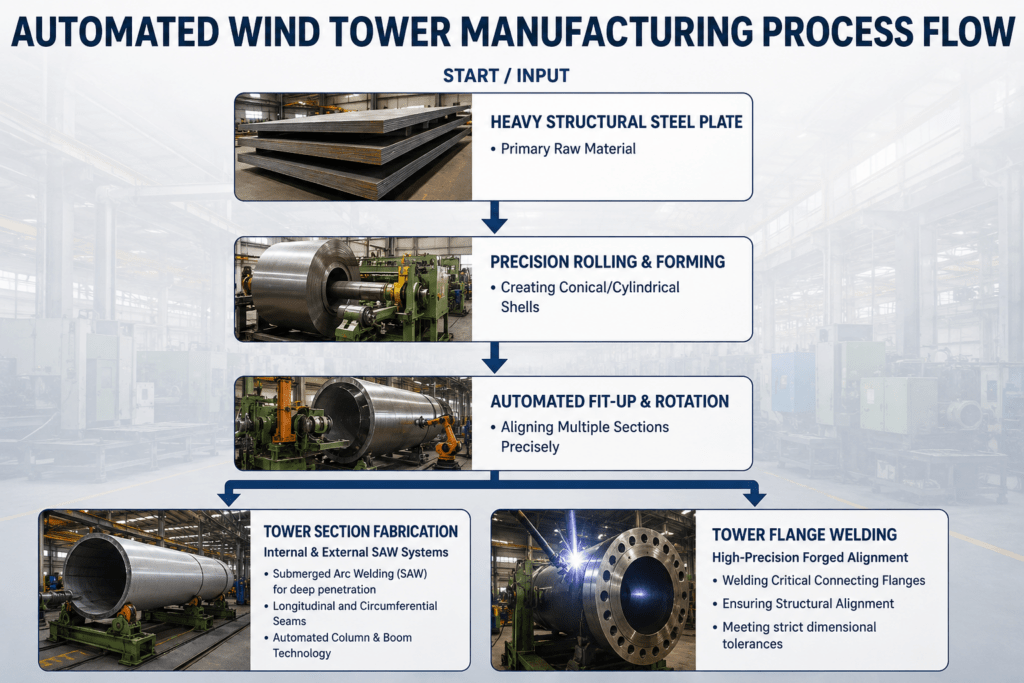
Managing geometric tolerances across large components is a frequent challenge during tower section fabrication. Even minor deviations during rolling or welding can distort a cylinder’s roundness, leading to fit-up issues during final assembly. Advanced heavy fabrication systems resolve this by utilizing real-time monitoring and adaptive controls to adjust tracking and pressure during production.
Additionally, managing the sheer weight of these sub-assemblies requires reliable material handling systems. Heavy industrial cranes, goliath gantries, and specialized transport systems are essential for moving completed sections safely between welding, blasting, painting, and storage yards.
Why India-Based Manufacturing is Crucial for Global Renewable Energy Goals
Establishing robust local supply chains is key to making clean energy projects economically viable. Relying heavily on imported structural components adds substantial freight costs and logistical risks to large-scale infrastructure developments.
Choosing an established, domestic wind tower manufacturer India helps developers mitigate import risks, optimize logistics, and shorten project timelines. Local production hubs also support broader economic growth by driving industrial innovation and creating skilled engineering jobs.
Furthermore, domestic equipment manufacturers are expanding their capabilities to supply international markets. By adhering to international quality standards, Indian heavy engineering companies are positioning themselves as competitive suppliers for global renewable infrastructure projects.
Custom Automation Engineering: The Cornerstones of High-Yield Production
Every clean energy project comes with unique specifications, meaning a one-size-fits-all approach rarely works for heavy manufacturing setups. Maximizing production throughput requires manufacturing systems tailored to a facility’s layout, material choices, and target output.
Partnering with an experienced engineering provider allows manufacturers to implement custom automation systems—such as specialized welding tracking and self-aligning rotators—that integrate directly into existing workflows. This specialized approach helps optimize production efficiency and ensures consistent manufacturing quality.
At Cu-Built Engineers, we specialize in designing and manufacturing high-capacity automation systems tailored for heavy industrial fabrication. Discover our specialized production setups by visiting our dedicated Wind Tower Manufacturing page, or explore our advanced Welding Rotators and heavy-duty Welding Column and Boom Systems engineered to meet the demands of modern infrastructure projects.
Partner with Cu-Built Engineers to Scale Your Manufacturing Capacity
Building the infrastructure for India’s clean energy transition requires reliable, high-capacity manufacturing technology. Cu-Built Engineers delivers advanced welding automation and heavy-material handling systems designed to optimize structural fabrication processes. With over 26 years of industrial experience, we provide custom-engineered solutions that enhance production efficiency, maintain strict tolerances, and support high-throughput operations.
Ready to optimize your production workflows and expand your manufacturing capacity? Get in touch with our engineering team today to discuss your project requirements and discover how our automated solutions can support your business growth.
Contact Our Engineering Specialists Today
- Corporate Headquarters: Plot No. 149, Sector No. 10, PCNTDA, MIDC, Bhosari, Pune, Maharashtra – 411026, India
- Direct Inquiry Hotlines: +91 97300 89705
- Direct Sales Email Support: sales@cubuilt.com
- Interactive Web Portal: Contact Cu-Built Engineers
Frequently Asked Questions
1.What types of welding technology are typically used in wind tower fabrication?
The primary technology used is Submerged Arc Welding (SAW), selected for its high deposition rates, deep penetration, and consistent weld quality. Tandem or multi-wire SAW setups are often deployed on automated columns and booms to efficiently complete long longitudinal and circumferential seams on thick steel plates.
2.Why are fit-up rotators essential for structural cylinder assembly?
Massive steel shells can deform slightly under their own weight, causing minor misalignments at the joints. Specialized hydraulic fit-up rotators allow operators to adjust the height, alignment, and spacing of adjacent sections, ensuring precise alignment before automated welding begins.
3.How do onshore and offshore wind tower structures differ in design?
Onshore towers are generally smaller in diameter to comply with road transport constraints and operate in less corrosive environments. Offshore towers feature larger diameters, thicker steel walls to withstand marine forces, and multi-layer corrosion protection systems to resist salt spray.
4.How does automated equipment help minimize manufacturing defects?
Automated systems ensure consistent welding speeds, precise torch tracking, and uniform heat input, reducing common human errors such as slag inclusions, porosity, or uneven penetration. This high level of consistency helps ensure components pass strict ultrasonic and radiographic non-destructive testing (NDT).