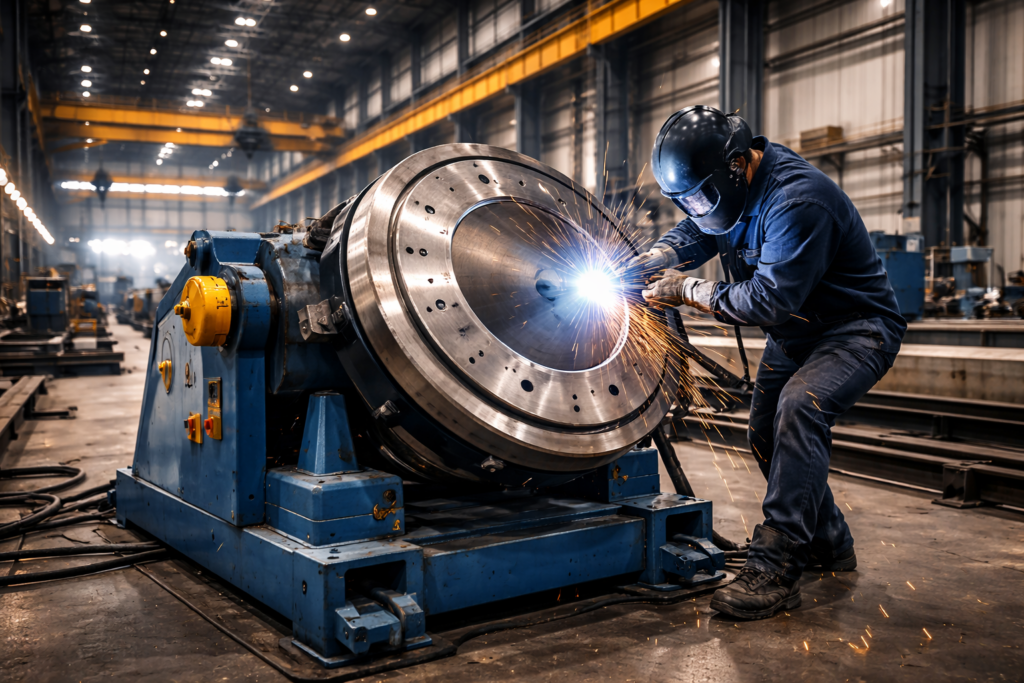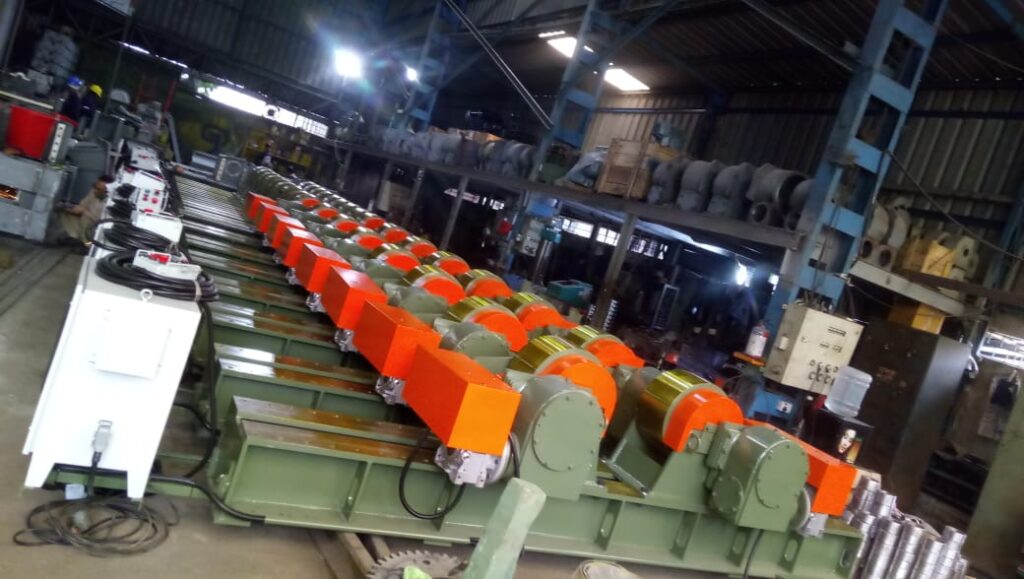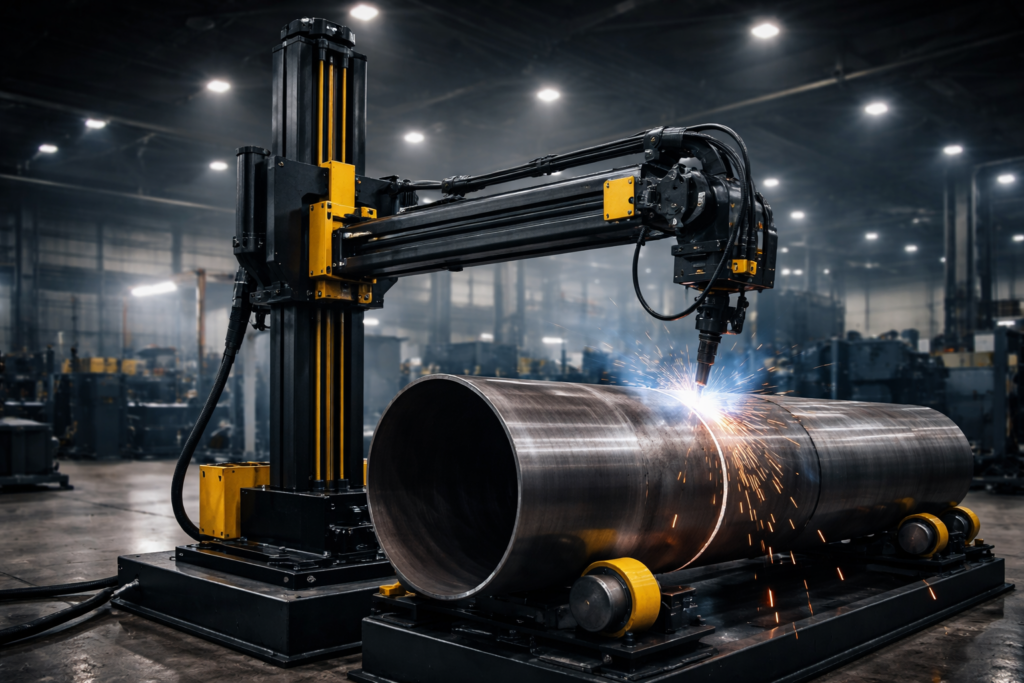
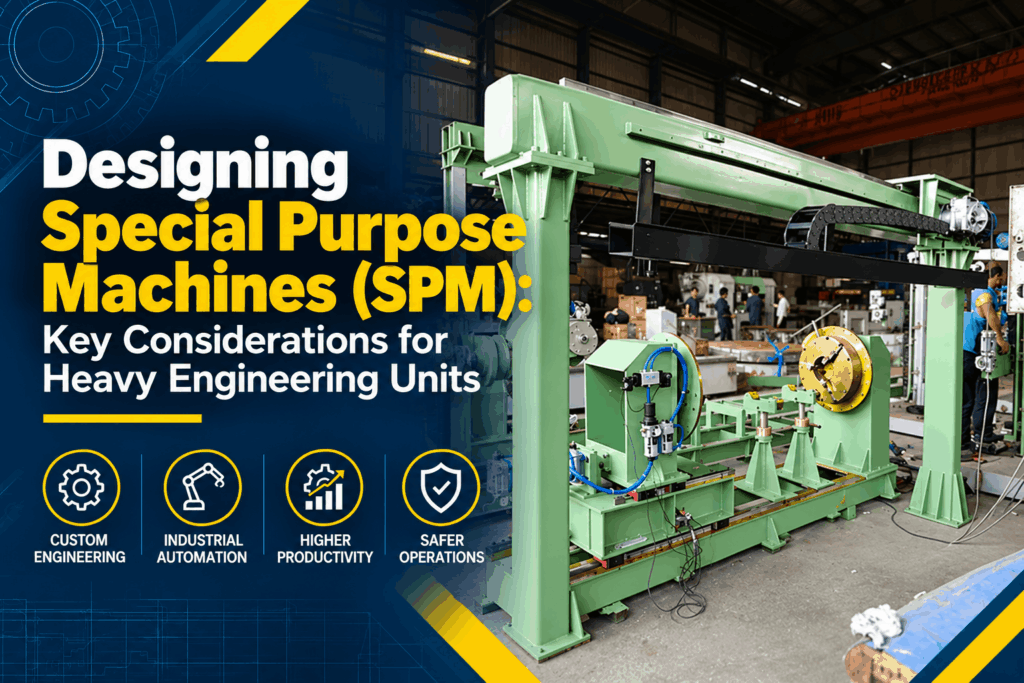
In modern industrial manufacturing, off-the-shelf equipment often fails to deliver the extreme precision, speed, and structural integrity required for massive operations. Heavy engineering sectors—such as windmill tower fabrication, pressure vessel manufacturing, structural steel assembly, and shipbuilding—face unique operational hurdles daily. As a result, adopting a tailor-made special purpose machine (SPM) has transitioned from a competitive advantage to an absolute operational necessity.
Designing special purpose machines (spm) requires a delicate balance between mechanical strength, control systems integration, and human safety. Standard CNC turning centers or off-the-shelf welding power sources simply cannot accommodate a 100-ton steel shell or weld a multi-pass thick-walled pressure vessel autonomously. Consequently, manufacturing units must implement high-performance custom automated machinery engineered specifically for dedicated applications.
In this comprehensive engineering guide, we examine the fundamental considerations for special purpose machine design in heavy engineering environments. From load dynamics and control architectures to structural integrity and industrial automation for fabrication, this guide provides a roadmap for plant managers, design engineers, and operations leaders aiming to maximize efficiency and ROI.
What is a Special Purpose Machine (SPM)?
A special purpose machine is a custom-designed piece of industrial equipment engineered to perform specific, repetitive manufacturing tasks with high speed and precision. Unlike general-purpose machinery—which offers flexibility for diverse part shapes—an SPM prioritizes optimized throughput, minimized manual labor, and consistent quality for specific production profiles.
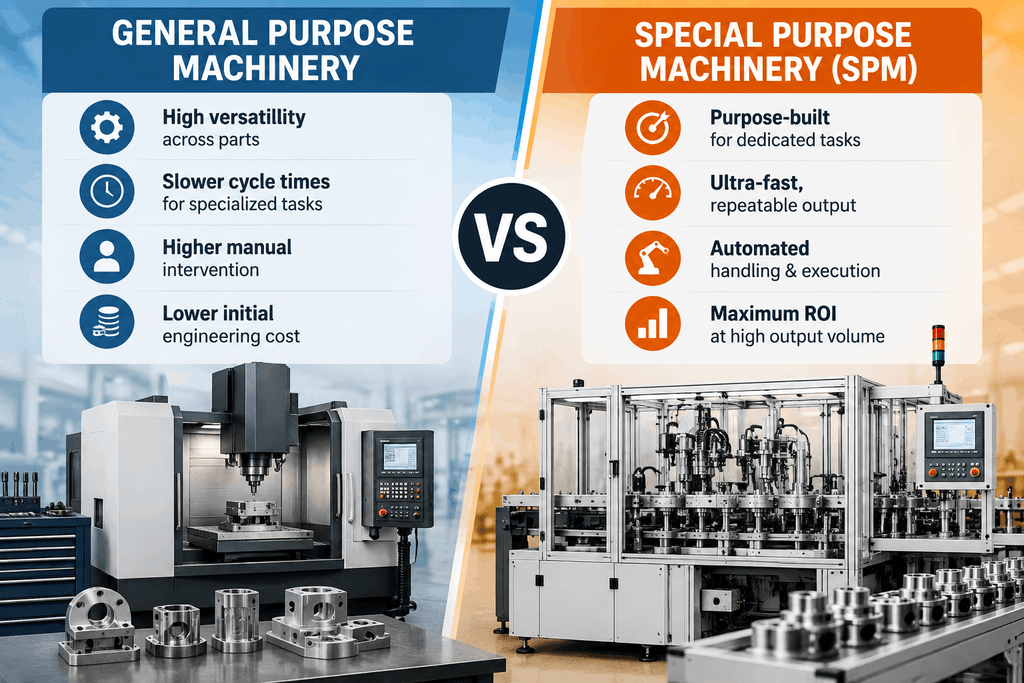
In heavy engineering, these systems often integrate heavy-duty mechanical assemblies, advanced hydraulic or pneumatic actuators, robotic arms, and intelligent PLC/SCADA controls. Whether implementing automated longitudinal submerged arc welding (L-SAW) setups or heavy-duty shell-to-shell fit-up stations, specialized industrial machinery plays a vital role in removing operational bottlenecks.
Why Heavy Engineering Demands Specialized Industrial Machinery
Heavy engineering units work under rigorous constraints. Components are exceptionally large, material thickness is substantial, and structural tolerances leave zero room for error. Standard off-the-shelf systems struggle in these environments due to several factors:
1. Payload and Structural Limits
Conventional factory automation is built for lightweight assemblies such as consumer electronics or small automotive parts. Conversely, heavy fabrication involves components weighing tens or hundreds of tons. Standard positioners and rotators collapse under these loads without custom structural engineering.
2. High Cost of Fabrication Errors
Scrapping a high-grade alloy shell or failing a non-destructive testing (NDT) inspection on a wind tower seam costs thousands of dollars in material and downtime. Utilizing dedicated manufacturing automation systems guarantees consistent tool positioning, exact heat input, and repeatable seam tracking.
3. Operator Safety and Fatigue
Manual handling and welding of giant steel structures subject operators to severe risks, including arc radiation, toxic fumes, and heavy lifting hazards. Custom automation minimizes operator exposure by enabling remote monitoring via digital HMI consoles and visual cameras.
Core Considerations for Special Purpose Machine Design
Designing an effective special purpose machine demands an integrated approach spanning mechanical design, electrical controls, software development, and process validation. Below are the key engineering phases required during the SPM design process.
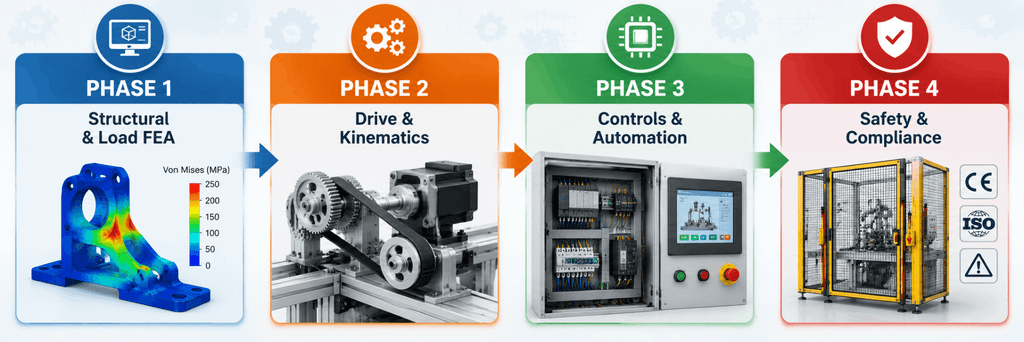
1. Rigorous Structural and Dynamic Analysis
Before drawing a single line in CAD software, engineers must thoroughly analyze static and dynamic load limits. Heavy engineering applications involve immense torsion, bending moments, and vibration.
- Finite Element Analysis (FEA): Engineers perform stress and deflection analyses on structural frames using FEA software to prevent frame flexure under load. Standard FEA best practices can be explored through leading engineering guidelines like ANSYS Structural Analysis Solutions.
- Thermal Expansion: Welding heavy plates generates intense localized heat. Structural components must accommodate thermal expansion without jamming mechanical tracks or distorting aligned gantries.
- Vibration Damping: High-torque cutting or heavy submerged arc welding requires robust dampening to preserve weld seam fidelity and prolong tool life.
2. Kinematics, Drive Systems, and Power Transmission
Selecting the ideal drive mechanism is vital when moving massive workpieces smoothly. Smooth motion directly impacts weld quality and dimensional tolerance.
- Hydraulic vs. Servo Drives: While servo motors offer precision, high-capacity hydraulic cylinders are often necessary for heavy clamping, shell fit-ups, and lifting functions.
- Gearboxes and Backlash Management: Heavy rotary drives require planetary or heavy-duty worm gearboxes with minimal backlash to avoid sudden slipping during rotation.
- Precision Motion Guidance: Linear motion bearings, heavy-duty hardened rack-and-pinions, and ground guide rails ensure wobble-free travel over extended lengths.
3. Industrial Automation for Fabrication and Control Integration
A machine is only as efficient as its control architecture. Modern industrial automation for fabrication integrates smart sensors, adaptive algorithms, and centralized PLC units.
- Programmable Logic Controllers (PLCs) & HMIs: Siemens, Allen-Bradley, or Schneider PLCs execute low-latency machine commands while intuitive touch-screen HMIs allow operators to modify parameters easily.
- Adaptive Sensing Technologies: Laser vision tracking sensors, tactile arc-voltage control (AVC) systems, and proximity sensors automatically compensate for plate edge variations.
- Data Logging & Industry 4.0 Integration: Modern SPMs collect operational metrics, log weld parameters, and provide predictive maintenance alerts via IoT gateways.
4. Safety Standards and Ergonomics
Safety must be embedded into the machine architecture from the conceptual design stage:
- Fail-Safe Braking Systems: Mechanical drop stops, counter-balance valves, and multi-disc motor brakes prevent free-fall events during power outages.
- Emergency Stop (E-Stop) Circuits: Category 0 and Category 1 safety relays guarantee immediate, safe shutdowns when triggered.
- Ergonomic Operator Interfaces: Adjustable pendant consoles and platform elevators minimize physical strain on operating personnel.
Applications of Custom Automated Machinery in Heavy Engineering
To understand how a tailored special purpose machine elevates shop-floor productivity, let us examine real-world applications across key heavy manufacturing sectors.
1. Windmill Tower Fabrication
Manufacturing utility-scale wind turbine towers requires rolling, aligning, and joining massive steel plates into cylindrical and conical segments.
- Hydraulic Shell-to-Shell Fit-Up Rotators: Custom fit-up rotators utilize independent hydraulic growth rollers to align two heavy shell rings, reducing assembly alignment times from hours to minutes.
- Internal and External Seam Welders: Specialized column and boom machines equipped with SAW (Submerged Arc Welding) heads perform longitudinal and circumferential seam welding with sub-millimeter precision.
- Explore Solutions: Learn how customized Windmill Tower Manufacturing Equipment streamlines production workflows.
2. Vessel and Reactor Manufacturing
Pressure vessels, heat exchangers, and chemical reactors operate under high pressure and temperature, requiring flawless weld integrity.
- Narrow-Gap SAW Systems: Custom narrow-gap welding heads allow thick-plate joints (exceeding 100mm thickness) to be filled efficiently using reduced weld metal volume.
- Heavy-Duty Welding Positioners: High-capacity headstock-tailstock positioners rotate unbalanced heavy vessels safely during fit-up and nozzle attachment.
- Discover Systems: Explore specialized Vessel & Reactor Manufacturing Setups designed for heavy-duty process plants.
3. Heavy Structural Fabrication and Crane Lines
Fabricating structural I-beams, box girders, and heavy crane gantries demands high-speed, continuous processing.
- Automatic Beam Welding Lines: Integrated gantries fit, tack, and weld web and flange plates simultaneously, minimizing structural distortion.
- Submerged Arc Column & Boom Stations: Heavy-duty column and boom setups mounted on motorized travel cars deliver versatile reach over massive weldments.
- Browse Systems: View engineered Welding Automation Solutions built for structural applications.
Key Steps in the SPM Design Process
Designing high-capacity custom machinery requires a structured, multi-phase engineering workflow. Skipping validation phases can lead to expensive rework on the shop floor.
Step 1: Requirement Gathering and Feasibility Analysis
Engineers evaluate workpiece dimensions, material grades, duty cycles, tact times, and spatial floor constraints. Clear specifications prevent scope creep later in the design cycle.
Step 2: Conceptualization and Kinematic Simulation
3D CAD models are generated alongside multi-body dynamic simulations. Designers evaluate component reach, interference points, payload distributions, and motion sequences virtually before finalizing physical layouts.
Step 3: Detailed Component Engineering
Engineers select commercial off-the-shelf (COTS) components (bearings, motors, valves) and design custom structural weldments. Technical drawings specify strict tolerances, surface treatments, and geometric dimensioning (GD&T). For detailed manufacturing standards, review guidance provided by international bodies like the American Society of Mechanical Engineers (ASME).
Step 4: Control System Architecture and Software
Electrical schematics are drawn using modern design software. Control engineers write structured PLC code, build HMI screens, and program safety interlocks.
Step 5: In-House Fabrication, Assembly, and Integration
Structural frames are cut, welded, stress-relieved, and precision-machined. Assembly technicians assemble mechanical drives, run pneumatic/hydraulic piping, and dress electrical cabling inside protective drag chains.
Step 6: Factory Acceptance Testing (FAT) and Site Commissioning
The completed SPM undergoes rigorous testing under simulated load conditions. Weld seam tracking, drive repeatability, safety interlocks, and emergency stops are validated before final dispatch and installation.
Quantifying the ROI of Special Purpose Machines
While the initial capital expenditure for custom automated machinery is higher than standard off-the-shelf tools, the return on investment (ROI) is significant for heavy engineering facilities.
| Performance Metric | Standard Manual / Semi-Auto Methods | Integrated SPM Solution | Operational Advantage |
| Shell Alignment Time | 4 – 8 Hours per joint | 20 – 40 Minutes | > 85% Time Savings |
| Weld Defect Rate (NDT) | 3% – 7% rework rate | Less than 0.5% rework rate | Substantial Material Savings |
| Duty Cycle & Uptime | Limited by operator fatigue | 24/7 continuous operation | Maximum Machine Utilization |
| Labor Requirement | 4-6 skilled fitters/welders | 1 operator / supervisor | Reduced Overhead Expenses |
| Safety Incident Risk | High (manual heavy rigging) | Low (interlocked automation) | Safer Working Environment |
By accelerating cycle times, minimizing material scrap, and reallocating skilled labor toward higher-value tasks, most heavy fabrication units recover their SPM investment within 12 to 18 months of commissioning.
How to Choose the Right SPM Partner
Selecting an experienced machine builder is critical when making a major capital investment. When evaluating potential special purpose machine manufacturers in pune or global engineering vendors, ensure your partner offers:
- In-House Design and Manufacturing Capabilities: Ensure the vendor manages CAD modeling, structural FEA, machining, panel building, and software programming internally rather than outsourcing critical stages.
- Proven Track Record in Heavy Fabrication: Verify the supplier’s experience in building heavy-duty rotators, column and boom units, fit-up beds, or custom gantries.
- Comprehensive Turnkey Support: Look for a partner that provides complete turnkey fabrication solutions, including installation, operator training, preventive maintenance programs, and fast spare parts availability.
Transform Your Heavy Engineering Capabilities with Cu-Built Engineers
Are production bottlenecks, alignment delays, or weld defects limiting your output? Cu-Built Engineers Pvt. Ltd. is a premier industrial automation partner, specializing in heavy-duty special purpose machine design, advanced welding automation, and custom material handling systems.
Headquartered in Pune, India—a global hub for heavy engineering—Cu-Built brings decades of proven expertise to high-stakes industries including oil & gas, wind energy, pressure vessel manufacturing, and structural steel fabrication. From heavy hydraulic fit-up rotators and multi-axis column & boom systems to complete turnkey production lines, Cu-Built engineers solutions tailored to your unique manufacturing needs.
Why Choose Cu-Built Engineers?
- End-to-End In-House Capabilities: Design, FEA simulation, precision machining, software integration, and FAT testing under one roof.
- Custom Engineering Focus: Built specifically around your workpiece dimensions, floor plan, and tact time goals.
- Global Quality Standards: Robust machinery designed for round-the-clock reliability in demanding industrial environments.
Ready to upgrade your manufacturing capability?
Contact the Cu-Built Engineering Team Today or email us at sales@cubuilt.com to discuss your project requirements and schedule a technical consultation.
Frequently Asked Questions (Q&A)
Q1: What is the difference between a Special Purpose Machine (SPM) and a standard CNC machine?
A standard CNC machine is a general-purpose unit designed to perform varied cutting, milling, or turning tasks across different part geometries. In contrast, a special purpose machine is custom-engineered to execute a dedicated manufacturing process (such as shell-to-shell fit-up or continuous submerged arc seam welding) for a specific product family with high throughput, lower cycle times, and minimal manual intervention.
Q2: What factors dictate the cost of designing a custom special purpose machine?
Key cost drivers include structural size and payload weight, degree of automation (manual vs. fully robotic), precision sensor integration (laser seam tracking, vision systems), hydraulic/servo power requirements, and specialized PLC programming. High-capacity SPMs built for heavy engineering carry higher structural and drive costs, but deliver faster ROI through substantial labor and time savings.
Q3: How long does the SPM design process typically take from concept to installation?
Lead times vary depending on machine complexity and payload capacity. Typically, an SPM project takes between 12 to 24 weeks. This timeline covers conceptual design, CAD modeling, structural FEA analysis, component sourcing, fabrication, assembly, PLC software integration, Factory Acceptance Testing (FAT), and final site commissioning.
Q4: Can existing manual fabrication setups be retrofitted into automated SPMs?
Yes. Many heavy engineering facilities modernize operations by integrating custom automation setups—such as adding motorized travel cars, servo-controlled cross slides, or laser seam tracking systems—to existing column and boom units or turning rolls. However, full structural automation yields the highest reliability and productivity gains.
Q5: What safety standards must be considered during special purpose machine design?
Heavy SPMs must comply with international machinery safety standards (such as ISO 13849 or IEC 62061 for functional safety). Design considerations include interlocked safety fencing, light curtains, fail-safe hydraulic holding valves, mechanical drop stops, emergency stop circuits, and ergonomic HMI console placement to protect plant operators.