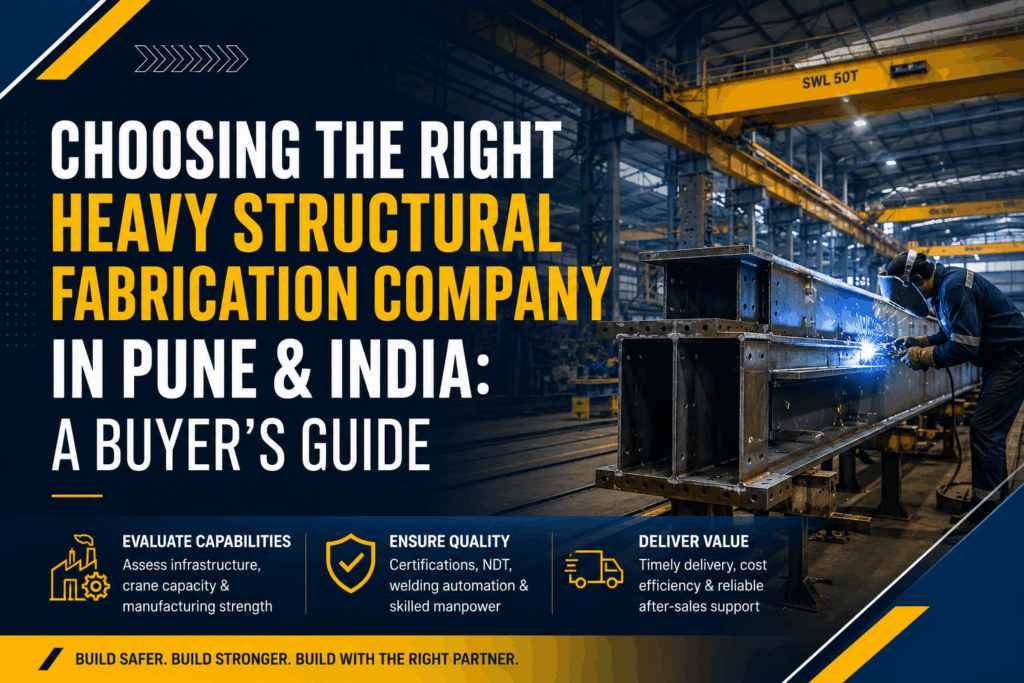
Selecting an industrial partner for large-scale engineering builds is one of the most critical decisions a project manager, procurement lead, or EPC contractor can make. The safety, operational efficiency, and structural integrity of multi-million-dollar infrastructure projects depend directly on the execution quality of your fabrication partner. When sourcing high-grade heavy structural fabrication services, navigating the marketplace requires a strategic approach. India’s manufacturing ecosystem is expanding rapidly, with major industrial corridors like Pune leading the way in engineering excellence.
Partnering with an established fabrication company in Pune offers distinct operational advantages. The region provides access to world-class steel sourcing, highly skilled engineering talent, and well-connected transport logistics. However, not all heavy structural fabrication companies in India offer the same capabilities. Evaluating potential partners requires looking beyond initial cost quotes. Procurement teams must examine manufacturing infrastructure, non-destructive testing (NDT) certifications, automated welding systems, and verified past project performance.
This buyer’s guide breaks down the essential criteria for auditing, selecting, and contracting top-tier heavy engineering companies in Pune and across India. Whether you are procuring structural frameworks for power plants, heavy crane girders, wind energy towers, or specialized factory buildings, this framework ensures your project is delivered safely, on schedule, and to exact technical specifications.
Understanding the Scope of Modern Heavy Structural Fabrication Services
To choose the right partner, you must first understand what sets high-capacity engineering facilities apart from basic sheet metal shops. High-end heavy structural fabrication services go far beyond cutting and joining steel plates. They encompass end-to-end engineering, starting with finite element analysis (FEA) and detail drafting, through automated cutting, precision fitting, heavy-duty submerged arc welding (SAW), stress relieving, and protective surface coating.
Industrial infrastructure requires heavy-duty engineering capable of carrying immense static and dynamic loads. Modern fabrication projects typically demand specialized components, including:
- Heavy-duty industrial columns, plus columns, and long-span beams.
- High-capacity overhead EOT crane girders and monorails.
- Complex stadium roof trusses and high-rise structural skeletons.
- Large-diameter wind turbine tubular towers and power plant ducting.
- Customized machinery beds, press frames, and heavy equipment chassis.
Executing these heavy components demands specialized shop-floor infrastructure. A leading facility must feature heavy-tonnage overhead cranes, automatic plate rollers, multi-axis CNC drilling lines, and motorized transfer trolleys. Without these specialized tools, maintaining precision over massive spans becomes impossible.
Key Criteria for Evaluating Heavy Structural Fabrication Companies in India
Evaluating industrial vendors requires a thorough technical audit. When evaluating candidate firms, procurement teams should structure their assessment around five core pillars:
| Audit Pillar | Key Evaluation Metrics | Why It Matters |
| Shop Floor Infrastructure | Cranage capacity (50T+), high-bay clear height, CNC cutting/drilling, blasting booths. | Determines the maximum size and weight of structural modules that can be handled. |
| Welding Automation | Column & boom manipulators, tank turning rolls, automated SAW systems. | Ensures high-penetration welds, minimal distortion, and fast project turnarounds. |
| Quality Certifications | ISO 9001:2015, ISO 3834-2, EN 1090, ASME certification stamps. | Verifies that internal processes adhere to internationally recognized engineering standards. |
| Workforce Expertise | ASNT Level II/III NDT inspectors, certified welding inspectors (CWI/CSWIP). | Guarantees rigorous quality assurance and reduces the risk of structural failure under stress. |
| Supply Chain & Logistics | Proximity to raw steel mills, major highways, ports, and inland container depots. | Directly impacts material lead times, shipping costs, and oversized cargo logistics. |
1. In-House Manufacturing Capabilities and Crane Capacity
The primary constraint in heavy fabrication work is physical space and lifting capacity. A vendor claiming to offer heavy engineering solutions must have a facility designed for large assemblies. Verify that the plant has high-bay workshops with double-girder EOT cranes capable of tandem lifts. Check the floor load capacity to ensure it can support massive metal fabrications without settling or misalignment.
2. Adoption of Advanced Welding Automation Technology
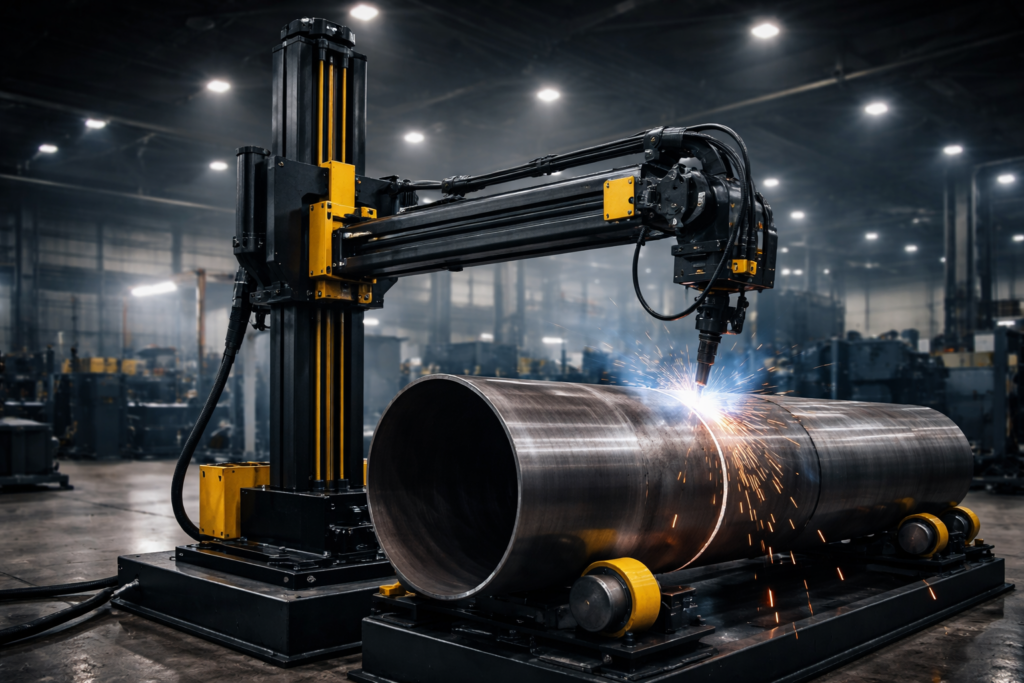
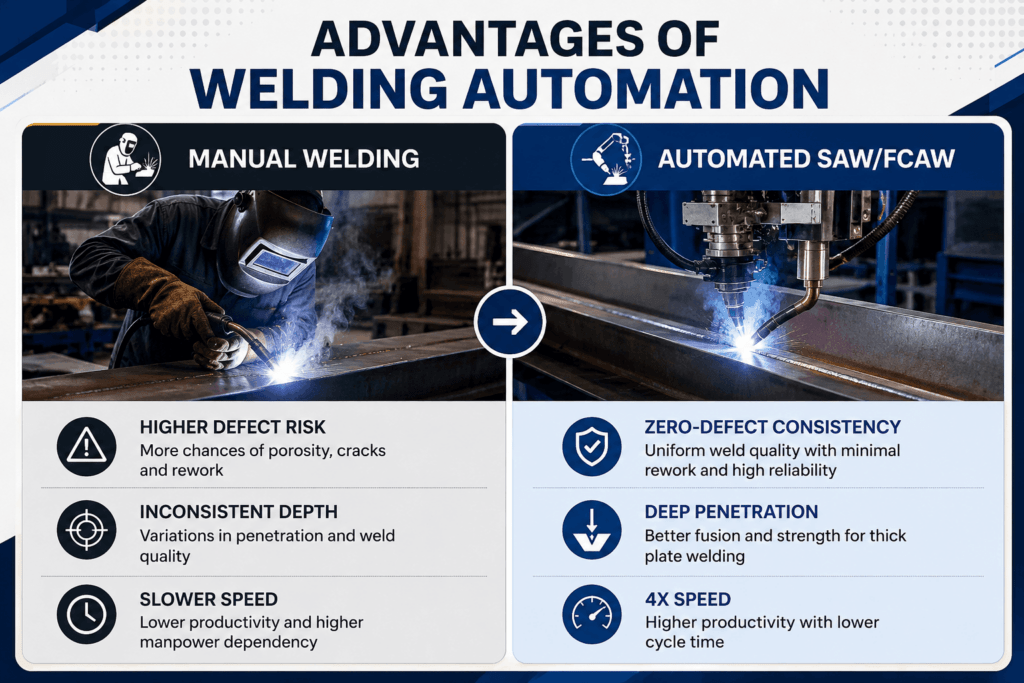
Manual stick welding is slow and subject to operator fatigue, which can introduce defects over long seams. Leading heavy engineering companies in Pune invest heavily in welding automation systems. Look for facilities equipped with heavy-duty column and boom manipulators, hydraulic fit-up rotators, and 3-axis positioners. Automated Submerged Arc Welding (SAW) and Flux-Cored Arc Welding (FCAW) deliver deep weld penetration and uniform beads. This automation is essential for meeting strict structural codes and avoiding costly rework during non-destructive testing (NDT).
3. Surface Preparation and Anti-Corrosion Treatment Facilities
A heavy steel structure is only as durable as its protective coating. Environmental exposure can rapidly degrade structural steel components if the surface preparation is substandard. Ensure your chosen partner has dedicated grit/shot blasting booths that consistently achieve Sa 2.5 cleanliness standards. Additionally, check that they operate environmentally controlled paint booths capable of applying multi-coat epoxy, polyurethane, or passive fireproofing systems.
Why Partnering with a Pune-Based Engineering Leader Offers Strategic Advantages
Pune has established itself as one of India’s premier industrial manufacturing hubs. Situated in the PCNTDA and MIDC industrial belts (such as Bhosari and Chakan), a top-tier fabrication company in Pune offers distinct supply chain advantages:
- Strategic Logistics Proximity: Pune offers excellent highway connectivity to major industrial zones across Maharashtra, Gujarat, and South India. Proximity to Jawaharlal Nehru Port Trust (JNPT) in Mumbai simplifies international shipping for export-oriented heavy engineering projects.
- Dense Industrial Ecosystem: The region hosts a deep network of raw steel distributors, specialized heat treatment vendors, calibration centers, and third-party testing laboratories.
- Skilled Technical Workforce: Pune’s strong history in automotive, defense, and capital goods engineering provides a steady supply of certified welders, fitters, and quality engineers.
- Faster Project Turnaround: Local vendor density reduces transit delays for sub-assemblies, raw materials, and surface-treatment consumables, keeping your construction timelines on track.
Learn more about regional industrial development and standards through the Ministry of Heavy Industries – Government of India and structural steel specifications via the Indian Institute of Welding.
Quality Assurance Standards in the Heavy Fabrication Industry
In high-stakes heavy engineering, quality control is not just a final checklist—it must be built into every step of production. Reliable metal fabrication companies run dedicated quality assurance (QA) and quality control (QC) programs. These programs cover every stage of production, from raw plate receipt to final site delivery.
Essential Quality Control Milestones
- Material Traceability: Every plate, section, and consumable must carry Mill Test Certificates (MTC) linked to heat numbers. This step guarantees that all custom steel fabrication meets the specified tensile, yield, and impact strength requirements.
- Welder Performance Qualification (WPQ): Welders must be certified in accordance with standard codes (such as ASME Section IX or AWS D1.1) for specific positions and material thicknesses.
- Non-Destructive Testing (NDT) Protocols: Reputable fabricators employ ASNT Level II certified technicians to run thorough NDT evaluations. These include Ultrasonic Testing (UT) for full-penetration welds, Magnetic Particle Testing (MPT) for surface defects, Liquid Penetrant Testing (LPT), and Radiographic Testing (RT) for critical joints.
- Dimensional Inspection and Trial Assembly: High-precision total stations and laser trackers verify that complex structural steel components are built within tight tolerances. Trial fitting critical assemblies in the factory prevents costly fit-up issues during field installation.
Meeting stringent industrial fabrication quality standards prevents structural failures and costly project delays. Working with a certified vendor protects your asset’s long-term performance and keeps your job site safe.
Evaluating the Commercials: Total Cost of Ownership vs. Initial Bid
While procurement teams often focus on the upfront per-kilogram fabrication rate, evaluating heavy structural fabrication services solely on initial price can be risky. Low bids can obscure hidden costs that emerge later during construction.
When evaluating commercial bids, consider these long-term cost factors:
- Rework and On-Site Modification Costs: Poorly fabricated steel leads to alignment errors on site. Correcting thick steel plates in the field requires specialized labor, cutting equipment, and re-welding—costing far more than shop-floor corrections.
- Project Schedule Slippage: Delays in structural deliveries can halt civil work, delay mechanical installations, and trigger daily liquidated damages. Choosing a vendor with robust internal production tracking ensures reliable, on-time delivery.
- Corrosion and Maintenance Expenses: Subpar surface prep leads to premature coating failure. Re-painting installed structural steel in working industrial facilities is extremely expensive and disrupts operations.
Investing in a high-quality partner ensures smooth project execution and protects your bottom line.
Partner with Cu-Built Engineers for High-Precision Heavy Fabrication
When executing complex, mission-critical infrastructure projects, you need an engineering partner with a proven track record. Cu-Built Engineers Private Limited is an industry leader in heavy engineering, structural steel fabrication, and welding automation solutions.
Headquartered in the MIDC Bhosari industrial hub in Pune, Cu-Built Engineers operates advanced manufacturing facilities. Their infrastructure includes heavy lifting capacity, CNC cutting machinery, specialized blasting and painting booths, and certified NDT personnel. Cu-Built delivers custom structural steel solutions for clients in power generation, oil and gas, heavy construction, and renewable energy sectors.
Why Global EPC Contractors and OEMs Choose Cu-Built Engineers:
- Comprehensive Infrastructure: Outfitted with heavy-duty EOT cranes, modern fabrication bays, and dedicated surface preparation setups.
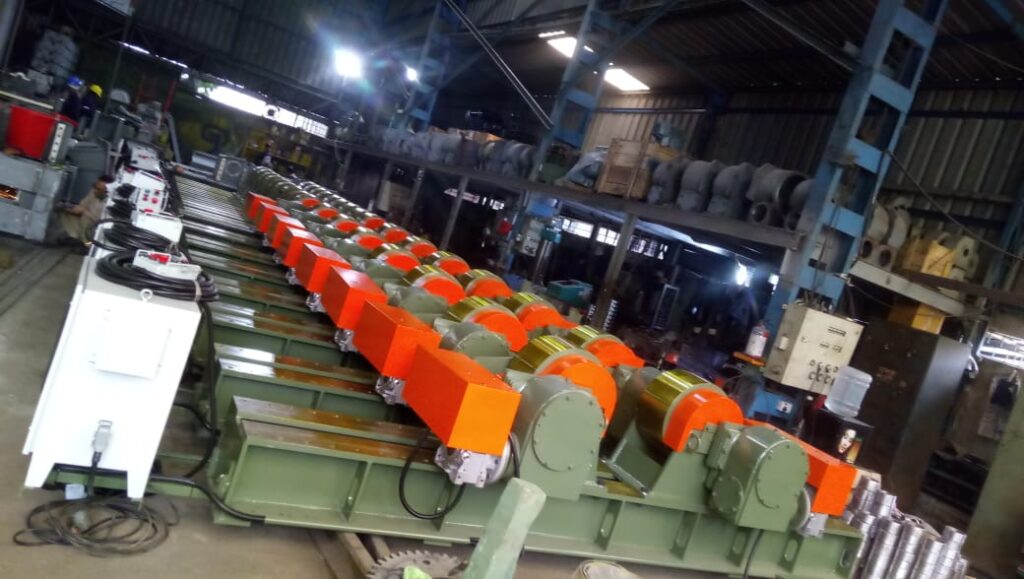
- Advanced In-House Welding Automation: Equipped with state-of-the-art Welding Rotators and Turning Rolls, heavy column-and-boom manipulators, and automated SAW setups that ensure fast execution and zero-defect welds.
- Uncompromising Quality Standards: Certified procedures supported by rigorous ASNT Level II testing, complete material traceability, and trial assembly capabilities.
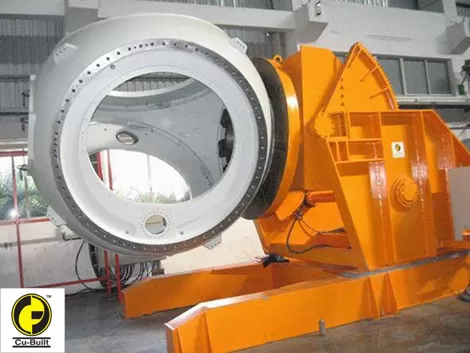
- Diverse Product Portfolio: From custom Heavy Engineering & Fabrication Services to custom material handling systems and Windmill Towers Fabrication.
- Proven Track Record: Trusted by major industry leaders, including BHEL Trichy and Forbes Vyncke, delivering high-performance projects across India and internationally.
Whether you need complex build-to-print structural components or full-scope heavy fabrication management, Cu-Built Engineers delivers precision, durability, and on-time execution.
Ready to elevate your structural infrastructure projects?
Contact Cu-Built Engineers Today to consult with engineering experts, discuss project requirements, or request a competitive quote for your next heavy fabrication project.
Frequently Asked Questions (Q&A)
Q1: What is the difference between light and heavy structural fabrication?
Light fabrication uses thin sheet metals and light structural sections to create smaller products, like enclosures or light frames. Heavy fabrication works with thick steel plates, large structural beams, and heavy forgings. It requires high-capacity cranes, heavy-duty rolling equipment, specialized automated welding systems, and rigorous NDT inspection protocols to handle extreme structural loads.
Q2: Why is automated welding important for heavy structural steel work?
Heavy steel components require thick, multi-pass welds that are time-consuming and labor-intensive to produce manually. Automated welding systems—such as submerged arc welding (SAW) on column-and-boom manipulators—deliver consistent heat input, deep penetration, and high deposition rates. This process speeds up production, minimizes heat distortion, and consistently passes strict NDT checks.
Q3: What quality documentation should I demand from a heavy fabrication vendor?
A complete Quality Assurance/Quality Control (QA/QC) dossier should include:
- Mill Test Certificates (MTCs) for all raw steel plates and consumables.
- Welding Procedure Specifications (WPS) and Procedure Qualification Records (PQR).
- Welder Performance Qualifications (WPQ).
- Non-Destructive Testing (NDT) reports (Ultrasonic, Magnetic Particle, Radiography).
- Surface preparation and coating thickness (DFT) inspection reports.
- Final dimensional check and alignment certificates.
Q4: How do I ensure proper fit-up of large structural frameworks before field delivery?
Ask your vendor to perform a factory trial assembly. During trial fit-up, major structural sub-assemblies (such as columns, trusses, and crane girders) are temporality joined on the shop floor using total stations or laser trackers. This step confirms bolt-hole alignment, overall dimensions, and joint tolerances before components leave the plant, preventing expensive fit-up issues on site.
Q5: Why is Pune considered an ideal manufacturing hub for heavy fabrication in India?
Pune boasts a mature industrial ecosystem with well-established manufacturing belts like MIDC Bhosari and Chakan. The city offers proximity to raw steel suppliers, skilled engineering talent, specialized metallurgical testing facilities, and seamless transport links via highways and JNPT port. This strategic location makes Pune a premier hub for high-precision, cost-effective fabrication services.