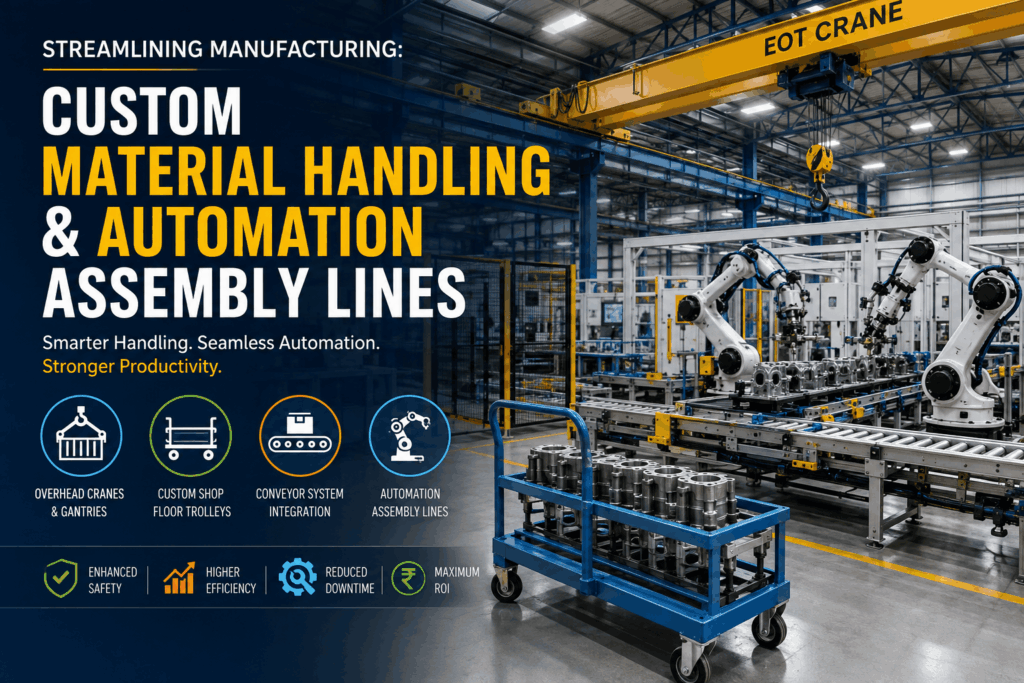
Modern industrial environments require high operational speed, strict quality control, and lean manufacturing processes. As consumer demand accelerates and product lifecycles shorten, traditional manual methods create bottlenecks, escalate costs, and expose shop floors to avoidable safety risks. Streamlining manufacturing: custom material handling equipment & automation assembly lines is no longer just an operational upgrade—it is a core strategy for maintaining a competitive edge.
By integrating intelligent material handling and automation systems into your production flow, you eliminate modern manufacturing friction points. Whether moving heavy raw materials, precision-positioning components, or synchronizing high-speed assembly tasks, custom-engineered equipment creates a seamless bridge between raw inputs and finished goods.
In this comprehensive guide, we explore how tailored intralogistics, specialized automation, and ergonomic handling solutions transform manufacturing plants into highly optimized, high-throughput smart facilities.
The Evolving Landscape of Modern Manufacturing
The global manufacturing sector is undergoing a profound structural shift. Rising labor costs, floor-space constraints, and high compliance standards mean off-the-shelf equipment often fails to satisfy specialized operational demands.
Every facility presents a unique layout, product weight profile, and workflow sequence. Standard, one-size-fits-all machinery frequently leads to floor congestion, unutilized vertical height, and excessive product handling damage.
To achieve real lean production, forward-thinking operations partner with leading material handling equipment manufacturers in Pune to architect custom solutions. When your equipment matches your specific operational geometry, overall equipment effectiveness (OEE) rises, cycle times shrink, and shop floor throughput stabilizes.
Key Components of Next-Generation Material Handling Systems
A robust material handling system forms the backbone of modern intralogistics. It encompasses all movement, protection, storage, and control of materials throughout the manufacturing, warehousing, and distribution phases.
1. High-Capacity Overhead Movement: Gantry & EOT Cranes
When floor space is at a premium, vertical and overhead space provides the most efficient movement path. Deploying a custom gantry EOT crane (Electric Overhead Traveling crane) allows facilities to transfer heavy steel plates, large dies, and bulky sub-assemblies across expansive bays without obstructing ground-level traffic.
Key advantages of customized overhead crane systems include:
- Maximized Floor Space: Keeps floor channels clear for workers and mobile machinery.
- Heavy Load Handling: Safely handles multi-ton industrial components with millimeter precision.
- Enhanced Safety: Advanced overload protection and variable-frequency drives (VFDs) reduce load sway and prevent mechanical shock.
2. Tailored In-Plant Movement: Custom Shop Floor Trolleys
While heavy lifts happen overhead, horizontal movement at the workstation level requires agility. Standard off-the-shelf carts often lack proper load rating, customized fixtures, or ergonomic balance.
Working with experienced material handling trolley manufacturers in Pune ensures carts are engineered for your specific parts—featuring custom cradles, anti-static materials, dynamic braking, and heavy-duty castors to streamline manual and tugger-assisted transport.
Revolutionizing Production with Automation Assembly Line Manufacturers
Manual assembly lines often struggle with process variability, ergonomic fatigue, and inconsistent production speeds. Partnering with expert automation assembly line manufacturers allows manufacturers to convert chaotic batch processes into continuous, streamlined production flows.
Strategic Benefits of Customized Assembly Lines
- Pacing and Flow: Automated lines establish consistent cycle times, preventing work-in-progress (WIP) accumulation.
- Precision & Repeatability: Automated pick-and-place, mechanical indexing, and robot-guided assembly ensure every unit satisfies strict tolerance limits.
- Traceability: Integrated sensors and PLC controllers log operational data at each station, providing full quality traceability across the entire production cycle.
By implementing continuous conveyor system integration, manufacturers connect disparate processing stations into unified, highly synchronized production ecosystems.
Deep Dive: Key Intralogistics & Handling Systems
To build a fully optimized shop floor, various material handling and automation technologies must work together seamlessly.
| Technology Category | Primary Application | Key Operational Benefit |
| Conveyor Systems | Continuous line-item transport | Eliminates manual haulage; stabilizes production pacing. |
| Overhead Cranes & Gantries | Heavy unit load transfer | Utilizes vertical airspace; keeps floor pathways clear. |
| Custom Workstation Trolleys | Kitting & localized part delivery | Minimizes operator bending and reaching; speeds up changeovers. |
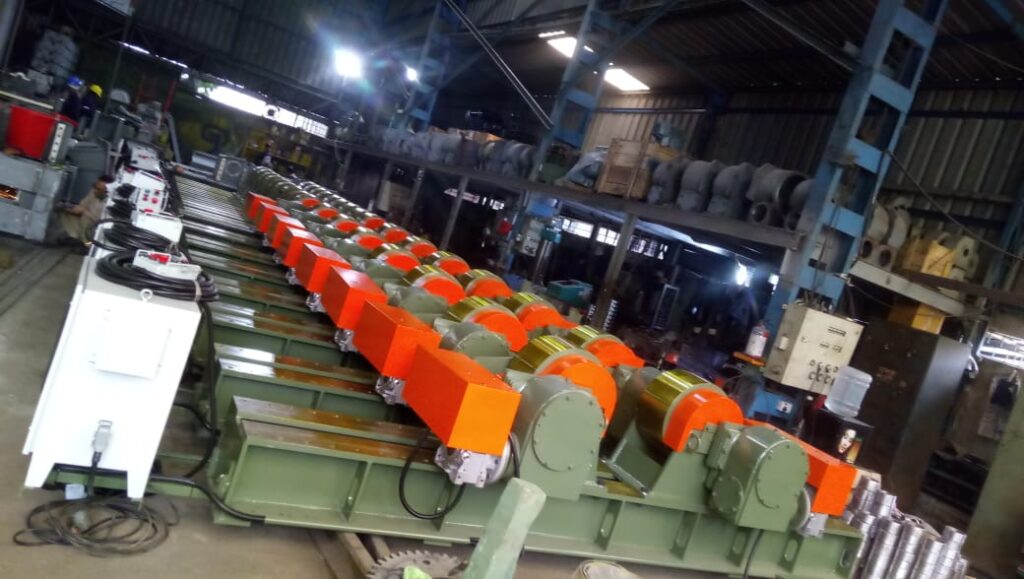
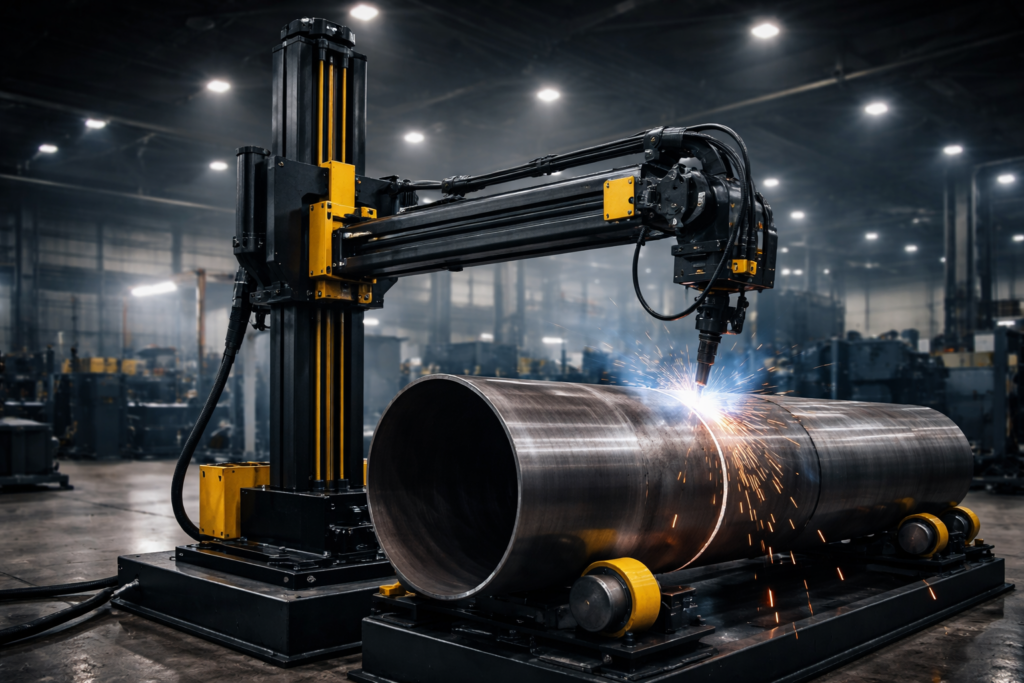
| Automation Cells | High-precision assembly & welding | Delivers tight tolerances and consistent, continuous output. |
Advanced Conveyor System Integration
Modern manufacturing lines rely heavily on customized conveyors, including powered roller conveyors, modular belt systems, slat conveyors, and overhead chain networks. Proper conveyor system integration aligns speed, load capacities, and stop-action indexing with downline machinery, reducing physical touchpoints and preventing line blockages.
Specialized Intralogistics Equipment
Advanced intralogistics equipment acts as the nervous system of modern material management. Intelligent sorters, automatic guided vehicles (AGVs), transfer cars, and vertical lifting modules coordinate to route materials dynamically based on real-time shop floor demands, eliminating costly idle time.
ROI and Industrial Impact of Custom Material Handling Automation
Investing in custom handling and assembly automation yields measurable returns across technical, operational, and financial dimensions:
- Labor Optimization: Automation frees skilled workers from dangerous or repetitive material transport, reallocating human talent to higher-value technical tasks.
- Reduced Material Damage: Precision-designed fixtures, soft-start overhead cranes, and smooth transfer conveyors eliminate part-to-part impacts and dropped load incidents.
- Optimized Floor Space: Custom engineering takes full advantage of vertical space, tight turn radii, and compact footprints, maximizing square-footage utilization.
- Worker Health & Safety: Ergonomic lifters and custom shop floor trolleys lower strain-related workplace injury risks, helping plants align with global safety standards such as OSHA Material Handling Guidelines.
Engineering Considerations for Industrial Automation
Implementing comprehensive material handling and automation solutions requires a structured engineering roadmap. Selecting the right industrial automation partner is vital to maintaining project timelines and performance metrics.
Steps to Successful System Design:
- Comprehensive Process Audit: Map physical space, material flow directions, part dimensions, cycle times, and structural load constraints.
- Custom Modular Design: Choose modular hardware designs that allow future line expansions and simplified maintenance.
- Control System Synchronization: Ensure software, PLC panels, and sensors integrate smoothly with existing ERP or MES infrastructure, mirroring standards outlined in the ISA-95 Enterprise-Control Integration Standard.
- Validation and Safety Auditing: Perform factory acceptance testing (FAT) to verify payload capacities, emergency stop reaction times, and automated indexing accuracy.
Transform Your Operations with Cubuilt Engineers
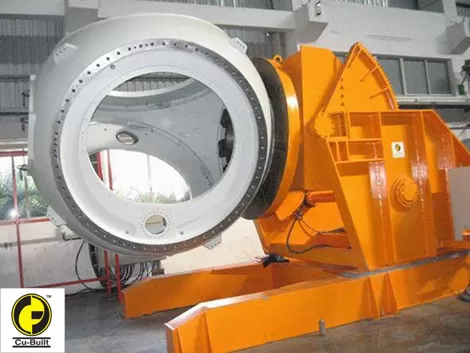
At Cubuilt Engineers, we recognize that no two manufacturing lines share identical requirements. As leading innovators among industrial automation companies, we design, fabricate, and deploy bespoke turnkey solutions engineered to solve your toughest production challenges.
Our engineering portfolio spans:
- Fully automated assembly lines and specialized process cells
- Custom heavy-duty EOT and gantry crane installations
- Tailored conveyor system integration for high-volume manufacturing
- Advanced custom shop floor trolleys and ergonomic intralogistics equipment
Whether you are retrofitting an existing facility or commissioning a new plant, Cubuilt’s technical experts deliver maximum operational efficiency and high long-term ROI.
Ready to modernize your manufacturing capabilities?
Contact Cubuilt Engineers Today to consult with our automation specialists and request a custom solution designed for your shop floor.
Frequently Asked Questions (Q&A)
Q1: What are the main benefits of custom material handling over off-the-shelf equipment?
Custom material handling systems are specifically engineered to accommodate your facility’s exact layout, payload requirements, and production speeds. Unlike off-the-shelf options, custom equipment eliminates workflow bottlenecks, maximizes vertical floor space, reduces product damage, and enhances workplace safety.
Q2: How does conveyor system integration improve overall assembly line efficiency?
Conveyor system integration connects isolated production stations into a synchronized, continuous workflow. By automating part movement between processes, it eliminates manual transit times, stabilizes production pacing, and reduces overall work-in-progress (WIP) inventory on the shop floor.
Q3: What safety features are critical for modern gantry EOT cranes?
Industrial EOT cranes should feature variable frequency drives (VFDs) for smooth acceleration/deceleration, dual limit switches, automatic overload protection, emergency braking systems, and anti-sway controls to protect both operators and delicate materials.
Q4: Why should manufacturers choose custom shop floor trolleys instead of standard carts?
Custom trolleys feature tailored cradles, specialized component holding fixtures, dynamic braking systems, and ergonomic push-pull handles specifically designed for your unique part geometry. This prevents component scratching, improves transfer speed, and reduces physical operator fatigue.
Q5: How long does it take to implement a custom automation assembly line?
Timelines depend on project scale, control complexity, and custom fabrication needs. Generally, turnkey projects range from a few weeks for standalone handling fixtures to several months for fully automated, integrated assembly lines involving robotics, PLCs, and multi-station conveyors.